Personalized care, from your first consultation
en-US
Scar & Tattoo Treatment
Scar and tattoo treatment in Busan, Korea using the clinic's own TAE-SFCT protocol, performed by Dr. Kim Ki-tae at TAE Plastic Surgery Clinic, Haeundae.

Scar and Tattoo Treatment in Busan, Korea

Medically reviewed by Dr. Kim Ki-tae, MD — Board-Certified Specialist in Plastic Surgery, Korean Society of Plastic and Reconstructive Surgeons; Director and founder, TAE Plastic Surgery Clinic TAE Plastic Surgery Clinic, Haeundae-gu, Busan
Scar and tattoo treatment in Busan covers improvement in the appearance of scars and progressive fading of tattoo ink, using the clinic's named protocols for each. TAE Plastic Surgery Clinic in Haeundae-gu groups the two together because they share a technical problem: pigment or altered tissue sitting in skin that has to survive the treatment. Both services here are courses of sessions rather than single appointments, and both are described in terms of improvement rather than erasure.
What Is Scar and Tattoo Treatment?
Scar and tattoo treatment is a group of procedures that improve the appearance, texture and color of a scar, and progressively fade tattoo ink across a course of sessions.
Two services sit under this heading: Scar Treatment and Tattoo Removal.
Both are documented as using TAE-SFCT, a protocol carrying the clinic's own name.
TAE-SFCT is recorded as a method within the services rather than as a service you book separately.
Multiple sessions are typically required, spread across months.
Colored inks respond differently from black ink.
The limitations belong in the definition rather than in a footnote. No treatment erases a scar completely. Complete tattoo clearance is not achievable for every tattoo. Pigmentation change and scarring are recognized considerations for both services. Results depend on the type and age of the scar or ink and on your skin type. How many sessions you need, and how far your particular scar or tattoo will move, are individual and are established as the course progresses rather than promised in advance.
American patients tend to reach this page for reasons that are specific to the US market. Scar treatment is a functional rather than a purely cosmetic concern, and patients research it in depth before travelling. Patients with surgical or acne scarring often report having exhausted local options first. Tattoo removal is billed per session over many sessions at home, so patients compare internationally. Patients with darker skin tones ask specifically about pigmentation risk from both services. And because both need a course, everyone asks the same question about a trip: how much can realistically be done in one visit.
Who Performs Scar and Tattoo Treatment at TAE Plastic Surgery Clinic

**Dr. Kim Ki-tae
**Board-Certified Plastic Surgeon
Dr. Kim Ki-tae holds the Board-Certified Specialist designation in Plastic Surgery issued by the Korean Society of Plastic and Reconstructive Surgeons. He graduated from Inje University College of Medicine and trained as a Clinical Fellow in the Department of Plastic Surgery at Pusan National University from March 2003 to February 2004. He founded TAE Plastic Surgery Clinic in 2005 and has practised there ever since.
The academic credential that bears directly on this specialty is a laser one. He chairs the Academic Committee of the Laser Plastic Surgery Research Group at the Korean Society of Plastic and Reconstructive Surgeons, sits on that society's Academic Committee, serves on the Legislation Committee of the Korean Association of Plastic Surgeons, and is General Affairs Director of the Busan Medical Association. He is a full member of the American Society for Laser Medicine and Surgery, an international member of the American Society of Plastic Surgeons, and a full member of the International Confederation for Plastic, Reconstructive and Aesthetic Surgery.
TAE-SFCT is listed among his documented named techniques, recorded on the clinic's confirmed service list as a method used within both Scar Treatment and Tattoo Removal. TAE Plastic Surgery Clinic is a single-doctor clinic, so the surgeon who assesses you is the surgeon who treats you. His profile is on the doctor page.
Scar and Tattoo Treatment Options and Types Available
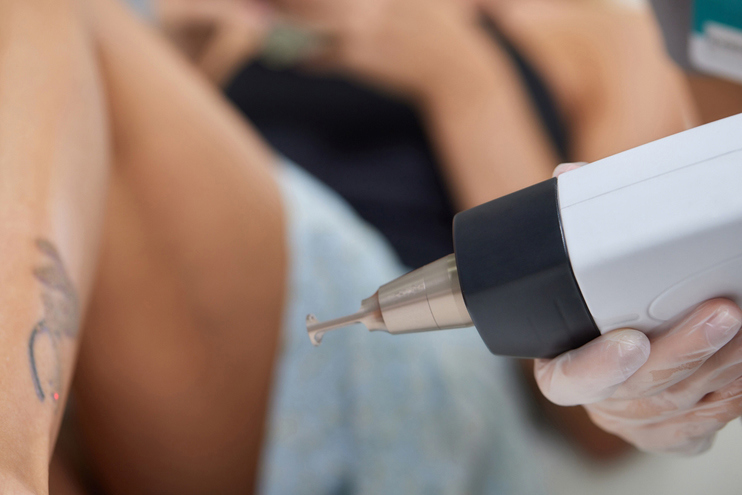
The specialty contains two services. They share a named protocol and diverge in what they are trying to move.
| Service | What is being treated | What the clinic documents |
|---|---|---|
| Scar Treatment | Scar tissue — its appearance, texture and color | A customized approach built from scar analysis, using N-DERM micro-coring combined with laser under the TAE-SFCT name |
| Tattoo Removal | Tattoo pigment, and tattoo-related scarring | The same TAE-SFCT pairing, with N-DERM creating controlled skin columns and laser then targeting pigment |
What the clinic says about the protocol at specialty level is narrow, and this page keeps it that way. TAE-SFCT and N-DERM are recorded on the confirmed service list only as named protocols within the services. At specialty level, no device, wavelength, session interval or mechanism is documented for either protocol; the specialized devices the clinic names are listed on the Scar Treatment page, which is where they are documented. The clinic maintains a dedicated web address for N-DERM. Beyond that, what distinguishes these protocols from conventional laser treatment or surgical excision is for the clinic to supply, and this page does not supply it on the clinic's behalf.
The one mechanism statement the clinic does publish is about intent: it describes TAE-SFCT as creating controlled skin columns with N-DERM and then using a laser to target pigment, with the aim of minimizing unnecessary skin damage.
Who Is a Good Candidate for Scar and Tattoo Treatment?
You may be a candidate if
You have a concern at a specific treated area rather than a generalized skin condition.
You are prepared to complete a course of sessions for the full result.
You accept that improvement, not removal, is the goal.
Treatment may be unsuitable or need postponing if
You are pregnant or breastfeeding.
There is active infection at the treated area.
There are open wounds at the treated area.
The skin at the treatment site has recently been tanned.
Another medical issue at the site needs evaluation first.
A final decision is made by the doctor after individual assessment. Suitability is settled for your particular scar or tattoo rather than for the category, because two scars on the same person can behave differently.
What to Expect: Procedure, Recovery, and Results Timeline

Assessment is detailed, and it is the part that determines everything after it. For a scar, the clinic looks at type, depth, thickness, redness, pigmentation, surface irregularity and tethering. For a tattoo, it looks at color, pigment density and depth. In both cases it also weighs skin sensitivity, previous procedures and how much downtime you can accommodate.
In simple terms, the session runs like this: the treated area is cleansed, eye protection is used, the laser is passed over the treatment area in the planned pattern, and a cooling or soothing step follows. The exact sequence is explained step by step during consultation.
Topical numbing cream is the standard here, and the area is cooled while the session runs. Which approach is used gets settled at consultation, weighed against your own tolerance and your medical history. Most patients report mild warmth or tingling rather than real pain. A session generally runs between thirty minutes and an hour.
Before treatment, avoid sun exposure or tanning of the treated area, and pause retinoid or strong exfoliating skincare for several days beforehand. Anyone with a long-term condition, or on regular medication, should say so at consultation so the plan can be adapted around it.
| Stage | What to expect |
|---|---|
| Per session | Thirty minutes to an hour, depending on the plan |
| Between sessions | Redness or mild flaking at the treated area usually settles within several days |
| First two to three sessions | A visible improvement typically begins to build |
| Full course | The full result typically appears after completing the recommended course |
| Maintenance | The result is generally maintained for several months to a year |
| Follow-up | Typical practice is a check after the final session in the course, with more scheduled if a further course is recommended |
| Travel | Downtime is minimal, and a single day in Korea is often enough for one session |
Aftercare is where most of the avoidable trouble lives. Follow the cleansing and wound-care instructions, protect the treated area from sunlight, use sunscreen once that is appropriate, do not pick crusts or scabs, and temporarily avoid irritating skincare products, excessive heat, sauna and anything that aggravates the treated skin.
How quickly you heal depends on your skin type, on your tissue and on your general health, and the clinic reviews it at follow-up. The number of sessions and the degree of response both vary between patients, and neither is fixed in advance.
The clinic has not published a price or a price range for this procedure, so none is stated here, and cost is confirmed at consultation.
Combining Scar and Tattoo Treatment with Other Treatments
Pairing a treatment here with another in the same category is common, whether that happens at one appointment or across a planned sequence. Which pairing fits depends on your anatomy and your goals, and it is agreed with the treating doctor rather than picked in advance.
Scar Treatment — the scar side of this specialty in full.
Tattoo Removal — the tattoo side, including tattoo-related scarring.
HALO Laser — the clinic's hybrid fractional laser, for surface texture and pigmentation.
Bespoke Laser Treatment — where the plan is built around the laser rather than around the scar.
Safety, Precision, and Clinic Standards
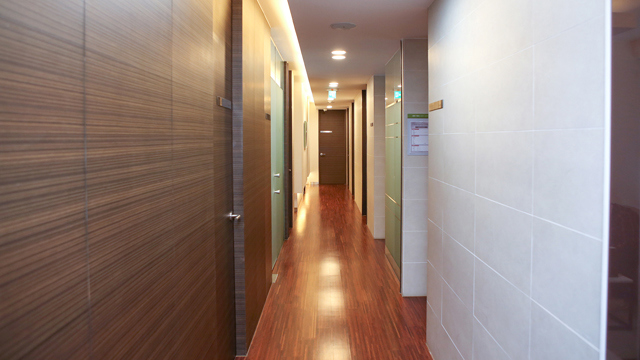
TAE Plastic Surgery Clinic is a Registered Medical Institution for Attracting Foreign Patients, certified by the Ministry of Health and Welfare under the Medical Overseas Expansion and Foreign Patients Attraction Act. The clinic has operated at the same address in Haeundae, Busan since 2005. TAE Plastic Surgery Clinic publishes neither case volumes nor complication rates for this procedure, and this page claims neither. The clinic reports approximately 240 surgical procedures and approximately 3,600 non-surgical treatments a year; these are clinic-wide totals across everything it offers, not figures for this procedure. The clinic has not published an approved-claims list for this procedure and this market, so this page states no efficacy or outcome claim beyond what the clinic itself documents.
Temporary redness, swelling, warmth, tenderness, dryness, crusting or pigmentary changes may occur after treatment in this specialty. Laser tattoo removal can cause blistering. It can also cause temporary hyperpigmentation or hypopigmentation. Persistent pigment change is possible but less common. Scarring is possible but less common. Infection, prolonged inflammation, delayed healing and changes in skin texture are the further recognized risks, and how they apply to you depends on your skin type and the treatment intensity.
Pigmentation risk is the question US patients with darker skin tones raise most often, and it is a legitimate one for both services. It is assessed individually before treatment rather than answered from a page.
Independent reading is easy to find for both halves of this specialty. The NHS describes how scars form and how they change with time (NHS). The US Food and Drug Administration hosts patient-facing material on regulated medical devices, lasers among them (FDA). The American Society of Plastic Surgeons runs a public index of cosmetic procedures (ASPS).
The Bottom Line
This specialty is two services, Scar Treatment and Tattoo Removal, sharing one named clinic protocol.
TAE-SFCT is documented as a method inside both, and its device-level details are not published.
Both services need a course of sessions, and the number varies with the individual case.
Improvement is the stated goal; complete scar removal and total tattoo clearance are not promised.
Pigmentation change is a recognized risk for both, and it is assessed against your skin type first.
FAQ
Can a scar or a tattoo be removed completely?
No, and the clinic does not claim otherwise. The realistic goal is improvement in the appearance, texture and color of a scar, and progressive fading of tattoo ink. Complete clearance is not achievable for every tattoo, and a scar that has formed cannot be erased.
How many sessions will I need?
That varies with the condition being treated, and it is not fixed in advance. Visible improvement typically builds across the first two to three sessions, with the full result after completing the recommended course. The schedule is set at consultation and adjusted as the course progresses.
How much can be done on one trip?
Often one session, since downtime is minimal and a single day in Korea is usually enough for it. A full course generally spans months, so most international patients plan around what can be started rather than finished. Discuss the realistic sequence before booking travel.
Is it painful?
Reported sensation is mild — warmth or tingling rather than real pain — and what remains afterward is usually slight. Numbing cream is applied first, and the treatment area is cooled while the session runs. Tolerance differs from person to person, and comfort measures can be adjusted if you ask.
What are the risks for my skin type?
Pigmentary change is the recognized risk that varies most with skin type, and it can go in either direction after laser treatment. Blistering can occur with laser tattoo removal. Infection, prolonged inflammation, delayed healing, scarring and textural change are the other risks, and their likelihood depends on treatment intensity.
What should I avoid before and after?
Before: sun exposure, tanning, and strong retinoid or exfoliating products in the days beforehand. After: sun and heat exposure such as saunas on the treated area for a short period, and picking at crusts. The clinic's written aftercare guidance covers the specific timeline.
How is this different from a standard laser treatment?
This specialty applies the clinic's own named protocols, N-DERM and TAE-SFCT, within its scar and tattoo services rather than offering conventional laser treatment or surgical excision alone. What distinguishes those protocols in device terms is not published, and this page does not fill the gap.
What if something looks wrong after I get home?
Contact the clinic promptly, and send clear photographs along with a description of the symptoms so it can be reviewed. The clinic's listed telephone number is 051-746-7004. Anything that looks infected, or any treated area that has stopped healing, warrants a local medical opinion too.
Book a Consultation at TAE Plastic Surgery Clinic
Scar and tattoo treatment in Busan begins with an assessment of the specific scar or tattoo, its depth and its pigment, and an honest estimate of how many sessions the plan will take. English-speaking assistance is available for both online and in-person consultations, and consultations are arranged through the clinic's contact page. TAE Plastic Surgery Clinic is at 4th Floor, Gunam Building, 27 Gunam-ro, Haeundae-gu, Busan, South Korea, and opens Monday to Friday from 09:00 to 18:00 and Saturday from 09:00 to 13:00, closed Sundays and public holidays.
Disclaimer
This page is for general informational purposes and does not constitute individualized medical advice. Candidacy, technique, anaesthesia and outcome can only be determined in an in-person consultation with a qualified doctor. Individual results vary.
References
NHS — Scars
US Food and Drug Administration — Medical Devices
American Society of Plastic Surgeons — Cosmetic procedures