Personalized care, from your first consultation
en-US
Skin Resurfacing with Laser Technology
Skin and laser treatments in Busan, Korea target skin tone, texture and pigmentation, and are performed by Dr. Kim Ki-tae at TAE Plastic Surgery Clinic.
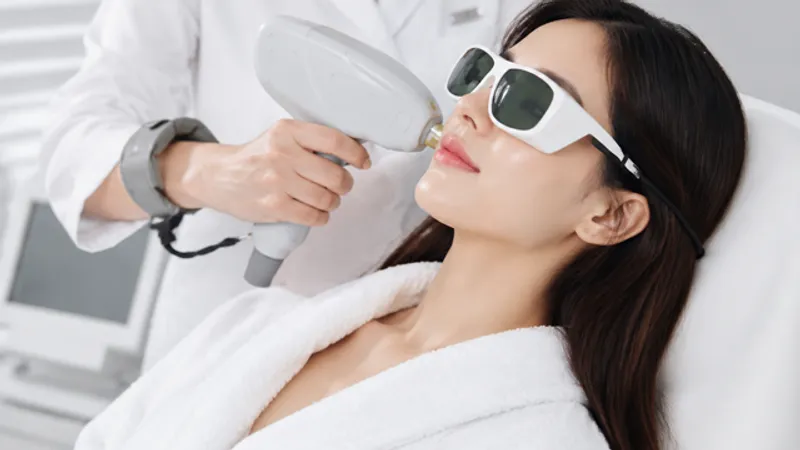
Skin and Laser Treatments in Busan, Korea
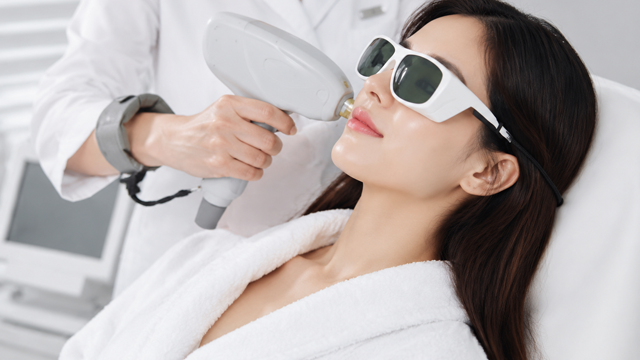
Medically reviewed by Dr. Kim Ki-tae, MD — Board-Certified Specialist in Plastic Surgery, Korean Society of Plastic and Reconstructive Surgeons; Director and founder, TAE Plastic Surgery Clinic TAE Plastic Surgery Clinic, Haeundae-gu, Busan
Skin and laser treatments in Busan use laser and energy-based technologies to address concerns in the skin itself — tone, texture, pigmentation and the surface changes that come with sun exposure and age. At TAE Plastic Surgery Clinic in Haeundae-gu the treatment is matched to the skin condition rather than the skin condition matched to one favoured device. The category holds three listed services and a device inventory considerably wider than that.
What Is Skin Resurfacing with Laser Technology?
Skin resurfacing with laser technology is the use of controlled laser or energy-based treatment to change the condition of the skin surface and the layers beneath it, with the device, the setting and the number of sessions selected against the concern being treated.
The category treats the skin itself, rather than laxity, volume or muscle movement.
Treatment is customized to skin condition, tissue characteristics, aesthetic goals and how much recovery time the patient can accept.
Session length varies widely by technology, treated area and intensity, with many sessions running thirty minutes to an hour.
Some concerns are addressed in a single visit and others require a planned series.
Results appear gradually as the skin responds, and maintenance sessions may be recommended depending on the concern.
The clinic states that it holds a wide range of premium laser and energy-based devices beyond the level of a general dermatology practice. The technologies documented as available are HALO, BBL, Discovery PICO, Ruby Laser, Virtue RF, Liftera 2, Profractional, VECTRA XT, Chrome Laser, Mosaic 3D, ONDA and TargetCool, along with other laser and energy-based equipment. Not every device on that list is a separately bookable service, and this page does not present any of them as one. The three services the clinic lists are set out in the next section.
The clinic's stated approach is to assess skin condition and the underlying tissue structure together, because the two determine what any single treatment can realistically achieve. In this category that has a specific consequence: the same pigmentation complaint on two patients can lead to two different devices, and neither choice is a compromise. Independent patient information on what laser resurfacing does and does not do is published by the American Society of Plastic Surgeons (ASPS).
The clinic has not published an approved-claims list for this procedure and this market, so this page states no efficacy or outcome claim beyond what the clinic itself documents.
Who Performs Skin Resurfacing with Laser Technology at TAE Plastic Surgery Clinic

**Dr. Kim Ki-tae
**Board-Certified Plastic Surgeon
Dr. Kim Ki-tae performs the treatments in this category himself, as the founder of the clinic and the only doctor working in it. Laser plastic surgery and energy-based aesthetic treatment is the first item in his documented core specializations, which is unusual for a plastic surgery practice and is the reason this category exists here at the scale it does.
Dr. Kim Ki-tae holds the Board-Certified Specialist designation in Plastic Surgery issued by the Korean Society of Plastic and Reconstructive Surgeons. He graduated from Inje University College of Medicine and trained as a Clinical Fellow in the Department of Plastic Surgery at Pusan National University from March 2003 to February 2004. He founded TAE Plastic Surgery Clinic in 2005 and has practised there ever since.
He chairs the Academic Committee of the Laser Plastic Surgery Research Group at the Korean Society of Plastic and Reconstructive Surgeons, sits on that society's Academic Committee, serves on the Legislation Committee of the Korean Association of Plastic Surgeons, and is General Affairs Director of the Busan Medical Association. He is a full member of the American Society for Laser Medicine and Surgery, an international member of the American Society of Plastic Surgeons, and a full member of the International Confederation for Plastic, Reconstructive and Aesthetic Surgery.
The teaching record in this specialty is documented rather than asserted. The clinic hosted the Sciton Innovations Workshop live seminar at its own premises on 26 August, attended by around 50 practitioners including a delegation from Taiwan, with Dr. Patrick Bitter, the developer of BBL HERO, as special guest. At that seminar Dr. Kim Ki-tae explained the composition of Sciton's devices, delivered a lecture organizing the concept of prejuvenation, and presented cases performed on his own patients.
His published caution about device treatment applies across this whole category: "Even if a treatment is safe and simple, patients differ in skin condition, fat layer thickness, age and how far ageing has progressed — so to get a satisfying result you should have a full consultation with an experienced plastic surgery specialist before being treated."
TAE Plastic Surgery Clinic is a single-doctor clinic, so the surgeon who assesses you is the surgeon who treats you. His full profile is on the doctor page.
Skin and Laser Treatment Options and Types Available
Three services sit inside this category. They answer different questions, and the table below is the shortest honest account of which is which.
| Service | What it addresses | How it is structured | Page |
|---|---|---|---|
| HALO Laser | Skin tone, texture, pigmentation, pores, fine lines and sun damage | A single named hybrid fractional laser treatment | HALO Laser |
| Bespoke Laser Treatment | A combination of skin concerns that no single device covers | A 1:1 planning program that selects and combines devices | Bespoke Laser Treatment |
| Private Daily Care | Ongoing skin management and post-operative soft-tissue care | A physician-led medical skincare program | Private Daily Care |
The distinction that matters most is between the first two. HALO is a treatment you can name and book. Bespoke Laser Treatment is a decision process that ends in one or more devices being chosen for you, and it exists precisely because the clinic's device inventory is wide enough for that choice to be worth making carefully.
The technology documented at the centre of this category is Sciton's Er:YAG and Halo platform, which the clinic describes as a high-end device counted among the world's first hybrid fractional lasers, outputting two energies at once — an erbium YAG wavelength of 2940 nm and a further wavelength of 1470 nm. BBL HERO appeared at the clinic's Sciton seminar as the special guest's own development and is not one of the clinic's listed services.
Who Is a Good Candidate for Skin and Laser Treatment?

You may be a candidate if
You have mild to moderate concerns in the skin and would accept a gradual result.
Your concern is pigmentation or uneven skin tone.
Your concern is uneven texture or acne scarring.
Your concern is redness.
You want to limit downtime and are willing to plan a series of sessions instead.
You may need to avoid or postpone treatment if
There is an active infection in the skin you want treated.
You have significant irritation or recent sunburn in the area.
You have an uncontrolled medical condition.
You have a significant healing problem.
You have a contraindication specific to a particular laser or energy device.
Where one device is ruled out, another may not be, which is why suitability here is assessed per treatment rather than per category. A consultation is the only way to settle it.
Photographs and history do most of the preparatory work for an international enquiry. Clear images of the treatment area are usually requested, along with your relevant medical history, current medications and records of any previous treatment on the same area. Previous laser treatment matters more than patients expect, because it changes what is safe to do next.
What to Expect: Procedure, Recovery, and Results Timeline

The sequence is consistent even though the devices are not. Consultation and skin assessment come first, then cleansing and preparation of the area, then the selected laser or energy treatment, then post-treatment skin care. The steps in between differ by technology.
Before the appointment, keep the skin out of strong sun and do not tan it. Pause retinoids and strong exfoliating products for several days beforehand. Raise any chronic condition or regular medication at consultation, along with any recent procedure, so the plan can be adjusted for you.
Anesthesia is usually a non-issue in this category. Topical numbing cream is used where it is needed, and treatment is generally tolerated without anything stronger; the exact approach is confirmed with you at consultation against your own comfort and history.
| Stage | What the clinic documents |
|---|---|
| Session length | Commonly thirty minutes to an hour, varying by device and area |
| Immediately after | Redness, warmth or mild swelling may be present |
| A few hours to a day | Redness settles for the lower-intensity treatments |
| Several days | Some treatments require this much skin recovery |
| Several weeks | Pigmentation and texture change appears gradually |
| Full course | The final result follows completion of the recommended sessions |
| Maintenance | Considered after several months, depending on the concern |
| Stay in Korea | As little as a single day where downtime is minimal |
Aftercare is the part patients underestimate. Keep the treated skin out of strong sunlight and away from heat. Do not pick or rub it. Leave irritating skincare products alone until the skin has recovered, and use sun protection consistently. The specific protocol depends on the device used and the intensity of the treatment, and it is issued in writing.
Recovery and flying are usually compatible in this category, because downtime for the lower-intensity treatments is measured in hours rather than days. The higher-intensity resurfacing options are the exception, and the timing of a long-haul flight after one of those should be settled with the treating doctor rather than assumed.
Results follow a pattern that is easy to misread on a short trip. Some improvement can be apparent shortly after a session, but pigmentation and texture generally change over several weeks as the skin responds, and the final position is only clear once a recommended course is finished. A patient who judges the outcome on the flight home is judging it too early. Where a course is planned, ask at consultation whether the remaining sessions need to happen in Busan or whether the plan can be structured around one visit.
Combining Skin and Laser Treatment with Other Treatments
Combining treatments within this category is normal rather than exceptional, because different devices address different concerns and a single visit can cover more than one. The right combination depends on your skin and your goals and is decided with the doctor at consultation.
HALO Laser — the named resurfacing option, and the usual anchor of a combined plan.
Bespoke Laser Treatment — the route to take when more than one concern is in play at once.
Private Daily Care — the clinic's medical skincare program, documented as accompanying laser and post-operative care.
Safety, Precision, and Clinic Standards
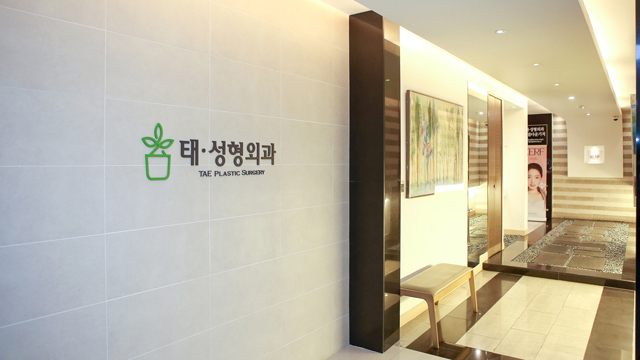
The clinic has operated at the same address in Haeundae, Busan since 2005. TAE Plastic Surgery Clinic is a Registered Medical Institution for Attracting Foreign Patients, certified by the Ministry of Health and Welfare under the Medical Overseas Expansion and Foreign Patients Attraction Act.
The clinic's stated method of reducing risk in this category has three parts. The skin is assessed before a device is chosen. The treatment and its settings are selected against that assessment. Aftercare instructions are matched to what was actually done.
The risks are real and worth reading before booking. Temporary redness, swelling, warmth, tenderness and dryness are common. Pigment change is possible, and it is the risk that deserves the most attention in patients with deeper skin tones. Prolonged irritation is possible. Burns are possible. Scarring is possible. Infection is possible. Which of these matters most depends on the device, the intensity and your own skin, and each should be discussed before treatment rather than after. The UK's National Health Service publishes general guidance on thinking a cosmetic procedure through and on checking who will carry it out (NHS).
Complete or permanent correction of a skin concern is not something the clinic guarantees, and this page does not either. The degree of improvement varies. The duration of improvement varies. Some concerns need several sessions before any change is visible.
TAE Plastic Surgery Clinic publishes neither case volumes nor complication rates for this procedure, and this page claims neither. The clinic reports approximately 240 surgical procedures and approximately 3,600 non-surgical treatments a year; these are clinic-wide totals across everything it offers, not figures for this procedure. The clinic has not published a price or a price range for this procedure, so none is stated here, and cost is confirmed at consultation.
The Bottom Line
The category treats the skin itself — tone, texture and pigmentation — rather than laxity or volume.
Three services are listed: HALO Laser, Bespoke Laser Treatment and Private Daily Care.
The device inventory is wider than the service list, and the clinic states it exceeds that of a general dermatology practice.
Dr. Kim Ki-tae chairs the Academic Committee of the KSPRS Laser Plastic Surgery Research Group and hosted the Sciton Innovations Workshop at the clinic.
Downtime is minimal for the lower-intensity treatments and measured in days for resurfacing.
FAQ
How do I know which treatment I need?
You do not, and you are not expected to. The clinic assesses skin condition and tissue structure first, then selects the technology against what it finds. If more than one concern is in play, Bespoke Laser Treatment is the service built around making that selection deliberately.
How long does a session take?
Most sessions run somewhere between thirty minutes and an hour, though this varies considerably with the device, the area treated and the intensity chosen. Some concerns are handled in one visit. Others are planned as a series, and the schedule is set at consultation.
Is it painful?
Sensation varies by treatment. Warmth, tingling or mild discomfort during treatment are the usual descriptions. Topical numbing cream is used where it is needed, and most treatments in this category are tolerated without anything stronger.
How soon can I fly home?
For the lower-intensity treatments, downtime is minimal and a same-day or next-day flight is usually workable. Resurfacing treatments involve several days of visible skin recovery and are a different calculation. Confirm the timing with the treating doctor for your specific plan before booking a return flight.
What are the common side effects?
Temporary redness, swelling, warmth, dryness, sensitivity and mild peeling are the ones patients most often experience. How pronounced they are depends on the treatment intensity. They usually settle as the skin recovers, and anything that worsens instead should be reported to the clinic.
What is the risk I should take most seriously?
Pigment change, particularly if you have a deeper skin tone or have had recent sun exposure. Burns and scarring are also possible with the more intensive options. The way both risks are managed is by assessing the skin properly, choosing appropriate settings, and following the aftercare instructions exactly.
How many sessions will I need?
That depends on the concern and the technology chosen, and the clinic does not publish a standard course. Some treatments are completed in a single visit; others are planned as a course with a maintenance session considered later. The expected number is agreed at consultation once the plan is set.
Book a Consultation at TAE Plastic Surgery Clinic
Skin and laser treatment is available in Busan at TAE Plastic Surgery Clinic, and the consultation is where the device, the setting and the number of sessions are matched to your skin. English-speaking assistance is available for both online and in-person consultations, and consultations are arranged through the clinic's contact page. TAE Plastic Surgery Clinic is at 4th Floor, Gunam Building, 27 Gunam-ro, Haeundae-gu, Busan, South Korea, and opens Monday to Friday from 09:00 to 18:00 and Saturday from 09:00 to 13:00, closed Sundays and public holidays.
Disclaimer
This page is for general informational purposes and does not constitute individualized medical advice. Candidacy, technique, anaesthesia and outcome can only be determined in an in-person consultation with a qualified doctor. Individual results vary.
References
American Society of Plastic Surgeons — Laser skin resurfacing
NHS — Cosmetic procedures