Personalized plastic surgery, laser & anti-aging care in Haeundae, Busan
en-US

Breast Augmentation Korea: What US Patients Ask First
Breast augmentation in Korea for US patients: credentials, assessment, recovery and travel timing at TAE Plastic Surgery Clinic in Haeundae, Busan.
Breast Augmentation in Korea: The Questions US Patients Ask Before Traveling
Medically reviewed by Dr. Kim Ki-Tae, Board-Certified Specialist in Plastic Surgery, issued by the Korean Society of Plastic and Reconstructive Surgeons
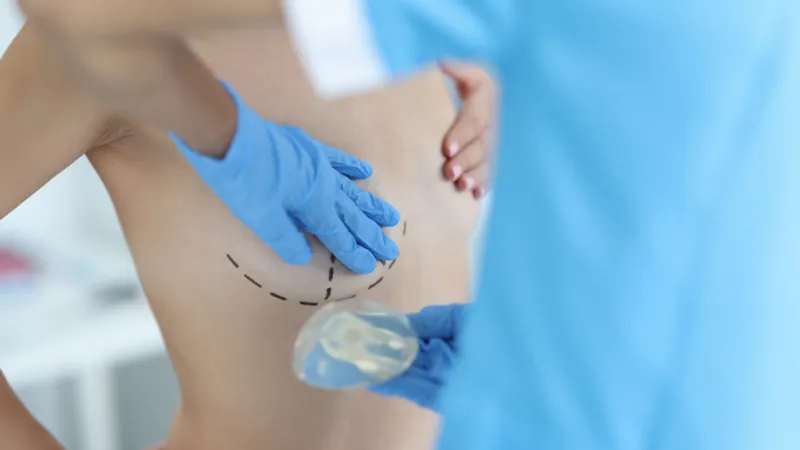
Breast augmentation is the procedure US visitors most consistently request at TAE Plastic Surgery Clinic in Haeundae, Busan. Anyone weighing it from several thousand miles away is really asking three questions at once: is the surgeon qualified, what will actually be done, and how does this fit into a trip. This article answers them in that order, because that is the order in which they matter.
Credentials, and what "board-certified" means here
Start with the question that comes first on nearly every list. Dr. Kim Ki-Tae holds a Board-Certified Specialist designation in Plastic Surgery, issued by the Korean Society of Plastic and Reconstructive Surgeons. He graduated from Inje University College of Medicine and trained as a Clinical Fellow in the Department of Plastic Surgery at Pusan National University between March 2003 and February 2004. He chairs the academic committee of that society's Laser Plastic Surgery Research Group, and holds membership of the American Society for Laser Medicine and Surgery and of the International Confederation for Plastic, Reconstructive and Aesthetic Surgery.
The issuing body is named deliberately every time, and there is a specific reason. In the United States, "board-certified" is generally taken to mean certification by an American specialty board. A Korean specialist qualification is a real credential issued by a real professional body, but it is not the same credential, and a US reader who sees the phrase without the issuer attached will fill in the American meaning by default. Naming the society each time is what prevents an assumption from doing work that the facts should be doing. Readers who want to understand how US certification verification works can consult the American Board of Medical Specialties directly.
Alongside the individual qualification sits an institutional one: the clinic is a registered medical institution for attracting foreign patients with the Korean Ministry of Health and Welfare, under Korea's legislation governing overseas medical expansion and foreign-patient attraction, and it holds Business Registration 617-31-90658. That is a Korean registration recording that the clinic may treat international patients. It is not an approval of any particular treatment, and it should not be read as one.
Why a clinic outside Seoul
US searches for Korean aesthetic surgery default to Seoul, and specifically to one district of it. TAE Plastic Surgery Clinic is in Haeundae, Busan, on Korea's southeast coast.
The practice was founded in 2005 and has operated from the same address on Gunam-ro ever since, which is more than twenty years at one location. It performs approximately 240 surgical cases and approximately 3,600 non-surgical procedures per year across 31 named services in eight categories. Those are clinic-wide figures for the practice as a whole, not counts for any one procedure.
Whether a second city suits you is a genuine question rather than a rhetorical one. It changes flight routing and it changes what the surrounding area offers during recovery. What it does not change is the qualification of the surgeon or the standards the institution is registered under.
What the procedure is, and what it is not
Breast augmentation increases breast volume and addresses breast shape and symmetry. Depending on anatomy and goals it may use implants or, in selected cases, the patient's own fat, with technique, implant type or volume and placement determined after individual consultation.
The American Society of Plastic Surgeons sets out the boundary clearly: augmentation increases fullness and projection and can improve the balance between breast and hip contours, but it does not correct significantly drooping breasts. Where sagging is the dominant problem, a lift may be required alongside augmentation for the result to read as fuller and lifted rather than simply larger. That distinction resolves a great deal of confusion before it starts, because volume and position are different problems with different operations.
The clinic's own alternatives reflect the same logic. Where the issue is position rather than volume, it points to breast lift and sagging breast correction; where a patient prefers their own tissue to an implant, it lists fat grafting separately.
The assessment, in some detail
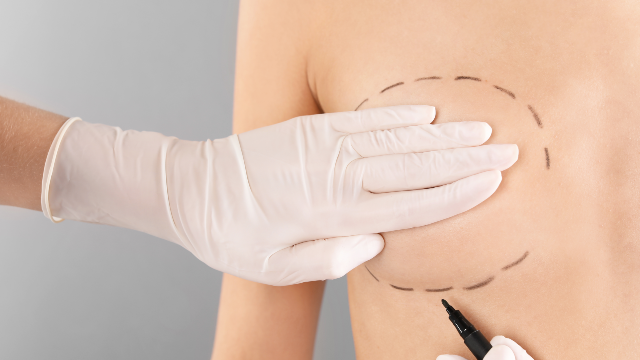
The clinic performs a detailed consultation and diagnosis before surgery, evaluating approximately 30 factors. Named among them are breast shape, nipple position, inframammary fold height, skin thickness and rib cage shape, with pre-operative examinations and Body Balance Design used to determine the most appropriate implant size, type, insertion site and surgical method.
Those five named factors are worth dwelling on, because none of them is about the number a patient arrives with in mind. The height of the inframammary fold — the crease beneath the breast — governs where an implant can sit. Skin thickness governs how much of an implant's edge will be visible or palpable. Rib cage shape governs how a given volume will project. A request expressed as a cup size has to be translated into these measurements before it can be answered, and sometimes the translation is the news.
Candidates are generally healthy adults with realistic expectations who are physically and emotionally prepared for surgery. The procedure may need postponing or avoiding for people who are pregnant or breastfeeding, who have uncontrolled medical conditions that could increase surgical or anesthesia risk, who have an active infection, or who are not medically fit for elective surgery. The final decision is made by the doctor after individual assessment.
Anesthesia, and who is watching
US patients ask about anesthesia more pointedly than most, and the clinic's answer for this procedure is specific: it is typically performed under local anesthesia with sedation, or under general anesthesia depending on the extent of surgery, with the exact approach confirmed with the patient at consultation based on individual comfort and medical history.
It is worth understanding what those two options mean. MedlinePlus, the patient-education service of the U.S. National Library of Medicine, explains that general anesthesia renders a person fully unconscious and unable to feel pain, with breathing and circulation monitored continuously throughout by the anesthesia team, whereas sedation produces varying depths of drowsiness alongside local numbing of the surgical area. The monitoring is not incidental to either — it is the reason the depth of anesthesia can be adjusted safely during an operation. Asking who provides and monitors your anesthesia, and what their qualification is, is a reasonable question anywhere in the world.
Recovery, and the shape of the trip

The procedure itself typically takes one to three hours depending on complexity. Around the breast, bruising and puffiness peak in the opening few days before easing across the couple of weeks that follow; light routine activity is typically back inside seven to ten days. Breast volume changes are noticeable soon after surgery, but swelling and tissue tightness temporarily affect the appearance; the breasts settle gradually with the final result becoming clearer over the following weeks to months.
For international patients the clinic advises planning roughly one to two weeks in Korea to allow initial healing and a check before traveling home, with typical practice being one in-person follow-up before departure and further check-ins available remotely. The exact schedule is confirmed at consultation.
Flying afterward has its own considerations independent of any clinic. The Centers for Disease Control and Prevention notes that prolonged immobility during long-haul flights is associated with an increased risk of blood clots in the deep veins of the legs, with risk elevated further by recent surgery, and recommends movement during flight and attention to individual risk factors. Its guidance on seeking health care abroad also addresses continuity — arranging follow-up and carrying documentation of what was done. Obtaining your operative records before you leave is the single most useful thing you can do for whoever assesses you later at home.
Aftercare means following instructions for wound care, medications, supportive garments, bathing, sleeping position and activity, avoiding heavy lifting and strenuous exercise during initial recovery, attending scheduled follow-ups, and contacting the medical team if unusual pain, swelling, fever, discharge or other concerning symptoms develop.
Implants are not permanent hardware
This is the point most worth absorbing before committing. Implants are not lifetime devices.
StatPearls, published on the National Library of Medicine's Bookshelf, states that plainly and puts numbers to it: implants typically last in the region of 10 to 20 years before revision or replacement becomes necessary, and patients should anticipate future surgery. It also describes the recommended imaging surveillance for silicone implants — screening by MRI or ultrasound beginning five years after placement and repeating every two years thereafter — because rupture of a silicone implant is often silent, with the gel retained inside the surrounding capsule and no outward sign. A saline implant deflating, by contrast, is usually obvious.
The clinic's own risk list is consistent. Temporary swelling, bruising, tightness, soreness and changes in sensation can occur after surgery. Potential complications include infection, bleeding, scarring, asymmetry, changes in nipple or breast sensation, implant displacement, capsular contracture, implant rupture or leakage, and the need for revision surgery. It notes that patients should discuss implant-specific long-term considerations with their surgeon.
Outcomes cannot be guaranteed. The procedure cannot guarantee a particular cup size, perfectly symmetrical breasts, or a permanent appearance — the clinic states this itself, and it is the correct thing to state.
Planning surgery abroad therefore means planning for a decade-scale relationship with a device, not for a single trip. Who will image you at five years, and who will manage a revision if one becomes necessary, are questions to think through before the first operation rather than after it.
The Bottom Line
- Dr. Kim Ki-Tae holds a Board-Certified Specialist designation in Plastic Surgery issued by the Korean Society of Plastic and Reconstructive Surgeons; the issuing body is named every time because "board-certified" carries a different default meaning in the United States.
- The clinic assesses approximately 30 factors before surgery, including nipple position, inframammary fold height, skin thickness and rib cage shape, which is how a request expressed as a size becomes a surgical plan.
- Augmentation addresses volume, not position; significant sagging generally needs a lift alongside it rather than a larger implant.
- Implants are not lifetime devices — typically in the region of 10 to 20 years before revision or replacement — and silicone implants carry a recommended imaging schedule beginning at five years.
FAQ
Is the surgeon board-certified?
He holds a Board-Certified Specialist designation in Plastic Surgery, issued by the Korean Society of Plastic and Reconstructive Surgeons. That is a Korean specialist qualification from a national professional body, and it is named with its issuer because the phrase is generally read in the United States as referring to an American specialty board.
What is assessed before surgery?
Approximately 30 factors, including breast shape, nipple position, inframammary fold height, skin thickness and rib cage shape, using pre-operative examinations and Body Balance Design to determine implant size, type, insertion site and surgical method.
Will augmentation fix sagging?
Generally not on its own. Augmentation increases volume and projection but does not correct significantly drooping breasts; where sagging is the main concern, a lift may be needed alongside it. The clinic lists breast lift and sagging breast correction separately for exactly this reason.
What anesthesia is used, and who monitors it?
Typically local anesthesia with sedation, or general anesthesia depending on the extent of surgery, confirmed with you at consultation. Under general anesthesia breathing and circulation are monitored continuously by the anesthesia team throughout the operation.
How long do I need to stay in Korea?
The clinic advises planning roughly one to two weeks to allow initial healing and a check before traveling home, with typical practice being one in-person follow-up before departure. The exact schedule is confirmed for each case at consultation.
How long will the implants last?
They are not lifetime devices. Published clinical guidance puts typical longevity in the region of 10 to 20 years before revision or replacement becomes necessary, and recommends imaging surveillance for silicone implants beginning five years after placement and repeating every two years.
What are the main risks?
Temporary swelling, bruising, tightness, soreness and sensation changes are common short-term effects. Potential complications include infection, bleeding, scarring, asymmetry, changes in nipple or breast sensation, implant displacement, capsular contracture, implant rupture or leakage, and the possible need for revision surgery.
What should I arrange before flying home?
Your operative records, a clear follow-up plan, and an understanding of which symptoms warrant urgent assessment. Long-haul flights after surgery carry an increased risk of blood clots in the deep leg veins, so discuss your individual risk and in-flight precautions with your treating team. Raise all of it at the enquiry and booking page. Wider clinic background is published separately.
This article is for general informational purposes and does not constitute individualized medical advice, and it is not a self-diagnosis tool. Care described here is delivered in the Republic of Korea under Korean medical licensure rather than United States licensure, and the clinic is closed on Sundays and observes a daily lunch break, which affects scheduling for short international trips. Speak with a qualified plastic surgeon about your own circumstances before making any treatment decision.
References
- StatPearls: Breast Implants
- American Society of Plastic Surgeons: Breast Augmentation
- MedlinePlus: Anesthesia
- CDC: Deep Vein Thrombosis and Pulmonary Embolism
- CDC: Medical Tourism
- American Board of Medical Specialties: Verify Certification
- CDC: Air Travel