Personalized plastic surgery, laser & anti-aging care in Haeundae, Busan
en-US

Design Contouring Filler vs Ellansé: Two Injectable Routes
Hyaluronic acid contouring filler against a polycaprolactone collagen stimulator: what each material does, how reversible it is, and how the choice is made.

Design Contouring Filler vs Ellansé: Comparing Two Injectables
Medically reviewed by Dr. Kim Ki-Tae, Board-Certified Specialist in Plastic Surgery, issued by the Korean Society of Plastic and Reconstructive Surgeons
Two injectable treatments can sit in the same consultation room and behave nothing alike. One places a material that gives volume the moment it is injected and can be adjusted afterwards. The other places a material that gives some volume immediately and then works slowly, encouraging the body's own collagen over weeks — and is not readily reversible. TAE Plastic Surgery Clinic lists both Design Contouring Filler and Ellansé as separate services, and this article explains what actually separates them and how the choice between them gets made.
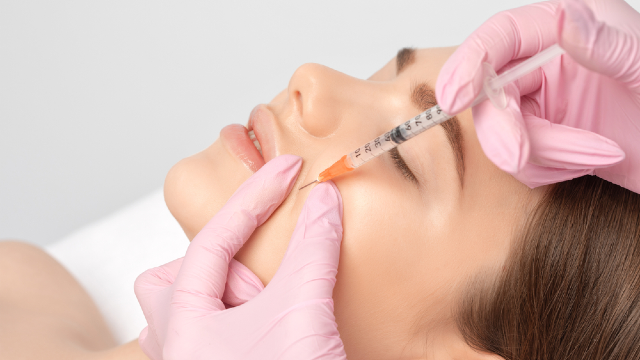
Two materials, two different clocks
The clinic describes Design Contour Filler as a non-surgical, non-cutting treatment that fills wrinkles and sunken areas of the face, with the filler type selected according to the treatment area and purpose. Its account of the result is immediate and adjustable: volume is placed, contour is shaped, and the effect is there to see.
Ellansé it describes differently. This is a collagen stimulator containing polycaprolactone — a synthetic, absorbable polymer usually abbreviated PCL — intended to restore lost facial volume, improve contour and encourage collagen production so that firmness and the appearance of wrinkles improve. It can give an immediate volumizing effect, followed by gradual collagen remodeling over time.
The clinic's own comparison note puts the distinction in one line: hyaluronic acid filler gives immediate volumization and contour correction and can generally be adjusted and, in the case of hyaluronic acid, dissolved with hyaluronidase when clinically appropriate; collagen stimulators such as Ellansé provide initial volume plus a longer-term collagen-stimulating effect, with different reversibility and risk considerations. The clinic states that it lists them as separate services for exactly that reason.
The American Society of Plastic Surgeons, whose patient-education library is written for an American readership, places both in its map of facial rejuvenation as injectable compounds used to improve skin contouring — a different family from resurfacing, from mechanical methods and from muscle-relaxing injections. Holding those families apart is the first step in any injectable decision.
Where the contouring filler is used
The clinic publishes an unusually specific map of areas for its contouring filler, and it is worth reading as a list of problems rather than a menu. Full-face treatment adds volume across the face while excluding the under-eye area and lips. Eye-area work addresses under-eye shadowing and aegyo-sal volume. Forehead treatment addresses a sunken or flat forehead and forehead lines. Frown-line treatment addresses the deep lines that repeated expression creates. Cheek treatment restores volume to sunken cheeks, chin treatment adds dimension and improves facial balance, lip treatment adds volume to thin or flat lips, and nose treatment addresses the appearance of a low bridge or a hooked shape.
Its stated candidates follow from that list: patients concerned about sunken cheeks or lost facial volume, a flat or lined forehead, glabellar lines, volume-deficient cheekbones, a low nose bridge, thin lips, a blunt chin shape, or under-eye shadowing and volume loss.
The clinic's framing of what it is doing is contouring rather than filling — its material describes the approach as not only adding volume but creating contour effects through customized placement. That is a meaningful distinction at the consultation stage, because it changes what is being assessed: proportion and balance across the face, not just the depth of one hollow.
Where the collagen stimulator is used

Ellansé's stated candidates are adults with mild to moderate volume loss, facial contour imbalance, selected wrinkles or folds, or age-related loss of firmness who want injectable facial rejuvenation. The consultation the clinic describes covers medical history, facial examination, assessment of volume loss and asymmetry, skin and tissue quality, facial proportions and the patient's aesthetic goals.
Placement is a physician judgment rather than a standard depth: the clinic's procedure description has the product injected into a physician-selected tissue plane using an appropriate needle or cannula technique, then distributed and contoured according to the plan before the injection sites are checked.
On timing, the clinic states that initial volume and contour improvement can be visible relatively soon after injection, while collagen-related remodeling develops progressively over the following weeks, and it cites published literature describing collagen becoming more apparent roughly five to eight weeks after treatment.
Reversibility is the real asymmetry
If you take one thing from this comparison, take this. A hyaluronic acid filler can generally be adjusted, and can be dissolved with hyaluronidase where that is clinically appropriate. A polycaprolactone collagen stimulator is not readily reversible — the clinic states this plainly, and it is why the two are listed apart rather than presented as interchangeable options.
That asymmetry should change how you approach a first treatment. A material that can be undone forgives a cautious trial; a material that cannot rewards a conservative first pass and a review later. It also raises the value of the assessment, because the decision about plane, product and volume is harder to revisit.
How long each lasts
For the contouring filler the clinic states that results are usually visible within a few days, the final result is usually reached within one to two weeks, and the effect typically lasts from several months up to around a year depending on the product used, with exact duration varying by individual skin, tissue and healing characteristics. Both treatments are short: the clinic gives fifteen to thirty minutes as the typical procedure time for each, under topical numbing cream or ice, with the exact approach confirmed at consultation.
For Ellansé the clinic does not attach a single duration to the service, and that restraint is deliberate rather than evasive: its stated realistic outcome is improvement matched to the individual starting point rather than a standard result. What it does state clearly is what cannot be promised — a specific measurable degree of change, an identical result to another patient's, symmetry, or freedom from needing further treatment.
Risks, including the rare serious one
Both treatments share a set of common, temporary reactions: redness, swelling, tenderness, pain, bruising, itching and injection-site discomfort, with small lumps or irregularities also possible. For Ellansé the clinic adds discoloration and temporary nodules or induration at injection sites, and notes a randomized study of Ellansé-M for nasolabial folds in which injection-site swelling, pain and redness resolved within thirty minutes.
The serious risk is the same for any injectable of this kind and is stated by the clinic for both: material entering a blood vessel can cause tissue ischemia or death of tissue and, in very rare cases, visual or neurological complications, including impairment of vision. The clinic also lists infection, prolonged swelling, asymmetry, lumps or nodules, over- or under-correction and inflammatory reactions.
Neither treatment suits everyone. Pregnancy or breastfeeding and a known allergy to the product are stated reasons to postpone in both cases, with active infection or inflammation at the treatment site added, and for Ellansé also uncontrolled diabetes, significant bleeding or coagulation disorders and certain autoimmune conditions. The clinic's general risk-reduction position for injectables reflects published expert guidance: appropriate anatomical knowledge, correct injection depth and technique, careful patient selection, and treatment by an appropriately trained injector.
Aftercare for both is brief: avoid touching or massaging the treated area, strenuous exercise and heat exposure for about twenty-four hours, with Ellansé adding that make-up, saunas, strong sun, swimming or bathing and alcohol should be avoided over that first day.
The argument for restraint
The clinic's published position on injectables is not a maximalist one, and it is a useful counterweight to the way this category is usually marketed. Dr. Kim Ki-Tae's documented view is that a youthful face is not achieved by the absence of wrinkles and taut volume alone; that natural facial expression must be preserved even if some wrinkles remain; and that excessive filling restricts natural facial movement. In the clinic's own framing, restraint is part of a good result rather than a limitation on one.
That is worth holding alongside the reversibility point. A cautious first treatment with an adjustable material, reviewed after the swelling settles, is a defensible plan. Filling to the maximum the anatomy will accept is a decision that is much harder to walk back with a material designed to stay.
Making the decision
The clinic's stated process for the contouring filler is an evaluation of the treatment area, the volume concern and the desired outcome, in order to select the filler type and approach. For Ellansé it is a fuller facial assessment including tissue quality and proportion. In both cases the product is an output of the assessment, not an input to it.
Some context helps before you arrive. the National Library of Medicine publishes patient guidance through MedlinePlus recording that skin thins over the years and surrenders fat, leaving it less full than it was. The society's facelift material names fat that has fallen or disappeared as one of the changes surgery addresses — and notes that fat transfer or fillers may be suggested to replace lost fatty volume. Volume loss, descent and surface damage are three different problems, and injectables answer one of them well.
To put your own face in front of someone, the online consultation and booking page is the route; the practice itself is described on its clinic background page.
The Bottom Line
- The contouring filler gives immediate, adjustable volume; Ellansé is a polycaprolactone collagen stimulator whose main effect develops over weeks.
- Reversibility is the decisive asymmetry: hyaluronic acid can generally be dissolved when clinically appropriate, while the collagen stimulator is not readily reversible.
- The clinic states the contouring filler's effect typically lasts from several months up to around a year depending on the product, and publishes no fixed duration for the collagen stimulator.
- Both carry the same rare but serious injectable risk — material entering a blood vessel, with possible tissue loss and, very rarely, visual complications.
- The clinic's published position favors restraint, on the grounds that preserving natural facial expression matters more than removing every wrinkle.
FAQ
Which one lasts longer?
The clinic gives a figure only for the contouring filler: several months up to around a year, depending on the product used. For the collagen stimulator it describes improvement matched to the individual starting point, with collagen-related change developing progressively and published literature putting the collagen response at roughly five to eight weeks.
Can either treatment be undone?
Hyaluronic acid filler can generally be adjusted, and dissolved with hyaluronidase where that is clinically appropriate. The clinic states that the collagen stimulator is not readily reversible, which is the main reason the two are treated as separate services rather than alternatives of equal weight.
How soon will I see a result?
For the contouring filler the clinic states that results are usually visible within a few days, with the final appearance reached within one to two weeks. The collagen stimulator can give visible volume relatively soon after injection, with its characteristic effect developing over the weeks that follow.
What are the serious risks?
For both, the rare but serious complication is material entering a blood vessel, which can cause tissue ischemia or tissue death and, in very rare cases, visual or neurological complications. More common effects are temporary: redness, swelling, tenderness, bruising, itching and small lumps.
Who should not have these injections?
Pregnancy or breastfeeding, a known allergy to the product, and active infection or inflammation at the treatment site are stated reasons to postpone either. For the collagen stimulator the clinic adds uncontrolled diabetes, significant bleeding or coagulation disorders and certain autoimmune conditions.
How long does the appointment take?
The clinic gives fifteen to thirty minutes as the typical procedure time for each, performed under topical numbing cream or ice, with exact timing depending on the plan agreed at consultation.
What should I avoid afterwards?
Touching or massaging the treated area, strenuous exercise and heat exposure for about twenty-four hours. For the collagen stimulator the clinic also advises avoiding make-up, sauna and strong sun, swimming or bathing, and alcohol during that first day.
How does the clinic decide which to use?
By assessment rather than preference. For the contouring filler the clinic evaluates the treatment area, the volume concern and the desired outcome before selecting the product; for the collagen stimulator it assesses medical history, volume loss, asymmetry, tissue quality, facial proportions and goals.
This article is for general informational purposes and does not constitute individualized medical advice, and it is not a self-diagnosis tool. The treatments described are delivered in the Republic of Korea under Korean medical licensure rather than United States licensure. Speak with a qualified plastic surgeon about your own anatomy and medical history before making any treatment decision.
References
- ASPS: Dermal Fillers
- ASPS: Skin Rejuvenation and Resurfacing
- ASPS: Botulinum Toxin
- ASPS: Facelift Surgery
- MedlinePlus: Skin Aging