Personalized plastic surgery, laser & anti-aging care in Haeundae, Busan
en-US

ELSA Ultrasound Fat Reduction Korea: How the Probe Works
ELSA ultrasound fat reduction in Korea uses a 0.9mm probe and selective cavitation to reduce small, localized fat deposits without a surgical incision.
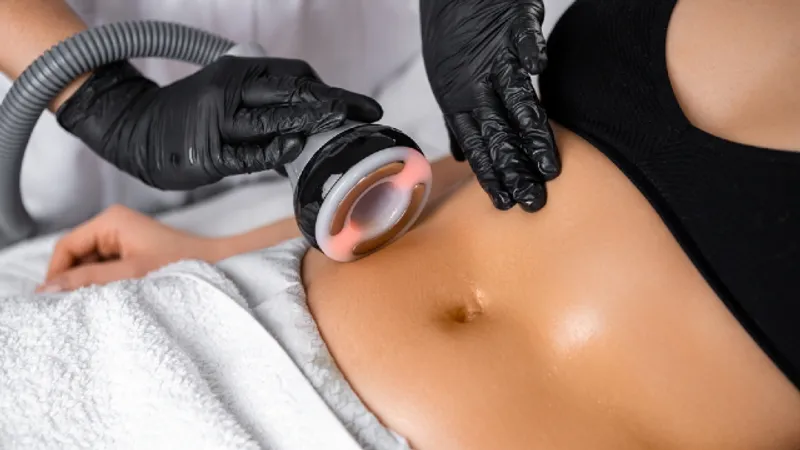
ELSA Ultrasound Fat Reduction: What a 0.9mm Probe Changes
Medically reviewed by Dr. Kim Ki-Tae, Board-Certified Specialist in Plastic Surgery, issued by the Korean Society of Plastic and Reconstructive Surgeons
ELSA ultrasound fat reduction in Korea answers a question that most fat-removal pages skip: what do you do when the amount of fat in the way is small, the area is delicate, and the last thing the face needs is a cannula sized for a thigh. ELSA uses ultrasonic energy to break fat cells apart and delivers that energy through a probe 0.9mm across. At TAE Plastic Surgery Clinic in Haeundae, Busan, it sits in the fat and body contouring range as a distinct option from surgical fat removal. This article explains the mechanism, the probe, and what the treatment can and cannot be expected to do.
What ultrasound does to a fat cell
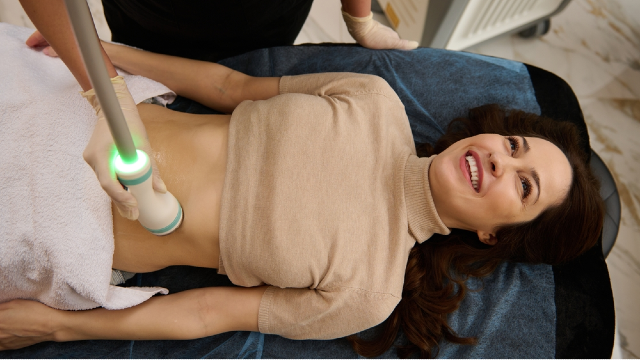
The working principle is mechanical rather than thermal. A tumescent solution is placed into the fat layer first. The probe then vibrates at ultrasonic speed, and those vibrations create bubbles that expand and collapse in the fluid around the fat cells. That cycle separates the cells and mixes them into the surrounding solution. Where the treatment is being used on the body, the emulsified fat is then drawn out through a suction cannula; on the face, that removal step may be left out altogether.
The clinic describes this as selective cavitation, and the word "selective" is carrying the important idea. The energy is aimed at the membranes of fat cells rather than at bulk heating of tissue, and because it does not depend on high thermal heat, the clinic states that internal bleeding, bruising and skin irregularity are less likely than with methods that work by melting fat. Fibrous tissue in the area is preserved rather than destroyed, and that surviving scaffolding is what supports the skin contracting down onto the new contour afterward.
The probe, and why 0.9mm is the headline
ELSA's probe is described as having the world's smallest diameter at Φ0.9mm — thinner than a hypodermic needle — and the device offers five probe sizes matched to different regions of the body. That single specification is what makes the rest of the treatment possible.
A wider instrument cannot be steered accurately through a small facial compartment, and the entry point it needs is large enough to require closing. A 0.9mm probe enters through a puncture, which is why the clinic can describe facial fat removal here as taking place without incisions. It also changes what counts as a worthwhile target: instruments sized for the abdomen make small, precise reductions difficult to control, whereas a fine probe makes the jawline and similar contained areas practical to treat.
Small volumes, and why they still show
The clinic states that a noticeable change in facial contour can be achieved even after removing approximately 1–2cc of facial fat. That number surprises people, and it is worth pausing on. On a face, the structures that read as definition — the line of the jaw, the shadow beneath the cheekbone — sit within a few millimeters of one another. Removing a small, correctly chosen volume from the right compartment alters those shadows. Removing a larger volume from the wrong one does not improve the face; it hollows it.
This is also why the treatment is described as fundamentally reducing the number of fat cells in the treated area rather than only shrinking them. The clinic states that extracted cells do not come back, with immediate contour change appearing as swelling resolves and the clearest definition arriving at around three months.
Where it sits against surgery
It would be easy to read a nonsurgical option as a softer version of a surgical one. The American Society of Plastic Surgeons is direct that this is the wrong frame: nonsurgical and minimally invasive fat reduction covers technologies using heat, cooling or an injected medication, and while none of them is a replacement for liposuction, they give options to patients unwilling or unable to have surgery.
TAE Plastic Surgery Clinic keeps the same boundary in its own service list, where ultrasound fat reduction and surgical fat removal are separate entries rather than tiers of one offering. The clinic's framing is that ultrasound reduction is the better fit where fat is localized and the volume involved is modest, while a surgical approach is considered when more direct or substantial removal is required. Deciding which side of that line you fall on is the point of the consultation, not something to settle in advance — and an assessment starts through the clinic's contact and booking page.
Who it suits, and who should wait
Suitable candidates are generally people wanting to improve contour by reducing localized fat, and specifically those whose target is a small volume in a defined area. The clinic names poor skin elasticity as a reason the treatment may not be appropriate, along with active skin infection and unmanaged systemic disease. Anyone seeking substantial overall weight loss is looking at the wrong treatment entirely.
Treatment is postponed during pregnancy and breastfeeding, and where there is active infection or inflammation at the site. Suitability is confirmed individually, and for an international patient the process typically begins with a remote review of photographs before the plan is finalized in person.
What a session involves, and the anesthesia used
Treatment takes one to two hours per target area and is normally completed in a single outpatient session, with one or two progress checks afterward. Anesthesia is local: tumescent anesthetic is placed into the treatment layer, and for multi-area treatments this is frequently combined with conscious intravenous sedation.
Downtime is minimal. Any redness usually settles within a few hours to a day, and most patients can fly home the same day or the next, with long-haul timing confirmed by the treating doctor for the individual case. Aftercare involves wearing lightweight elastic bandages or a targeted chin or body strap, keeping an eye on the small probe entry sites, staying well hydrated to help the body clear the fluid, and attending any post-treatment acoustic or LED sessions the clinic schedules.
How the treatment is chosen, and what it is combined with

The clinic's stated approach is to select treatment from the concern rather than apply one technology to everyone, which is easier to claim than to demonstrate. Here the demonstration is structural: ultrasound fat reduction, surgical fat removal and body lifting are maintained as three separate entries in the same category, so a patient can be matched to one of them instead of being routed to whichever the practice happens to own. The clinic also holds a broader set of energy-based equipment, including the ONDA and Fascella systems, which widens the range of what can be proposed for a given problem.
Combination is common rather than exceptional. The clinic's material records ultrasound fat reduction being paired with thread lifting where the target is the area under the chin and the jawline needs tightening as well as reducing, and with muscle-stimulating energy devices where body sculpting is the goal. Whether any combination is appropriate depends on the individual assessment, and combining treatments in one visit is a decision made with the doctor rather than assembled from a menu.
What a consultation is actually for, in this treatment more than most, is agreeing the target. Reviewing medical history, goals and any previous treatment comes first; then the area itself is assessed to confirm which approach fits. For international patients that sequence usually begins with a remote look at photographs and ends with the plan being confirmed in person before anything is done.
Risks, and what recovery actually feels like
The common effects are temporary: swelling, mild bruising, localized numbness, a small collection of fluid, or temporary unevenness of the skin surface. Energy-based body treatments carry a broader potential list that the clinic states openly — pain or sensitivity, swelling, skin irritation, burns or other energy-related tissue injury if treatment is inappropriate or excessive, contour irregularity, and improvement that falls short of what was hoped.
How quickly any of that resolves differs from person to person. Recovery pace is genuinely individual, and the clinic reviews it at follow-up rather than predicting it in advance. MedlinePlus, the National Library of Medicine's consumer health service, makes the general point that cosmetic procedures are medical procedures with real risks, and that the decision deserves the same seriousness as any other medical one.
What results are realistic
Realistic expectations are localized contour improvement in appropriately chosen areas. The clinic is explicit that this treatment should not be presented as a substitute for substantial weight loss, and that the degree of improvement varies with fat distribution, the area treated and individual response.
What cannot be promised is a specific measurable degree of change, a result identical to someone else's, perfect symmetry, or freedom from needing further treatment. The clinic publishes no outcome guarantee for this service. The American Academy of Dermatology recommends establishing, before any cosmetic treatment, who will perform it and what result is realistic in your individual case — advice that applies with particular force to a treatment whose effect is measured in cubic centimeters. Wider context on the practice itself is available on the about the clinic page.
The Bottom Line
- ELSA uses ultrasonic vibration to separate fat cells mechanically rather than by melting them, with the emulsified fat suctioned out on the body and sometimes left to clear on the face.
- The probe measures 0.9mm across, thinner than a hypodermic needle, which is what allows facial fat removal without an incision; five probe sizes cover different regions.
- The clinic states that removing approximately 1–2cc of facial fat can produce a noticeable contour change.
- It is not a replacement for surgical fat removal, and the clinic lists the two as separate options rather than as tiers of the same service.
- Downtime is minimal, the clearest definition arrives at around three months, and no outcome guarantee is published.
FAQ
How does ultrasound remove fat without melting it?
The probe vibrates at ultrasonic speed, creating bubbles in the surrounding fluid that expand and collapse. That mechanical cycle separates fat cells and mixes them into the tumescent solution. Because the effect does not rely on high heat, the clinic describes reduced risk of internal bleeding, bruising and skin irregularity compared with thermal methods.
Why does the probe diameter matter so much?
At 0.9mm the probe enters through a puncture rather than an incision, which is what makes facial work practical, and it can be steered accurately inside small compartments. Five probe sizes are available so the instrument can be matched to the region being treated.
Can such a small amount of fat really make a difference on the face?
The clinic states that a noticeable contour change can follow the removal of roughly 1–2cc of facial fat. Facial definition depends on shadows cast by structures only millimeters apart, so a precisely chosen small volume changes more than the number suggests.
Is this the same as liposuction?
No. The clinic lists ultrasound fat reduction and surgical fat removal as separate services. The American Society of Plastic Surgeons states plainly that nonsurgical fat reduction is not a replacement for liposuction, though it provides an option for people who are unwilling or unable to have surgery.
What anesthesia is used?
Tumescent local anesthetic is placed into the treatment layer. For treatments covering more than one area, that is frequently combined with conscious intravenous sedation.
How long is the downtime?
Minimal. Redness at the treated area generally settles within a few hours to a day, and most patients can fly home the same day or the next, with timing for a long flight confirmed by the treating doctor.
When will I see the final contour?
Change appears as swelling resolves, with the clearest definition at around three months. The clinic states that extracted fat cells do not return, though maintaining a stable weight is what preserves the result.
This article is for general informational purposes and does not constitute individualized medical advice, and it is not a self-diagnosis tool. Care described here is delivered in the Republic of Korea under Korean medical licensure rather than United States licensure, and the clinic is closed on Sundays and observes a daily lunch break, which affects scheduling for short international trips. Speak with a qualified plastic surgeon about your own circumstances before making any treatment decision.
References
- American Society of Plastic Surgeons: Nonsurgical Fat Reduction
- American Society of Plastic Surgeons: Liposuction
- MedlinePlus: Plastic and Cosmetic Surgery
- American Academy of Dermatology: Questions to Ask
- American Academy of Dermatology: Cosmetic Treatments
- MedlinePlus: Skin Conditions