Personalized plastic surgery, laser & anti-aging care in Haeundae, Busan
en-US

HALO Laser Korea: Two Wavelengths in One Treatment Pass
HALO laser in Korea delivers 2940nm and 1470nm wavelengths in the same pass to treat surface and deeper skin. How it works at TAE in Haeundae, Busan.
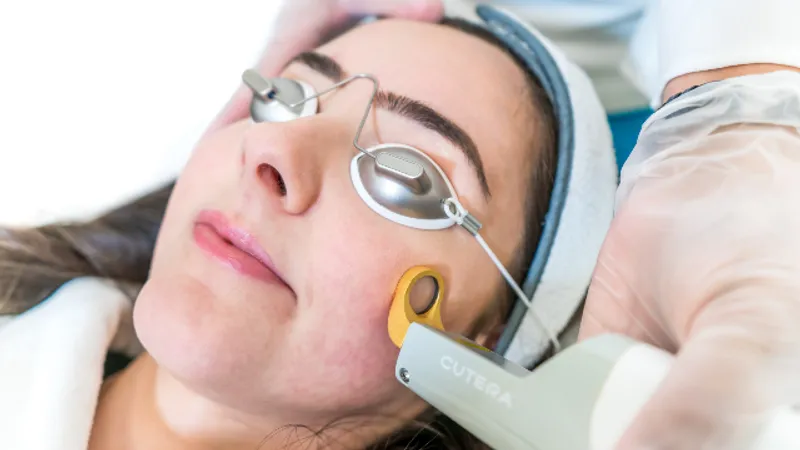
HALO Laser in Korea: How a Hybrid Fractional Laser Treats Two Depths
Medically reviewed by Dr. Kim Ki-Tae, Board-Certified Specialist in Plastic Surgery, issued by the Korean Society of Plastic and Reconstructive Surgeons
HALO laser in Korea appeals to a particular kind of patient: someone who already knows the device from home, who has pigmentation and texture and pores to deal with rather than one isolated complaint, and who is not willing to disappear for two weeks afterward. HALO is a hybrid fractional laser, meaning it delivers an ablative and a non-ablative wavelength together in the same treatment. TAE Plastic Surgery Clinic in Haeundae, Busan uses it as a dual-layer treatment addressing surface and deeper concerns in one procedure, and this article explains what that means in practice.
Two wavelengths, and the depths they reach
The specification is the reason this device exists, so it is worth stating precisely. HALO delivers a 2940nm Erbium:YAG wavelength and a 1470nm wavelength simultaneously. The 2940nm wavelength is strongly absorbed by water and works in the epidermis, at roughly 20 to 100 micrometers, which is the layer where pores and surface scarring live. The 1470nm wavelength reaches deeper, into the dermis at roughly 100 to 700 micrometers, where it supports regeneration of elastic fibers including collagen and elastin.
Two problems therefore get addressed in one pass rather than in two separate treatments. That is the practical difference from a conventional fractional laser, which generally works at one characteristic depth and manages everything else through settings and technique. The clinic emphasizes this simultaneity specifically: surface improvement of pores and scarring through the epidermal component, and deeper stimulation of collagen and elastin through the other.
The device also carries an energy delivery system that measures speed and temperature in real time, so that energy is laid down evenly across the treated area rather than varying with how fast the handpiece happens to be moving. Uniformity matters more than peak power in a fractional treatment, because unevenness is what shows.
What "hybrid fractional" means for the skin
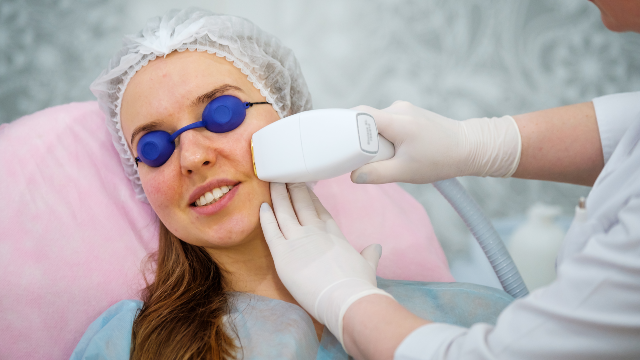
The American Society of Plastic Surgeons describes laser resurfacing generally as using concentrated pulses of light to take away damaged skin one precise layer at a time. Its account of the mechanism is that the beam removes the outer layer, the epidermis, while simultaneously heating the dermis underneath, which prompts new collagen fibers to form; as the area heals, the skin that replaces it is smoother and firmer.
"Fractional" adds one further idea. Rather than treating the whole surface, the energy is delivered in a pattern of microscopic columns with untreated skin in between, so healing proceeds from the surrounding tissue. That is what keeps recovery from a resurfacing treatment measured in days rather than weeks. The American Society of Plastic Surgeons also notes that the targeted nature of laser resurfacing means fewer problems with lightening of the skin than blunter methods produced.
What it is used to treat
The clinic's list is broad because the two wavelengths cover different territory: fine lines and wrinkles, pigmentation, sun damage, enlarged pores, acne scars, uneven texture, skin tone and overall clarity. The device is described as suitable for treatment of the face and the body.
Treatment settings are adjusted to the skin in front of the clinician rather than fixed, which is what allows the same device to be used for a patient wanting a light treatment with almost no visible recovery and for one accepting more downtime in exchange for a stronger effect. That adjustment is the substance of the consultation, and it is decided from skin condition, the concerns being treated, lifestyle and how much downtime is acceptable.
Who it suits, and who should wait
Adults concerned about wrinkles, sun damage, pigmentation, uneven texture, acne scars, enlarged pores or general skin aging are the described candidates. Against that, treatment may be unsuitable for people with active skin infections, uncontrolled inflammatory skin conditions, certain photosensitivity disorders, or medical factors that impair healing. A clinician assesses skin condition, medications, medical history and goals before treatment rather than after.
The American Academy of Dermatology's standing advice for any cosmetic treatment applies here: find out who will be performing it and what outcome is realistic for your particular skin. With a resurfacing laser there is a third question worth asking — what setting is being proposed and what recovery does that setting imply, since those two are the same decision seen from different sides. An individual assessment is arranged through the clinic's enquiry form.
The session itself
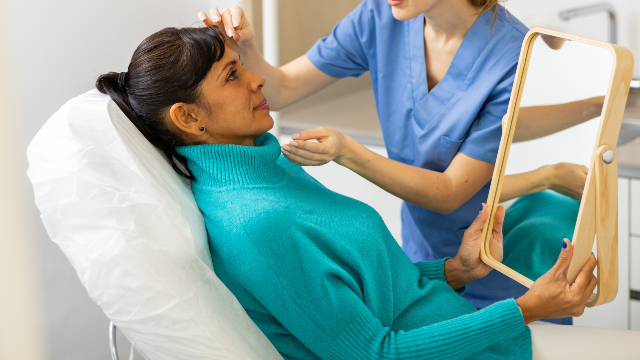
A session generally runs thirty minutes to an hour depending on the area and the settings. A topical anesthetic is normally applied beforehand rather than nerve blocks, and the device's integrated cooling contributes to comfort during treatment. Patients commonly describe warmth or a stinging sensation during the pass; how much varies with the settings chosen and individual sensitivity.
Downtime, and what days four and five look like
Typical downtime is around three to five days, though it varies with treatment intensity. Redness and swelling generally begin improving within several days. The distinctive part comes slightly later: microscopic epidermal debris sheds around days four to five, which patients often notice as a fine sandpaper-like texture before the skin settles. Temporary darkening of treated areas and mild peeling are also normal parts of that sequence rather than signs of a problem.
Knowing that shape in advance changes how the treatment is scheduled. A social commitment on day four is the one to move.
Aftercare, and why sun protection is not optional here
The clinic asks for gentle cleansing and moisturizing as instructed, no rubbing or scratching of treated skin, and consistent sunscreen use, with direct sun avoided during early healing. Heat exposure, vigorous exercise, harsh products and exfoliation are also set aside until the skin has recovered.
There is a specific reason sun protection carries more weight after a resurfacing treatment than in ordinary skincare. Skin that has just had its outer layer treated is more reactive to ultraviolet exposure, and pigmentation is one of the things the treatment was performed to improve. The American Academy of Dermatology's guidance on treating wrinkles and photoaging consistently places sun protection alongside any in-office treatment rather than as an alternative to it.
Results, and how long they hold
Initial results can be visible within two to five days. Pigment and general skin quality may continue improving over subsequent weeks and months, and a subtle improvement often appears within the first few sessions of a recommended course, building as the course progresses.
The clinic states that results can last for years, while being clear that continuing ultraviolet protection and maintenance treatments help preserve them. What it does not claim is complete removal of pigmentation, scars, wrinkles or pores — those can be improved, and the degree and duration of improvement differ from person to person.
Fitting it into a trip
The visit shape is unusually forgiving for an international patient. The procedure takes thirty minutes to an hour per session, and the clinic advises that a stay of as little as a single day can be practical because downtime is minimal, with the exact schedule confirmed case by case. Typical practice is a follow-up check after the final session of the recommended course.
Where a course rather than a single session is recommended, that changes the planning question entirely, and it is the thing to establish before booking rather than after arriving. Wider background on the practice is published on the practice information page.
How it compares with the other resurfacing options
Patients researching this device usually meet a list of alternatives: fractional carbon dioxide or Erbium resurfacing, non-ablative fractional lasers, intense pulsed light, microneedling and chemical peels. Each occupies a different point on the same trade-off, which is how much of the skin's surface is removed against how long the recovery takes.
What distinguishes a hybrid fractional treatment on that scale is that it takes both positions at once — an ablative wavelength for the surface and a non-ablative one for the deeper layer — so the resurfacing effect does not have to be bought entirely with downtime. That is the argument for it, and it is a real one, but it is a matter of balance rather than of escaping the trade-off. A stronger setting still means a longer recovery, and a patient who wants no visible recovery at all is choosing a lighter treatment and a smaller change.
The right comparison is therefore not between devices in the abstract but between what each one would mean for your skin and your calendar. That is a conversation to have with the person who will examine you, and it is worth going into it knowing which concern you most want addressed, because a treatment optimized for pigmentation and one optimized for texture are not set up the same way.
Risks worth knowing
Common effects are temporary: redness, warmth, swelling, tightness, sensitivity, dryness and the rough or peeling texture described above. The potential risks are prolonged redness, infection, changes in pigmentation, burns, scarring or delayed healing, and how likely any of them are depends on skin type, treatment intensity and how carefully aftercare is followed.
Those risks are managed through proper skin assessment, appropriately chosen settings, hygiene measures and clear instructions before and after — which is to say that most of the risk control happens before the device is switched on.
The Bottom Line
- HALO delivers 2940nm and 1470nm wavelengths in the same pass: the first works in the epidermis at roughly 20–100 micrometers, the second in the dermis at roughly 100–700 micrometers.
- That combination treats surface concerns such as pores and scarring alongside deeper collagen and elastin support, rather than one or the other.
- Typical downtime is three to five days, with microscopic epidermal shedding around days four to five.
- Settings are adjusted to skin condition and acceptable downtime, so the same device covers light treatments and stronger ones.
- Results can be long-lasting with continued sun protection, but complete removal of pigmentation, scars, wrinkles or pores is not claimed.
FAQ
What does "hybrid fractional" actually mean?
Hybrid refers to combining an ablative and a non-ablative wavelength in one treatment. Fractional means the energy is delivered in microscopic columns with untreated skin in between, so healing proceeds from the surrounding tissue and recovery is measured in days.
Why two wavelengths instead of one?
Because the concerns sit at different depths. The 2940nm wavelength is absorbed in the epidermis, at around 20–100 micrometers, addressing pores and surface scarring; the 1470nm wavelength reaches the dermis at around 100–700 micrometers to support collagen and elastin. Delivering both in one pass treats both layers in one appointment.
How long is the downtime?
Around three to five days typically, varying with intensity. Redness and swelling improve within several days, and microscopic epidermal debris sheds around days four to five, which feels like a fine sandpaper texture before the skin settles.
Does it hurt?
Warmth, stinging or some discomfort during treatment is normal, with the level depending on settings and individual sensitivity. A topical anesthetic is generally applied beforehand, and the device's integrated cooling helps.
How many sessions will I need?
That depends on the concerns being treated and the settings used. A subtle improvement often appears within the first few sessions and builds across a recommended course, with a follow-up check after the final session.
Can I have this on a short trip?
Often yes — a session takes thirty minutes to an hour and the clinic advises that as little as a single day can be practical, because downtime is minimal. If a course is recommended rather than a single treatment, plan around that instead.
Will the results last?
The clinic states results can last for years, with continued ultraviolet protection and maintenance treatments helping preserve them. Complete removal of pigmentation, scars, wrinkles or pores is not claimed, and the degree of improvement varies between people.
This article is for general informational purposes and does not constitute individualized medical advice, and it is not a self-diagnosis tool. Care described here is delivered in the Republic of Korea under Korean medical licensure rather than United States licensure, and the clinic is closed on Sundays and observes a daily lunch break, which affects scheduling for short international trips. Speak with a qualified plastic surgeon about your own circumstances before making any treatment decision.
References
- American Society of Plastic Surgeons: Laser Skin Resurfacing
- American Academy of Dermatology: Wrinkle Treatment
- American Academy of Dermatology: Cosmetic Treatments
- American Academy of Dermatology: Questions to Ask
- MedlinePlus: Skin Conditions
- MedlinePlus: Plastic and Cosmetic Surgery