Personalized plastic surgery, laser & anti-aging care in Haeundae, Busan
en-US

HALO Laser vs Non-Ablative Fractional Laser Treatment
How a hybrid fractional laser differs from single-wavelength fractional treatment, what each addresses, and the questions that settle the choice in Korea.
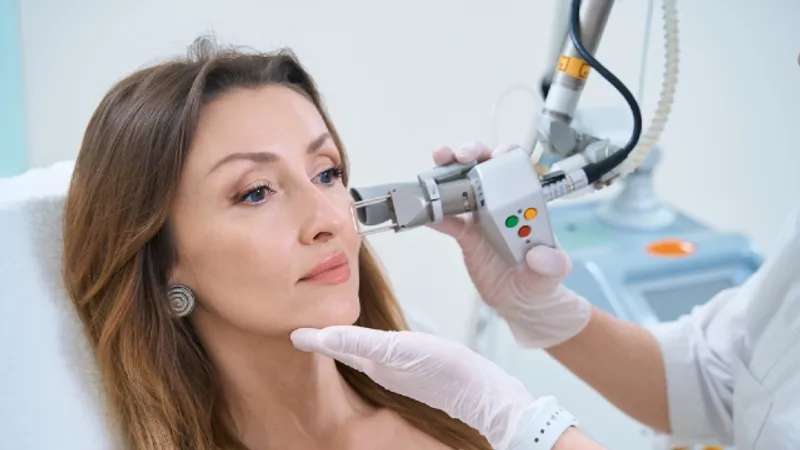
HALO Laser vs Non-Ablative Fractional Lasers: How to Compare Them
Medically reviewed by Dr. Kim Ki-Tae, Board-Certified Specialist in Plastic Surgery, issued by the Korean Society of Plastic and Reconstructive Surgeons
If you are weighing a hybrid fractional laser against a conventional non-ablative fractional treatment, the useful question is not which device is stronger. It is how much of the skin's thickness each one is designed to reach, and how many days you are prepared to look treated. Those two variables account for most of the difference, and this article works through them using the material TAE Plastic Surgery Clinic publishes about its own laser range and the public patient education that describes the wider category. This is a comparison framework, not a diagnosis.
What "fractional" means before you compare anything
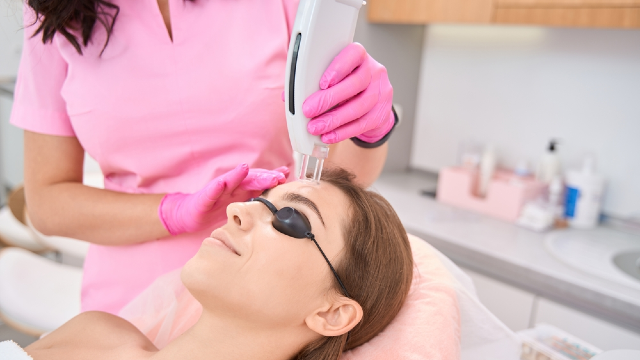
A fractional laser does not treat the whole surface of the skin at once. It treats it in columns, leaving untreated tissue in between, so the area that has to heal is a fraction of the area that has been influenced. That single design choice is why fractional treatment recovers faster than treating an entire field.
The American Society of Plastic Surgeons, the largest professional body of board-certified plastic surgeons in the United States, groups skin rejuvenation into families that are worth holding separate in your mind: laser and intense pulsed light treatments; ablative laser treatments including fractional and CO₂ devices, which take away surface layers to soften lines; mechanical methods such as dermabrasion; non-ablative treatments including microdermabrasion and microneedling; injectable products; and chemical peels, which the society describes as using a chemical solution to improve texture and tone by taking away damaged layers.
Two of those families matter here. Ablative fractional treatment removes tissue in its treated columns. Non-ablative fractional treatment heats tissue in its columns without taking the surface away. Recovery, intensity and the kind of concern each one answers all follow from that distinction.
Where the clinic's hybrid device sits
TAE Plastic Surgery Clinic describes HALO as a hybrid fractional laser: it combines ablative and non-ablative wavelengths in a single treatment, aimed at skin tone, texture, pigmentation, pores, fine lines and sun damage, and designed to deliver visible change with relatively limited downtime. The clinic's own framing of the difference is direct — conventional fractional lasers generally work at one wavelength or one depth, while the hybrid approach is intended to address concerns at more than one level of the skin in the same session.
That is the whole of the comparison, stated plainly. A single-wavelength non-ablative fractional laser is a focused instrument: it heats without taking surface tissue away, which is why it is gentler and why its results usually build across a course of sessions. A hybrid device attempts surface refinement and deeper stimulation together, which is why it asks for more recovery than a purely non-ablative treatment and less than a fully ablative one.
The clinic also runs a wider laser program rather than a single machine. Its published equipment list for individually planned laser treatment includes HALO alongside BBL, Chrome Laser, Mosaic 3D, Ruby Laser, Profractional, Virtue RF, Liftera 2 and ONDA, and it states that the technology chosen depends on the treatment objective. The practical consequence for a patient comparing two named devices is that the real decision at consultation is often broader than the two you arrived with.
What each approach is used for
The clinic lists the concerns it treats with the hybrid laser: enlarged pores, pigmentation, uneven skin tone, wrinkles, acne scars and reduced skin elasticity, across face and body. It describes suitable candidates as adults troubled by wrinkles, sun damage, pigmentation, uneven texture, acne scars, enlarged pores or general skin aging, and says settings are adjusted to skin condition, goals and the downtime a patient can accept.
That last clause is the one to hold on to. The same device is not one fixed treatment. Energy settings move the intensity along a range, which means the choice between a hybrid and a non-ablative approach is rarely a hard boundary. It is a question of how much change is wanted and how quickly you need to look ordinary again.
The society's patient material is useful for setting expectations on the concerns themselves. It describes static wrinkles as visible at rest, dynamic wrinkles as expression lines that deepen with movement, pigmentation such as freckles and sun spots as arising mainly from sun exposure, and loss of skin tone as a weakening of the collagen and elastin structures that keep skin firm. Those are different problems with different answers, and a laser is a better tool for some of them than for others.
Recovery is where the two genuinely part company
The clinic states that typical downtime after the hybrid treatment runs to roughly three to five days, varying with the intensity of the session, and that redness and swelling generally begin easing within several days. It describes the common experience as warmth, redness, swelling, tightness and a temporary rough or sandpaper-like feel to the skin. A session itself usually takes thirty minutes to an hour, and topical numbing is generally recommended rather than nerve blocks, with integrated cooling used for comfort.
Non-ablative fractional treatment sits below that. Because no surface tissue is taken away, the visible aftermath is usually milder and shorter, and the trade-off is that a course of sessions is normally needed rather than a single stronger one. The society makes the general version of this point: most skin treatments require a series, and a combination of methods, to reach a good result.
Neither pattern is better. A reader with a fixed date in three weeks and moderate pigmentation is choosing differently from a reader with an open calendar and textural scarring, and both are choosing sensibly.
Risks belong in the comparison
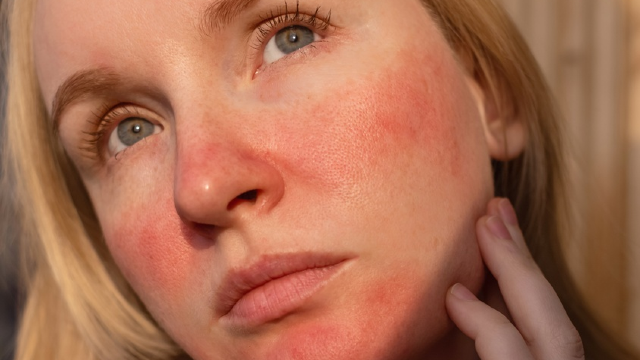
The clinic lists the possible risks of laser treatment as prolonged redness, infection, changes in pigmentation, burns, scarring or delayed healing, and notes that risk varies with skin type, treatment intensity and aftercare. It says risk is reduced by proper skin assessment, appropriate settings and parameters, hygiene measures and clear instructions before and after treatment.
Preparation matters more than most patients expect. The clinic asks patients to avoid sun exposure and tanning beforehand and to pause retinoids and strong exfoliating products for several days, and afterwards to cleanse gently, moisturize, avoid rubbing or scratching treated skin, and use sunscreen consistently. Sun protection is not an optional extra here. The National Library of Medicine's MedlinePlus service, writing on skin aging with material from the National Institute on Aging, describes sunlight as a major cause of skin aging and notes that skin also becomes thinner, loses fat and can take longer to heal with age.
Treatment may need to be postponed for active skin infection, significant irritation or certain skin conditions, and the clinic states that a medical assessment should come first.
What no laser in this comparison will do
Being clear about limits is part of an honest comparison. The clinic states that complete removal of pigmentation, scars, wrinkles or pores cannot be promised; a laser can improve these concerns, and the degree and duration of improvement differ from person to person. The society's material makes a parallel point about a neighboring treatment: a chemical peel cannot treat deep facial lines, meaningfully tighten loose or sagging skin, or take away deep scars.
That last item is the boundary patients most often miss. Fractional laser treatment of either kind addresses skin quality. Pronounced sagging is a different problem, and the society is explicit that surgical correction is a different intervention rather than a stronger setting on a device.
How the decision actually gets made
The clinic's stated process is an assessment of skin condition, pigmentation, texture, scarring, lifestyle and the downtime you can accept, before any settings are chosen. Its wider laser program is described as planned one to one rather than applied from a single standard protocol, with the technology matched to the objective.
In practice that means arriving with a comparison in mind is useful, but arriving with a decision already made is not. Bring the constraint that actually binds you — the wedding, the return flight, the week you cannot take off work — because that is the input a clinician cannot guess. The clinic's appointment and enquiry route is where that conversation is arranged, and readers who want context on the practice before booking will find it set out on the clinic's own profile.
The Bottom Line
- The meaningful difference is not brand against brand but ablative against non-ablative: one takes surface tissue away in its treated columns, the other heats without doing so.
- The clinic positions its hybrid laser as combining both wavelength types in one session, against conventional fractional lasers that generally work at a single wavelength or depth.
- Downtime after the hybrid treatment is stated as roughly three to five days; non-ablative fractional work is usually milder and asks for a course of sessions instead.
- Settings are adjustable, so the choice is a conversation about how much change you want and how much recovery you can absorb, not a fixed either-or.
- Neither approach meaningfully tightens loose skin, and complete clearance of pigmentation, scars, wrinkles or pores is not something any of them can promise.
FAQ
Is a hybrid fractional laser stronger than a non-ablative one?
It is broader rather than simply stronger. The clinic describes it as combining ablative and non-ablative wavelengths so that surface and deeper concerns are addressed together, whereas conventional fractional lasers generally target one wavelength or one depth. Energy settings are adjusted to the individual, so intensity is a range rather than a fixed property of the device.
How long will I look treated?
The clinic states that typical downtime is around three to five days, varying with how intense the session was, and that redness and swelling generally start improving within several days. Warmth, tightness and a temporarily rough skin texture are common during that period.
How many sessions will I need?
That depends on the concern and the intensity chosen. The clinic describes improvement building gradually across a course, with the final result appearing once the recommended course is complete. The American Society of Plastic Surgeons notes that most skin treatments require a series and often a combination of approaches.
Can this treatment tighten sagging skin?
Not meaningfully. Fractional laser treatment of either type is aimed at skin quality — tone, texture, pigmentation, pores and fine lines. The society states plainly that a related resurfacing method cannot significantly tighten loose or sagging skin, and that pronounced laxity is answered surgically rather than by a device setting.
What should I do before and after treatment?
Beforehand, avoid sun exposure and tanning, and pause retinoids or strong exfoliating skincare for several days. Afterwards, cleanse and moisturize gently, keep from rubbing or scratching the treated skin, and use sunscreen consistently. MedlinePlus, the patient information service of the National Library of Medicine, describes sunlight as a major driver of skin aging, so the sun protection is doing real work.
Who should postpone laser treatment?
Anyone with an active skin infection, significant skin irritation or certain skin conditions should postpone, and the clinic asks for a medical assessment before treatment. Photosensitivity disorders and medical factors that impair healing also need to be raised at consultation.
Does the clinic only offer one laser?
No. Its published equipment list for individually planned laser treatment includes HALO alongside BBL, Chrome Laser, Mosaic 3D, Ruby Laser, Profractional, Virtue RF, Liftera 2 and ONDA, and the clinic states that which technology is used depends on the treatment objective.
Is numbing used?
Topical anesthetic is generally recommended for the hybrid treatment rather than nerve blocks, and integrated cooling is used to improve comfort during the session. The exact approach is confirmed at consultation.
This article is for general informational purposes and does not constitute individualized medical advice, and it is not a self-diagnosis tool. The treatments described are delivered in the Republic of Korea under Korean medical licensure rather than United States licensure. Speak with a qualified plastic surgeon about your own skin, your own history and your own timetable before making any treatment decision.
References
- ASPS: Skin Rejuvenation and Resurfacing
- ASPS: Laser Skin Resurfacing
- ASPS: Chemical Peel
- ASPS: Facelift Surgery
- MedlinePlus: Skin Aging