Personalized plastic surgery, laser & anti-aging care in Haeundae, Busan
en-US

How Long to Stay in Korea After Eye Plastic Surgery
Stitch removal falls around five to seven days after eye plastic surgery. That appointment, not the flight, is what sets the length of your stay.
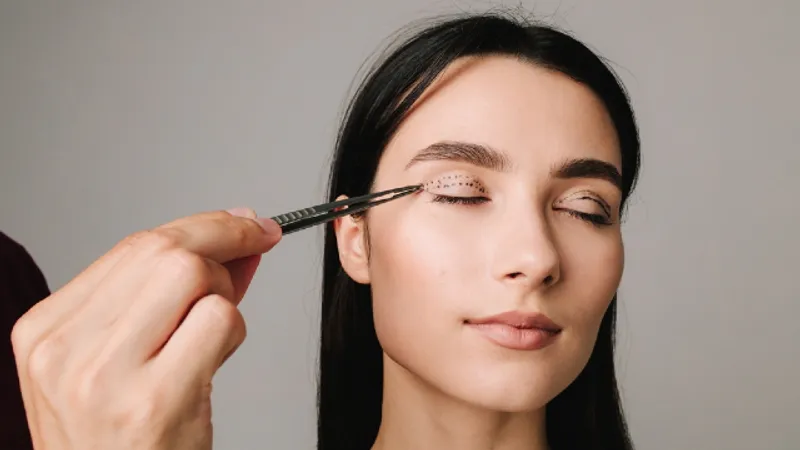
How Long to Stay in Korea After Eye Plastic Surgery
Medically reviewed by Dr. Kim Ki-Tae, Board-Certified Specialist in Plastic Surgery, issued by the Korean Society of Plastic and Reconstructive Surgeons
The question of how long to stay in Korea after eye surgery has a more specific answer than most trip-planning advice suggests, and it does not come from a general rule about flying. At TAE Plastic Surgery Clinic, eye plastic surgery is built around three appointments: consultation, the operation itself, and stitch removal around five to seven days later. That third appointment is the fixed point. Everything else about your schedule arranges itself around it.
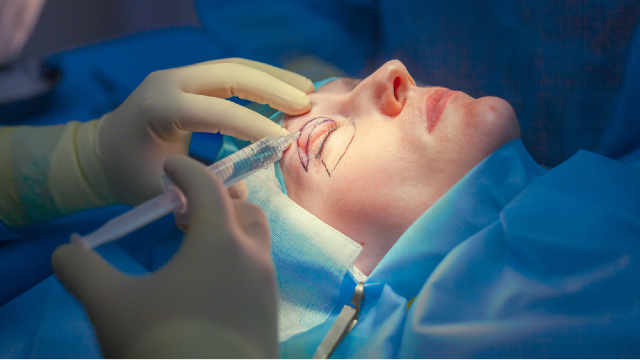
The appointment that sets your dates
Work backward from stitch removal and the shape of the trip becomes obvious. The clinic states that eye plastic surgery requires visits for consultation, for surgery, and for stitch removal five to seven days afterward. The operation itself takes around one to two hours.
So the minimum useful stay is not a number someone invented for a brochure. It is the distance between the day you are operated on and the day the stitches come out, plus whatever margin you want on either side of it for the consultation beforehand and for not being rushed afterward.
That framing matters because it gives you something to plan against. A return flight booked for day four is booked before the surgery is finished, in the sense that it commits you to leaving before the last scheduled step of the procedure has happened. A flight booked with the stitch-removal date already in hand is a different kind of decision.
What the first days actually look like
The early period is dominated by swelling and bruising, and it helps to know that in advance rather than discovering it in a hotel mirror.
The clinic's account of eye plastic surgery recovery is that temporary swelling, bruising, tightness, discomfort, dryness, watering, or blurred vision can occur during recovery. None of that is a sign something has gone wrong; it is the ordinary early course.
The American Society of Plastic Surgeons, whose patient library covers eyelid surgery in its own detail, describes a comparable early picture for blepharoplasty: swelling, bruising, irritation, dry eyes, and discomfort that can be managed with medication, cold compresses, and ointment, along with possible irritation at the incision sites. It also notes that lubricating ointment and cold compresses may be applied immediately after the procedure, and that in some cases the eyes are loosely covered with gauze.
Two independent descriptions converging on the same early course is useful information for anyone deciding how much of their trip to treat as recovery rather than sightseeing.
Two weeks, then a few months
Beyond the stitches, the timeline has two further markers worth understanding, because they explain why the answer to "when will I look like myself again" is not the same as "when can I go home."
The clinic states that initial swelling subsides within about two weeks, and that the first visible structural change appears once that swelling decreases at around the two-week mark. Full settling takes longer: the clinic puts it at two to three months, with final outcomes maturing over several months and lasting for many years.
This is the part patients most often misjudge. Leaving Korea and being finished are different events. You can be perfectly well enough to fly while still looking swollen, and you will very likely still be changing for weeks after you land.
MedlinePlus, the patient-facing service of the National Library of Medicine, makes a related point about the tissue itself: skin thins and loses fat with age, and it can take longer to heal. Healing speed is not uniform across patients, and age is one of the reasons.
The aftercare that runs alongside the schedule
Aftercare is not separate from trip planning; it is part of what you are budgeting time for.
The clinic's instructions for eye plastic surgery are specific:
- Apply cold compresses for the first two days.
- Keep the surgical site clean.
- Avoid heavy lifting or straining.
- Use prescribed eye drops or ointments as directed.
The society adds a point that outlasts the trip: diligent sun protection, including darkly tinted sunglasses, until healing is fully complete. For a patient flying home to a bright climate, that is a practical instruction rather than an afterthought, and it applies well past the date the stitches come out.
Settle the calendar at consultation, not before
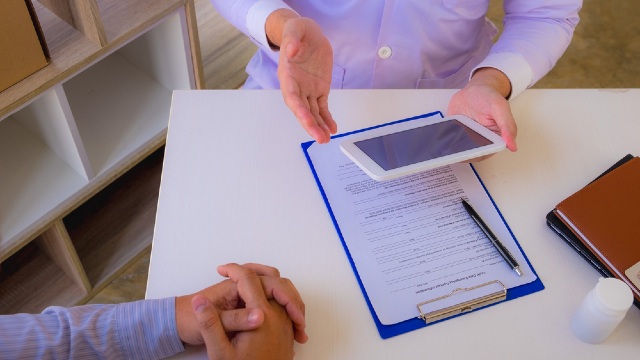
The five-to-seven-day figure is the clinic's stated practice for eye plastic surgery, and the clinic confirms the exact schedule for each case at consultation. That is where the useful conversation happens, and the American Society of Plastic Surgeons suggests the questions almost verbatim in its own recovery guidance — among them whether stitches are removed and when, when normal activity and exercise can resume, and when to return for follow-up care.
Bring those questions with you. They are the ones that convert a general timeline into your timeline.
The society's separate guidance on what a blepharoplasty consultation covers is worth reading alongside them, because a realistic schedule depends on what the consultation establishes: it lists your surgical goals, your medical conditions and any previous eye problems, your current medications, and your previous surgeries as the things to come prepared to discuss, and says the surgeon will evaluate your general health, take photographs, set out the options, and go through likely outcomes and potential risks. A timetable is downstream of all of that.
If you want that conversation before committing to dates, the clinic takes enquiries through its appointment and enquiry page. The practice is in Haeundae, Busan, and its background is set out here.
What can move the dates
Not every eye procedure sits on the same timetable, and the clinic is precise about this.
For a combination of eyelid procedures, the clinic states that recovery varies with the exact combination: a straightforward eyelid procedure may involve visible swelling and bruising for several days to weeks, while more extensive or combined surgery can require longer. Where sutures are used in revision work, removal is commonly around five to seven days, though timing varies by technique, and additional follow-up visits depend on the case.
StatPearls, a peer-reviewed clinical reference made available through NCBI Bookshelf, records that transconjunctival lower-eyelid surgery is not one operation but a set of defined variants, with and without additional maneuvers such as lateral canthal tightening or skin excision. Which variant applies is a clinical finding. It is also, indirectly, a scheduling fact: the more the operation involves, the less safe it is to assume a generic timetable.
The Bottom Line
- Eye plastic surgery at the clinic is structured around three visits: consultation, surgery, and stitch removal five to seven days later.
- The stitch-removal appointment is the anchor for trip length, and the operation itself takes around one to two hours.
- Initial swelling subsides within about two weeks; the first real structural change is visible once that swelling decreases.
- Full settling takes two to three months, so leaving Korea and being finished are separate milestones.
- Combined or revision eyelid procedures can run longer, and the clinic confirms each patient's exact schedule at consultation.
FAQ
When are the stitches removed after eye plastic surgery?
The clinic states that stitch removal occurs around five to seven days after surgery. It is one of the three scheduled visits for eye plastic surgery, alongside the consultation and the operation, and it is the appointment most patients should plan their return travel around.
How long does the operation itself take?
Around one to two hours for eye plastic surgery, according to the clinic. That figure covers the procedure, not the consultation beforehand or the recovery-room observation and discharge instructions that follow it.
When will the swelling go down?
Initial swelling subsides within about two weeks. The clinic states that the first visible structural change appears once swelling decreases at around two weeks, which is why early photographs tend to be misleading.
When is the result final?
The clinic puts full tissue settling at two to three months, with final outcomes maturing over several months. It describes those outcomes as lasting for many years.
What should I expect in the first few days?
Temporary swelling, bruising, tightness, discomfort, dryness, watering, or blurred vision are all described by the clinic as part of recovery. The American Society of Plastic Surgeons describes a similar early course for blepharoplasty and notes these effects can be managed with medication, cold compresses, and ointment.
What aftercare do I need to follow while I am still in Korea?
Cold compresses for the first two days, keeping the surgical site clean, avoiding heavy lifting or straining, and using prescribed eye drops or ointments. The society adds diligent sun protection with darkly tinted sunglasses until healing is complete, which continues after you get home.
Does a combined or revision procedure change the timetable?
Yes. The clinic states that recovery varies with the exact combination of procedures, that a straightforward eyelid procedure may show swelling and bruising for several days to weeks, and that more extensive or combined surgery can require longer. Suture removal in revision work is commonly around five to seven days, with timing varying by technique.
Who confirms my actual schedule?
The clinic confirms the exact schedule for each case at consultation. The five-to-seven-day stitch-removal figure is its stated practice for eye plastic surgery, and your own dates are set against your procedure and your healing.
This article is for general informational purposes and does not constitute individualized medical advice, and it is not a self-diagnosis tool. The treatments described are delivered in the Republic of Korea under Korean medical licensure rather than United States licensure. Speak with a qualified plastic surgeon about your own procedure, your healing and your travel plans before fixing any dates.
References
- ASPS: Eyelid Surgery
- ASPS: Eyelid Surgery Recovery
- ASPS: Eyelid Surgery Consultation
- StatPearls: Transconjunctival Blepharoplasty
- MedlinePlus: Skin Aging