Personalized plastic surgery, laser & anti-aging care in Haeundae, Busan
en-US

Is Renuvion Tightening Painful? Recovery and Downtime
Renuvion is performed under anesthesia, so the question is really about recovery: mild soreness, swelling and bruising settling over one to two weeks.

Is Renuvion Tightening Painful? Recovery and Downtime
Medically reviewed by Dr. Kim Ki-Tae, Board-Certified Specialist in Plastic Surgery, issued by the Korean Society of Plastic and Reconstructive Surgeons
Asking whether Renuvion is painful usually means two different questions at once, and they have different answers. The treatment itself is performed under anesthesia — local with sedation, or general, depending on how much area is being treated — so it is not something you lie there and endure. What people are really asking about is afterward, and there the clinic's own answer is mild soreness, alongside swelling and bruising that subside over roughly one to two weeks.
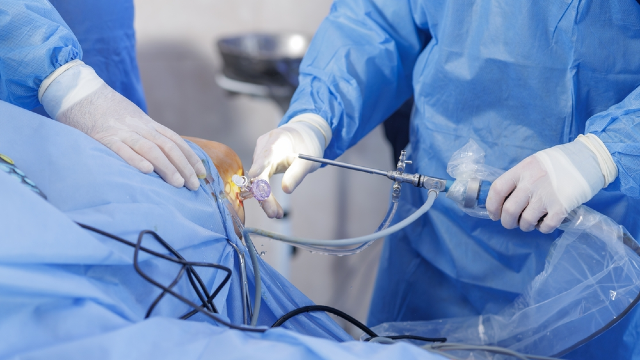
Separating the procedure from the recovery
Renuvion is a skin tightening treatment that uses helium plasma and radiofrequency energy to contract sagging tissue beneath the skin surface, without the large incisions an excisional operation would require. TAE Plastic Surgery Clinic describes the sequence plainly. A few tiny entry points are made; slim instruments then travel beneath the surface, releasing their energy into the tissue they are aimed at; that tissue draws in on itself at once.
That is a surgical sequence in miniature, and it is why anesthesia is used rather than a numbing cream. It is also why the honest answer to the pain question lives in the recovery period rather than in the treatment room.
For context on where this sits among body and skin treatments generally, the American Society of Plastic Surgeons lists radiofrequency among the modalities used across the minimally invasive category, alongside ultrasound, infrared light, vacuum massage and injectable medication. Radiofrequency energy is established technology in this field; what varies between treatments built on it is how the energy is delivered and how deep it goes.
What anesthesia is used, and why it varies
The clinic's stated approach is local anesthesia with sedation, or general anesthesia, chosen according to the extent of the areas being treated and intended to keep the patient comfortable throughout.
The variation is the point. A small single area and a broad multi-area treatment are not the same undertaking, and the anesthetic plan follows the scale of the work rather than a fixed protocol. This is one of the specific things to settle before the day, not on it.
Preparation follows from the same decision. The clinic asks patients to avoid blood thinners and certain supplements, to stay well hydrated, to fast if sedation or general anesthesia is being used, and to complete routine physical checks beforehand.
The recovery timeline, as the clinic states it
Here is the part that answers the practical question.
The clinic's stated initial recovery is around one to two weeks for swelling and bruising to subside. After that, improvement continues on a much longer curve: refinement of contour and structure develops over a span of six weeks to six months.
Two things follow from that shape. The first is that the visibly awkward phase is short and front-loaded. The second is that the result you are actually paying for is not available at the end of that phase — it accumulates quietly for months, as new collagen forms.
The treatment itself takes roughly one to two hours depending on how many areas are involved, and the clinic describes the usual pattern as one main treatment visit followed by routine progress checkups.
Where soreness sits among the risks
The clinic lists the potential effects of the treatment as temporary swelling, bruising, mild soreness, and temporary numbness, with skin burns possible but uncommon if energy is applied improperly.
It is worth reading that list carefully rather than skimming it. Soreness appears there as one of several temporary effects, and it is qualified as mild. Numbness, which patients rarely anticipate, also appears, and it too is described as temporary. The burn risk is the one genuinely serious item, it is described as uncommon, and it is explicitly tied to how the energy is applied — which is to say, to technique rather than to chance.
The American Society of Plastic Surgeons, the specialty organization that has published patient-facing guidance in the United States since 1931, frames the general version of this point in its patient safety material: becoming an informed patient, and making considered choices about the surgeon and the facility, is among the first steps toward a good outcome. For an energy-based treatment whose main serious risk is described in terms of application, that framing is directly relevant.
The aftercare that shapes your week
Recovery instructions here are short, and each one has an obvious reason behind it. The clinic asks patients to:
- Wear supportive compression garments as directed.
- Keep the micro-incision sites clean and dry.
- Avoid strenuous workouts.
- Attend the scheduled follow-up checks.
For a sense of how a body-contouring recovery typically unfolds week by week, the society's published liposuction recovery guidance is a useful external reference point: it describes a first week of monitoring pain, swelling and bruising with activity significantly limited, a second and third week when patients begin to feel much better and many return to work while still limiting exercise, bruising resolving and swelling beginning to subside around weeks four and five, and continued improvement with gradually increasing activity from week six onward. That is a different procedure with its own profile, but the overall arc — a restricted first week, a long tail of swelling — is the pattern to plan around.
Why the result keeps arriving after the soreness stops
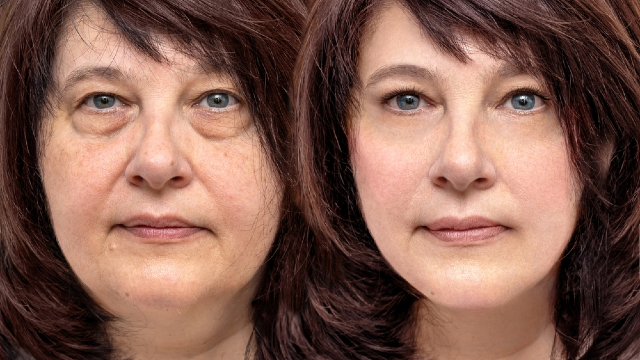
The clinic describes immediate skin contraction at the time of treatment, followed by continuing improvement as new collagen forms.
That is the mechanism behind the six-week-to-six-month window, and it explains why discomfort and results run on completely different clocks. By the time you have stopped noticing the treatment, the treatment has not stopped working.
The society's overview of skin rejuvenation puts the underlying problem in plain terms: loss of skin tone reflects weakening of the supportive structures in the skin, the collagen and elastin fibers that keep it firm. Rebuilding that support is not an overnight process in any modality.
MedlinePlus, the consumer health service run by the National Library of Medicine, adds a relevant caution about individual variation: as skin ages it thins and loses fat, and it can take longer to heal. Two patients given identical instructions will not necessarily follow identical timelines.
Deciding whether the tradeoff suits you
The useful question is not whether there is discomfort — there is some, and the clinic says so — but whether a short, mild, well-described recovery is a reasonable exchange for what the treatment offers. That is a judgment that depends on your own tolerance, your schedule, and an assessment of your skin and the areas concerned.
The clinic's consultation covers exactly that ground: what is to be treated, and how the energy delivery should be planned for it. You can start that conversation through the clinic's contact page, and there is more about the practice on its clinic profile.
The Bottom Line
- Renuvion is performed under local anesthesia with sedation or general anesthesia, chosen according to how much area is treated.
- The clinic lists mild soreness among the temporary effects, alongside swelling, bruising and temporary numbness.
- Initial recovery is around one to two weeks for swelling and bruising to subside.
- Improvement in contour and structure continues over six weeks to six months as new collagen forms.
- Aftercare is compression garments as directed, clean and dry incision sites, no strenuous workouts, and attending follow-up checks.
FAQ
Will I feel the treatment while it is happening?
The clinic performs Renuvion under local anesthesia with sedation or under general anesthesia, selected according to the extent of the areas being treated and intended to keep you comfortable. The anesthetic plan is decided in advance rather than on the day.
How sore will I be afterward?
The clinic describes soreness as mild and temporary, listing it alongside swelling, bruising and temporary numbness as the potential effects of the treatment. Individual experience varies, which is part of why follow-up checks are scheduled.
How long is the downtime?
Initial recovery is around one to two weeks for swelling and bruising to subside, according to the clinic. Contour and structural refinement then continues over a much longer period, from about six weeks to six months.
How long does the appointment take?
Roughly one to two hours, depending on how many areas are being treated. The clinic's usual pattern is a single main treatment visit followed by routine progress checkups.
What do I have to do during recovery?
Wear supportive compression garments as directed, keep the micro-incision sites clean and dry, avoid strenuous workouts, and attend the scheduled follow-up checks. These are the clinic's stated aftercare instructions for the treatment.
What is the most serious risk?
Skin burns, which the clinic describes as uncommon and links to energy being applied improperly. The other listed effects — swelling, bruising, mild soreness and temporary numbness — are described as temporary.
How should I prepare?
The clinic asks patients to avoid blood thinners and certain supplements, stay well hydrated, fast beforehand if sedation or general anesthesia is planned, and complete routine physical checks. The specifics depend on the anesthetic plan for your treatment.
When will I see the result?
Skin contraction occurs immediately at the time of treatment, and the clinic describes continuing improvement afterward as new collagen forms. The longer curve runs from roughly six weeks to six months.
This article is for general informational purposes and does not constitute individualized medical advice, and it is not a self-diagnosis tool. The treatments described are delivered in the Republic of Korea under Korean medical licensure rather than United States licensure. Speak with a qualified plastic surgeon about your own skin, your medical history and your tolerance for recovery before deciding on any treatment.
References
- ASPS: Nonsurgical Fat Reduction
- ASPS: Skin Rejuvenation and Resurfacing
- ASPS: Liposuction Recovery
- ASPS: Patient Safety
- MedlinePlus: Skin Aging