Personalized plastic surgery, laser & anti-aging care in Haeundae, Busan
en-US

Korea Plastic Surgery: Bay Area Travel and Jet Lag Plan
Bay Area travelers: the science behind why a short flight to Korea can mean a long recovery, plus a day-by-day body clock plan for the trip out and home.
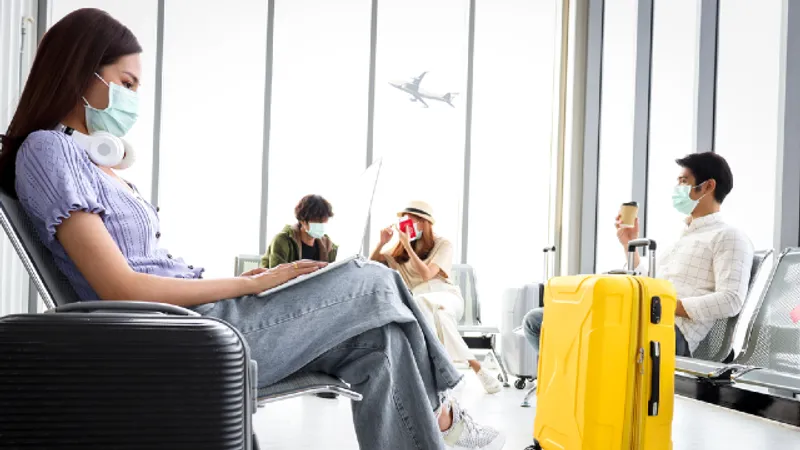
Plastic Surgery in Korea for San Francisco Bay Area Patients: Travel Planning and What to Expect
Medically reviewed by Dr. Kim Ki-Tae, Board-Certified Specialist in Plastic Surgery, issued by the Korean Society of Plastic and Reconstructive Surgeons
There is a small paradox buried in Korea plastic surgery for San Francisco Bay Area patients, and it catches almost everyone out. Northern California is about as close to East Asia as the mainland United States gets. The flying is shorter than it is from most of the country. And yet the adjustment, taken across the whole round trip, is one of the more demanding ones an American traveler undertakes. Short flight, long recovery. This article is about why that is true, what your circadian system is actually being asked to do, and how to plan the days around the journey so that the difficult part lands where you can afford it.
The paradox on the timetable
Distance and difficulty are not the same variable. A flight's length determines how long you sit; the number of time zones you cross determines how much biological rearranging you face afterward. From Northern California those two numbers pull in opposite directions. The Pacific crossing is at the shorter end of transpacific sectors, while the clock difference is at the larger end of anything you will encounter anywhere.
The National Heart, Lung, and Blood Institute describes circadian rhythms as roughly twenty-four-hour internal cycles that govern sleep and wakefulness along with hormone release, body temperature and other functions, and it groups jet lag among the circadian rhythm disorders — the conditions that arise when your internal timing and your external schedule fall out of step. That framing is the useful one here. You are not merely tired from a flight. You are running an internal schedule that was set in one place and is now being read in another.
Why direction matters more than distance
Circadian science draws a hard line between two kinds of shift. Traveling in a direction that asks your clock to run later — to delay — is generally tolerated better than traveling in a direction that asks it to run earlier, an advance. The American Academy of Sleep Medicine's patient education material on jet lag makes this point directly, noting that symptoms tend to be more pronounced when travel requires the body clock to move forward, and that the number of zones crossed drives the severity.
The Academy's own clinical practice guideline on circadian rhythm sleep-wake disorders, published for clinicians, treats jet lag disorder as a recognized condition with a defined evidence base rather than as an inconvenience, and considers timed light exposure and timed melatonin among the interventions studied for it.
For a Bay Area traveler this asymmetry defines the whole trip. The outbound crossing of the Pacific is the direction your system finds more forgiving. The journey home, back across the same water, is the one that asks for the advance. Most people plan the outbound carefully and the return not at all, which is precisely backwards.
Sixteen hours, and what that actually asks
Busan runs nine hours in front of Coordinated Universal Time. Northern California sits eight hours behind that same reference in winter and seven hours behind it while daylight saving is in force. Set one against the other and the separation works out at sixteen hours across most of the calendar, widening to seventeen for the winter stretch. Either way you are looking at roughly two-thirds of a full day.
The CDC's Travelers' Health material on jet lag notes that the body clock does not snap into a new schedule on arrival; it re-entrains gradually, typically over a period of days that scales with the number of zones crossed, and symptoms in the meantime include disturbed sleep, daytime fatigue, difficulty concentrating and gastrointestinal upset. Read that alongside the number above and the planning implication is obvious. Nobody arrives from Northern California fully adjusted, and treating the first days as ordinary working days is a mistake.
One quiet mercy: because the shift is so large, the body frequently settles by moving its clock backward rather than forward, which is the easier maneuver. This is part of why the outbound leg often feels less brutal than the raw figure of sixteen hours would predict — and why the homeward leg, where no such shortcut is available in the same way, so often does not.
A day-by-day plan
The plan below is a scaffold, not a prescription, and anyone with a sleep disorder, a psychiatric condition or a medication schedule that depends on timing should shape it with their own physician first.
Three days before you fly
Begin nudging your schedule instead of holding it. Shifting bedtime and waking time later by an hour a day in the days before a westward crossing gives your clock a head start on the delay it will need to make. Even two nights of partial movement helps. At the same time, protect sleep quantity: arriving already sleep-deprived amplifies everything that follows.
Departure day
Set your watch and your phone to Busan time when you sit down on the aircraft, and start thinking in that frame immediately. Decide, before takeoff, whether this flight is a sleeping flight or a waking one, and then hold to the decision. Drink water steadily. Alcohol is a poor sleep aid and a reliable way to arrive worse than you left.
Arrival and the first night
Get outside during local daylight if the hour allows it — light is the dominant signal your circadian system reads, which is exactly why the Academy of Sleep Medicine's guideline considers its timing therapeutically. Eat at local mealtimes. Keep any nap short and take it early in the local afternoon rather than the evening. Then go to bed at a plausible local hour, even if sleep comes in pieces. A broken first night at the right hour is more useful than a solid one at the wrong hour.
Days two through four
Expect an afternoon trough and expect to wake early. Both are normal and both fade. Keep mornings bright and evenings dim. Keep caffeine to the first half of the local day. Resist the urge to catch up with a long midday sleep, which feels wonderful and costs you the following night.
The mistakes people make
Three come up repeatedly. The first is the heroic nap: a four-hour sleep beginning at six in the evening, which resets nothing and destroys the night. The second is bright screen light late in the local evening, which pushes the clock in the direction you are trying to move away from. The third is scheduling a consequential appointment for the first local morning on the theory that you will be fine by then. You may be. Planning on it is another matter.
A fourth, less discussed: over-planning the trip. A schedule with no slack in it turns a bad night into a cascade of missed things.
Melatonin, and one caution that applies here
Travelers ask about melatonin more than any other single item. The Cochrane review on melatonin for the prevention and treatment of jet lag examined randomized trials in this specific context and concluded that melatonin taken close to the target bedtime at the destination is effective in reducing jet lag after flights crossing several time zones, with the effect more evident the more zones are crossed. The review also noted that occasional short-term use appeared safe in the trials examined, while flagging that people with certain conditions, including epilepsy, and those taking warfarin should seek medical advice before using it.
There is a further caution specific to anyone traveling for surgical care. TAE Plastic Surgery Clinic's preparation guidance asks patients to stop blood-thinning medication and supplements in the period before a procedure, to avoid anti-inflammatory drugs, and to raise chronic conditions and regular medications at consultation so the plan can be adjusted. A sleep aid you intend to take on the trip is a medication for these purposes. Mention it at consultation rather than assuming it is too minor to matter.
The harder half: coming home

The return leg deserves the attention the outbound usually gets. It is the direction that asks your clock to advance, which is the shift the sleep literature consistently identifies as the tougher one, and it lands you in the middle of your own life rather than in a hotel where nothing is expected of you.
Two practical moves help. Do not schedule a demanding first day back — a Friday return with a free weekend behind it is worth more than a Sunday return into a Monday. And seek morning light at home in the days after you get back, since morning light supports an advance in the same way that evening light supports a delay.
The U.S. Department of State's material on staying healthy abroad is a reasonable companion to all of this. It encourages travelers to plan for their health needs before departure, to carry adequate supplies of any prescription medication, and to know how they would obtain care if a problem arose while away. None of it is dramatic advice; all of it is easier to act on before you leave than after you arrive.
Where the clinic fits in the schedule
TAE Plastic Surgery Clinic keeps its consulting rooms in the Gunam Building — 27 Gunam-ro, Haeundae-gu, Busan — four floors above the street. Dr. Kim Ki-Tae is its only physician; he practices as a Board-Certified Specialist in Plastic Surgery, issued by the Korean Society of Plastic and Reconstructive Surgeons, certified by the Korean Society of Plastic and Reconstructive Surgeons.
Against the day-by-day plan above, the clinic's week has a shape worth noting. It receives patients across the full weekday span, from 9 a.m. until 6 p.m., pausing for an hour in the middle of the day beginning at 1 p.m. Saturday work stops at 1 p.m., and no patients are seen on Sundays. If your body is waking you at four in the morning local time during the first days — and it may — an early appointment is not the burden it would be at home, but a late-afternoon slot on day one might be.
Questions can be sent from this form. A fuller description of the practice appears here. Hold the homeward date loosely until Dr. Kim Ki-Tae has weighed in on it at consultation.
The Bottom Line
- From Northern California the flying is comparatively short but the clock difference is near the maximum — sixteen hours most of the year, seventeen once California returns to standard time.
- The American Academy of Sleep Medicine notes that shifts requiring the body clock to move earlier are harder than those requiring it to move later, which makes the journey home the more demanding half of the round trip.
- Start shifting your schedule a few days before departure, switch to destination time on boarding, and use daylight, local mealtimes and a fixed bedtime on arrival, following the CDC's jet lag guidance.
- The Cochrane review found melatonin effective for jet lag across multiple time zones, and advised that people on warfarin or with certain conditions get medical advice first.
- Any sleep aid or supplement belongs on the list you discuss at consultation, alongside the clinic's guidance on stopping blood-thinning medication and supplements before a procedure.
FAQ
Why is jet lag worse coming home than going out?
Because the two legs ask different things of your body clock. The American Academy of Sleep Medicine's patient material explains that adjusting when travel requires the clock to move earlier is generally harder than adjusting when it can move later, and the return to the Pacific coast is the direction that requires the earlier shift. Planning a light first week back is the practical response.
How many hours ahead is Busan?
The city keeps a clock nine hours in front of Coordinated Universal Time. Measured against Northern California, that lands at sixteen hours in front through most of the calendar and seventeen once winter standard time arrives, or roughly two-thirds of a day either way.
How long does adjustment take?
The CDC's Travelers' Health guidance describes re-entrainment as gradual and scaling with the number of time zones crossed, rather than as something that resolves overnight. In practice, expect several days of early waking and afternoon fatigue, improving steadily. Build slack into your schedule rather than assuming you will be at full capacity on the first local morning.
Should I take melatonin?
That is a question for your own physician, and for the consultation. The Cochrane review of randomized trials found melatonin taken near the destination bedtime effective at reducing jet lag after crossing several zones, while noting that people taking warfarin or living with certain conditions should seek medical advice before use. Because it is a supplement, it also belongs in the medication list you discuss before any procedure.
Does the clinic's schedule work for someone who is waking up very early?
Its weekday sessions begin at 9 a.m. and run to 6 p.m., broken by an hour's pause that starts at 1 p.m.; Saturdays close at 1 p.m. and Sundays are not worked. An early appointment can suit a body clock that is still running on Pacific time, while a late-afternoon appointment during the first days may coincide with your lowest point.
What should I sort out before I leave California?
The State Department recommends planning for health needs before departure, carrying sufficient prescription medication, and understanding in advance how you would access care abroad. Add a written list of your medications, supplements and allergies, which will be useful at consultation.
Can I shorten the adjustment by picking a particular flight time?
Only at the margins. What you can control is what you do in the days on either side of the flight: pre-shifting your sleep before departure, holding to destination time from the moment you board, and using morning and evening light deliberately once you arrive. Those levers matter more than the departure hour.
This article is for general informational purposes and does not constitute individualized medical advice, and it is not a self-diagnosis tool. Candidacy, technique, and expected outcomes can only be determined through a consultation with a qualified plastic surgeon.
References
- American Academy of Sleep Medicine, Sleep Education: Jet Lag
- American Academy of Sleep Medicine: Circadian Rhythm Sleep-Wake Disorders Guideline
- NHLBI: Circadian Rhythm Disorders
- Cochrane: Melatonin for the Prevention and Treatment of Jet Lag
- CDC Travelers' Health: Jet Lag
- U.S. Department of State — Your Health Abroad