Personalized plastic surgery, laser & anti-aging care in Haeundae, Busan
en-US

Liposuction and Renuvion Korea: One Plan, Two Problems
Liposuction and Renuvion Korea: why US patients request fat removal and skin tightening in a single surgical plan, and how the technique is chosen.
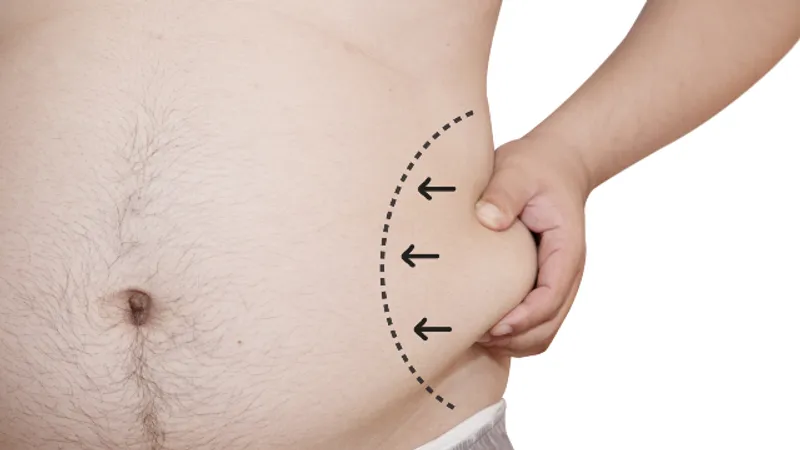
Liposuction Combined With Renuvion: Why US Patients Ask for Both
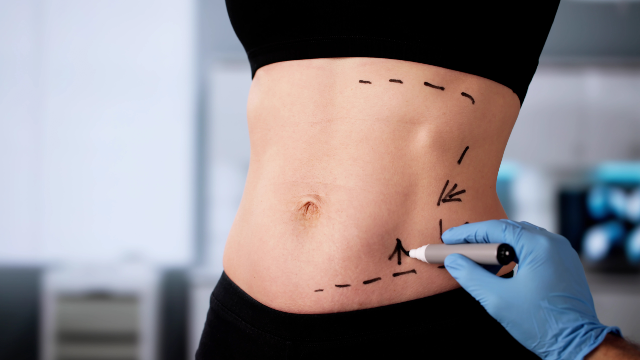
Medically reviewed by Dr. Kim Ki-Tae, Board-Certified Specialist in Plastic Surgery, issued by the Korean Society of Plastic and Reconstructive Surgeons
Patients researching liposuction and Renuvion in Korea usually arrive having already worked something out: taking fat away and having the area look right afterward are two different problems. Fat removal changes volume. What the skin does over the emptied space decides whether the result reads as a contour or as a deflation. TAE Plastic Surgery Clinic in Haeundae, Busan records liposuction being used in conjunction with Renuvion for exactly that reason, and this article explains when the pairing makes sense and how the surgical decisions behind it are made.
The problem the combination is built around
Liposuction is, in the American Society of Plastic Surgeons' description, a surgical procedure that removes excess fat from specific areas of the body, typically used to contour the abdomen, hips, thighs, buttocks and other places where diet and exercise have not worked. Nothing in that description addresses the envelope. The skin over a treated area has to contract onto the smaller volume underneath, and whether it does is a property of the skin, not of the surgery.
Renuvion is a tightening treatment delivered under the skin without an open incision. Pairing it with fat removal means the two problems are addressed within one plan rather than sequentially across two trips. The clinic's material records the pairing directly: fat is removed, and the skin left behind is tightened in the same surgical episode. For a patient traveling internationally, that structure is often the deciding factor — a single recovery, a single set of follow-up checks, a single block of time away.
Skin elasticity is the variable that decides
The most useful thing a prospective patient can understand before consultation is what determines whether liposuction alone will be enough. The American Society of Plastic Surgeons is specific: results are better with firm, elastic skin, while skin that has been left soft and thin by stretch marks, weight loss or natural aging will not reshape as well over the new contour. The same source notes that further surgery may then be needed to take away and tighten the extra skin.
That paragraph is the whole argument for the combination, and it also marks its ceiling. Where elasticity is reasonable but not perfect, adding an energy-based tightening step to a fat-removal operation is a sensible way to improve how the area settles. Where skin has lost its ability to redrape altogether, no amount of energy substitutes for removing it, and an honest consultation says so. The clinic keeps surgical and energy-based routes to loose skin as separate services precisely so that the answer can be one, the other, or both.
It is also worth knowing what liposuction is not for. The American Society of Plastic Surgeons states that it is neither a treatment for obesity nor a substitute for diet and exercise, and that it does not treat cellulite effectively. Patients whose expectation is weight loss are measuring the wrong outcome.
How the technique gets chosen
TAE Plastic Surgery Clinic performs what it describes as customized liposuction rather than one standardized method applied to every patient, and the customization is technical rather than presentational. Three approaches are used, selected by what the target region is actually like:
- Negative pressure liposuction (SAL) uses vacuum pressure through a cannula for precise removal, and the clinic favors it for delicate regions such as the face and upper arms.
- Ultrasound-assisted lipoplasty (UAL) uses ultrasound energy to break down fat before suction, which helps in areas where the fat is dense or fibrous, such as the back and thighs.
- Power-assisted lipoplasty (PAL) uses motor-driven micro-vibrations with suction to remove larger volumes efficiently, typically in the abdomen and thighs.
What drives that choice is a reading of the region before anything is done: how thick the skin is, how firm the fat is, how much of it there is, how fibrous it is, and how well the area is supplied with blood. Those five properties differ between a jawline and a flank, which is why one instrument set used everywhere produces uneven results. The clinic's stated treatment areas run from the face through the abdomen, flanks, front and back thighs, buttocks, knees and calves, the back along the bra line, and the arms.
Anesthesia, and how long the operation takes
Liposuction here is performed under local anesthesia with intravenous sedation, or under general anesthesia, depending on how many zones are being treated and how large they are. Renuvion is documented as being performed under topical or local anesthesia. Where both are planned together, the approach is confirmed at consultation as one decision rather than two.
The operation itself typically runs one to three hours depending on the number of zones. It is an outpatient procedure with one main surgical visit and follow-up checks afterward — a structure that matters when the visit has to fit inside a trip.
Recovery, and planning the trip around it

Acute swelling and bruising dominate the first week to two weeks and then settle, with most people back to light daily activity within a week to ten days. Contour refinement and skin settling continue for three to six months, so the shape at discharge is not the shape at the end.
Most patients are cleared to head home once swelling and bruising have begun to settle and the surgeon has checked the result, which is typically around a week to ten days after the operation. That timing is a medical judgment made at the check, not a fixed figure, and the clinic confirms the schedule for each case.
The CDC's guidance on medical tourism is worth reading alongside any clinic's own advice: it recommends planning the whole episode rather than the operation, including who provides follow-up care once you are home and what documentation you leave with. Obtaining your operative records before you fly is not bureaucracy — it is what makes competent aftercare possible at a distance. Practical questions about scheduling are handled through the clinic's appointment request form.
The follow-up check itself is doing several jobs at once. It looks at how the swelling is behaving, at the small entry sites, at how the tissue is healing, at the contour taking shape, and at anything suggesting a complication developing. Because all of that has to happen before a long flight rather than after it, the schedule is worth confirming before the return leg is booked rather than around it — a booking made first and a clinical timetable fitted to it afterward is the wrong order, and it is the most common avoidable problem in a medical trip.
Aftercare for the surgical component means compression worn as instructed, with exercise and heavy lifting deferred for several weeks. MedlinePlus, the National Library of Medicine's consumer service, makes the general point that following the instructions given after an operation is part of the treatment rather than an optional extra.
Risks worth weighing
The common effects are swelling, bruising, soreness, tenderness, temporary numbness or altered sensation, tightness and fluid accumulation; small entry sites may leave marks that are temporary or permanent. The more serious potential risks the clinic states include bleeding, infection, fluid collections, contour irregularities, asymmetry, changes in sensation, skin irregularities, scarring, blood clots, fat embolism, anesthesia-related complications and the possible need for further treatment. Larger-volume procedures and multi-area procedures carry more of that risk, not less.
For the energy component, burns or thermal injury, infection, bleeding, contour irregularity, prolonged swelling and sensation changes are the potential complications. A combined plan carries both lists, which is an argument for treating the combination as a real operation rather than as a package upgrade.
What to settle before agreeing
The American Academy of Dermatology recommends establishing, before any cosmetic procedure, who will perform it and what result is realistic in your case. For a combined plan, add three: which zones are being treated and with which technique; what the examiner judges your skin's ability to redrape to be; and what the plan is if the result is uneven. Background on how the practice is organized is published on its clinic overview page.
The clinic states plainly what cannot be promised — a specific amount of weight lost, exact measurements, perfectly smooth contours, complete symmetry, an absence of marks, or a complication-free recovery. Residual fat, contour irregularity, remaining skin laxity and future weight change all affect what the result looks like a year later.
The Bottom Line
- Fat removal and skin tightening solve different problems; the combination exists because the second one determines how the first one looks.
- Skin elasticity is the deciding variable — the American Society of Plastic Surgeons notes that skin thinned by weight loss or aging does not reshape well, and may need surgical removal instead.
- The clinic selects among SAL, UAL and PAL according to skin thickness, fat firmness, volume, fibrousness and circulation in the specific region.
- Expect one to three hours in the operating room, a week to ten days before travel is cleared, and three to six months before the contour finishes settling.
- A combined plan carries the risk profile of both components, and no outcome is guaranteed.
FAQ
Why not just have liposuction and see how the skin settles?
That is a reasonable plan when skin elasticity is good, and the American Society of Plastic Surgeons notes that firm, elastic skin gives better results. Where the skin has been thinned by weight loss or aging, it will not reshape as readily, and addressing that in the same operation avoids a second trip.
Which liposuction technique will be used on me?
It depends on the region. Negative pressure liposuction suits delicate areas such as the face and upper arms; ultrasound-assisted lipoplasty suits dense or fibrous fat as found on the back and thighs; power-assisted lipoplasty handles larger volumes in areas like the abdomen. The clinic decides from skin thickness, fat firmness, accumulation, fibrousness and circulation.
Which areas does the clinic treat?
The stated list runs from the face through the abdomen, flanks, front and back thighs, buttocks, knees and calves, the back along the bra line, and the arms and accessory breast area.
What anesthesia is used for a combined plan?
Liposuction is performed under local anesthesia with intravenous sedation or under general anesthesia depending on the number and size of the zones; the energy component is documented under topical or local anesthesia. For a combined plan the approach is agreed once, at consultation.
How long before I can fly home?
Usually around a week to ten days, once swelling and bruising have started to settle and the surgeon has checked the result. It is a clinical judgment rather than a fixed number, and the clinic sets the schedule case by case.
When does the contour stop changing?
Acute swelling resolves over the first couple of weeks, but refinement of the contour and settling of the skin continue across three to six months. Judging the outcome before that point means judging a work in progress.
What does the follow-up visit actually check?
Swelling, the small entry sites, how the tissue is healing, the contour as it emerges, and any sign of a complication. For an international patient it is also the visit at which travel is cleared, which is why the schedule should be settled before the return flight is booked.
Is this a weight-loss operation?
No. The American Society of Plastic Surgeons is explicit that liposuction is not a treatment for obesity and not a substitute for diet and exercise, and it is not an effective treatment for cellulite. It works for people at a stable weight with localized fat that has not responded to either.
This article is for general informational purposes and does not constitute individualized medical advice, and it is not a self-diagnosis tool. Care described here is delivered in the Republic of Korea under Korean medical licensure rather than United States licensure, and the clinic is closed on Sundays and observes a daily lunch break, which affects scheduling for short international trips. Speak with a qualified plastic surgeon about your own circumstances before making any treatment decision.
References
- American Society of Plastic Surgeons: Liposuction
- CDC: Medical Tourism
- MedlinePlus: After Surgery
- American Academy of Dermatology: Questions to Ask
- MedlinePlus: Plastic and Cosmetic Surgery
- MedlinePlus: Swelling