Personalized plastic surgery, laser & anti-aging care in Haeundae, Busan
en-US

Renuvion Korea: Plasma Tightening Across Five Body Areas
Renuvion Korea explained: helium plasma and radiofrequency tighten loose skin on face, arms, abdomen, thighs and buttocks without an open incision.
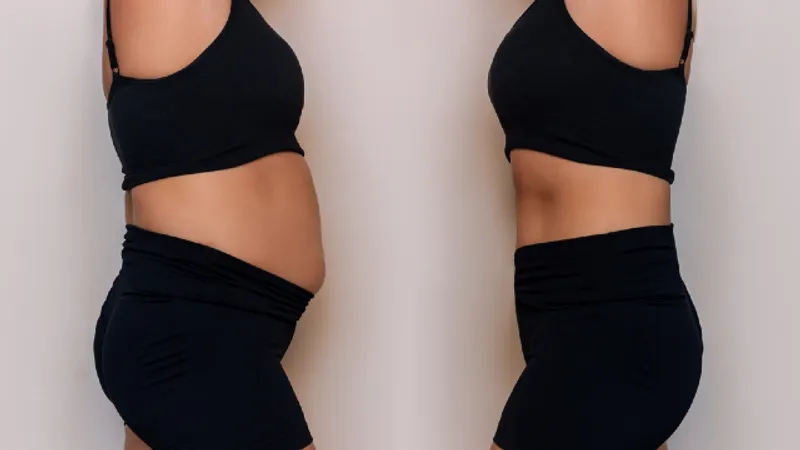
Renuvion in Korea: Plasma-Energy Tightening for Five Body Areas
Medically reviewed by Dr. Kim Ki-Tae, Board-Certified Specialist in Plastic Surgery, issued by the Korean Society of Plastic and Reconstructive Surgeons
Renuvion Korea searches almost always start from the same problem: skin that has stopped holding its shape, usually after weight loss, and a reluctance to accept a long surgical scar in exchange for fixing it. Renuvion is a tightening treatment that delivers helium plasma together with radiofrequency energy underneath the skin through entry points small enough not to require a conventional incision. At TAE Plastic Surgery Clinic in Haeundae, Busan, it is offered across five body areas. This article sets out how the energy works, where it is used, what a visit involves, and what the weeks afterward look like.
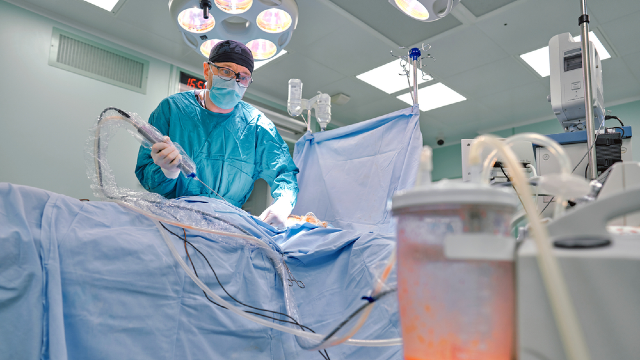
What the energy is doing under the skin
Renuvion is described by its makers as a device that combines helium plasma with radiofrequency energy. Tiny entry points are made, a slim handpiece is passed into the plane just beneath the skin, and energy is delivered directly to the tissue there. Tissue contraction happens during the treatment itself rather than weeks later, which is the behavior that distinguishes this category from surface treatments that work entirely through heat conducted from outside.
The temperature figures are the part worth understanding, because they explain both the effect and the safety margin. The clinic's technical description has the energy raising deep target tissue to 85°C within 0.044 seconds, while the outer skin surface is held at or below 41°C. Two numbers, two jobs: the first is high enough and fast enough to make tissue contract; the second keeps the surface you can see well below the range where a burn would occur. Heat that arrives that quickly also does not linger, which is the other half of the design.
The hardware reflects the range of areas treated. TAE Plastic Surgery Clinic records a 10cm micro handpiece for smaller and more delicate work, and 15cm or 27cm body handpieces for larger surfaces. The choice is not cosmetic — the length and profile of the handpiece determine how evenly energy can be laid down across a given area, and a tool sized for a jawline is the wrong tool for an abdomen.
The five areas the clinic treats
TAE Plastic Surgery Clinic confirms Renuvion treatment across five areas: the face, the arms, the abdomen, the thighs and the buttocks. That is a broader stated range than a face-only or a body-only offering, and it matters to anyone whose concern is not confined to one region.
The clinic's own material describes the treatment as addressing skin tightness and elasticity, contour, the appearance of a double chin, sagging arms, wrinkles, sagging breast tissue and loose abdominal tissue. Those are descriptions of what the treatment aims at, not promises about how far it will go in any individual case. How far it goes depends on how much laxity is present, the quality of the tissue underneath, and how an individual heals.
Who it suits, and who it does not
The clinic names a fairly specific group of candidates: people with sagging skin; people who are hesitant about facelift surgery; people left with loose skin after dieting or weight loss; people dissatisfied with previous treatments; and people who have lost definition along the jawline. Its material also names thin or loose-looking skin after dieting, poor body contour that persists after weight has come off, laxity that does not respond to exercise, noticeable sagging following fat reduction, and sagging around the chest or abdomen.
Against that, the clinic is equally clear about who should not be treated. Where the volume of excess tissue is severe enough to require surgical removal of skin, this is not the right intervention. Active skin infection at the site rules it out, as do uncontrolled and serious medical conditions. Suitability is a medical judgment made at consultation rather than something a reader can settle from a web page, and the clinic assesses skin elasticity, marks out the target areas and plans the energy delivery before anything is agreed. If you want that assessment, the enquiry route is where a case is opened.
The American Academy of Dermatology advises that before any cosmetic procedure you establish who will carry it out and what result is realistic for you specifically. For an energy-based tightening treatment, two more questions are worth adding: how much laxity does the examiner actually think is present, and at what point would they tell you a device is not enough.
What a treatment visit involves
Treatment runs roughly one to two hours depending on how many areas are covered, and is normally a single main visit followed by routine progress checks. For Renuvion the clinic records treatment under topical or local anesthesia, confirmed individually before the day.
The sequence is short. The area is assessed and marked, handpiece size is chosen, small entry points are made, energy is delivered under the skin in planned passes, and the treated area is supported afterward. International patients are generally advised to allow a few days to about a week in Korea, though the clinic confirms the schedule case by case, and when it is medically appropriate to take a long flight is a question for the treating doctor rather than a fixed number.
Preparing for the appointment, and what to send ahead

Most of the preparation is disclosure rather than restriction. The clinic asks patients to declare medical conditions, allergies, current medications and supplements, previous procedures and any history of healing that did not go to plan. Instructions on smoking, alcohol and anything that raises bleeding risk are given individually — and the clinic is explicit that prescribed medication is never stopped on a patient's own initiative, only on medical advice. Staying well hydrated and completing routine physical checks round out the list, with fasting required only if sedation is planned.
For a patient assessing this from another country, the practical step happens earlier. Standardized photographs of the area concerned and a relevant medical and treatment history are what allow a first opinion to be formed at all, and where there has been previous treatment in the same area, those records matter too. The exact angles and file requirements are confirmed once the assessment begins, which is a reason to open the conversation well before booking flights rather than after.
One thing worth settling in that first exchange is what the examiner considers achievable for your particular degree of laxity. A photograph taken standing still tells a clinician less than most patients assume about how tissue behaves when it moves, and an honest answer to that question early is worth more than an optimistic one late.
Recovery and the aftercare that carries it
Expect swelling and bruising to be the visible part, subsiding over roughly the first week or two, with continued refinement of the line over a much longer window. Soreness, tightness, temporary numbness or altered sensation can all occur; how noticeable they are depends on the area treated.
Aftercare is not incidental to the result here. The clinic asks for supportive compression garments to be worn as directed, the micro entry points kept clean and dry, strenuous workouts avoided, and the scheduled follow-up checks attended. Compression is doing real work during the settling phase, and skipping it is not a neutral choice.
Swelling itself is worth understanding rather than worrying about. MedlinePlus, the consumer health service of the National Library of Medicine, describes swelling as fluid accumulating in tissue, which is exactly what happens after tissue has been worked on and why the early appearance is not the final one. The same service notes that bruises form when small blood vessels break and blood collects under the skin, and that the color change as a bruise clears is the body reabsorbing that blood.
Risks, stated plainly
Temporary swelling, bruising, soreness, tenderness, numbness and altered sensation are the common effects. The potential complications the clinic names are burns or thermal injury, infection, bleeding, contour irregularity, prolonged swelling, changes in sensation and scarring. Uncommon skin burns are specifically listed as possible if energy is applied improperly, which is a candid thing for a clinic to publish and a good reason to ask who is holding the handpiece.
None of that is a reason to avoid the treatment; it is the information you need to consent properly. MedlinePlus notes that cosmetic surgery and procedures carry real risks alongside their benefits and should be approached as medical decisions rather than consumer ones.
What the result looks like, and when
The clinic describes immediate contraction at the time of treatment, with an early improvement in elasticity, and then continued change as new collagen forms over the following weeks and months. Its own examples are shown at different points — a neck at one week, arms at six weeks, other areas at two and six months — which is a more honest way of presenting a timeline than a single headline figure.
What the clinic does not do is publish an outcome guarantee, and none should be inferred. A specific degree of tightening cannot be promised, results will not be identical between two people, and skin laxity is not always fully correctable without surgery. Fuller background on how the practice is organized sits on the clinic's own about page.
The Bottom Line
- Renuvion delivers helium plasma with radiofrequency energy beneath the skin through small entry points, producing tissue contraction during the treatment itself.
- Deep tissue reaches 85°C within 0.044 seconds while the skin surface is held at or below 41°C — the two figures that explain both the effect and the safety margin.
- TAE Plastic Surgery Clinic confirms treatment of five areas: face, arms, abdomen, thighs and buttocks.
- It is aimed at people with loose skin who want to avoid a surgical scar; where excess tissue requires surgical removal, it is not the right option.
- Swelling and bruising dominate the first week or two, with the line continuing to refine over subsequent months.
FAQ
How is the energy delivered if there is no incision?
Through small entry points rather than a surgical opening. A micro handpiece is passed into the layer just under the skin and delivers helium plasma and radiofrequency energy directly to the target tissue, so the tightening happens from underneath rather than through the skin's surface.
What do the temperature numbers mean in practice?
Deep tissue is raised to 85°C within 0.044 seconds, which is what triggers contraction, while the skin surface is kept at or below 41°C. The heat is delivered quickly and does not remain for prolonged periods, which is how the two temperatures coexist in the same treatment.
Which areas can be treated?
The clinic confirms the face, arms, abdomen, thighs and buttocks. Handpiece size is matched to the area — a 10cm micro handpiece for finer work, 15cm or 27cm body handpieces for larger surfaces.
What anesthesia is used?
Topical or local anesthesia is typical for this treatment, with the exact approach confirmed with you at consultation based on the extent of the areas being treated and your own medical history.
How long will I be visibly swollen?
Swelling and bruising are most apparent in the first week or two and settle from there. Structural improvement continues developing well beyond that, so the appearance at two weeks is not the appearance at three months.
What aftercare does the clinic ask for?
Supportive compression garments worn as directed, entry points kept clean and dry, strenuous exercise avoided while healing, and attendance at the scheduled follow-up checks. The compression element matters more than patients often expect.
Can the result be guaranteed?
No, and the clinic publishes no such guarantee. A specific degree of tightening, an identical result to someone else's, or full correction of laxity without surgery are all outside what can honestly be promised.
This article is for general informational purposes and does not constitute individualized medical advice, and it is not a self-diagnosis tool. Care described here is delivered in the Republic of Korea under Korean medical licensure rather than United States licensure, and the clinic is closed on Sundays and observes a daily lunch break, which affects scheduling for short international trips. Speak with a qualified plastic surgeon about your own circumstances before making any treatment decision.

References
- MedlinePlus: Swelling
- MedlinePlus: Bruises
- MedlinePlus: Plastic and Cosmetic Surgery
- American Academy of Dermatology: Questions to Ask
- American Academy of Dermatology: Cosmetic Treatment Safety
- MedlinePlus: Skin Conditions