Personalized plastic surgery, laser & anti-aging care in Haeundae, Busan
en-US

Renuvion Tightening vs Liposuction Alone: What Changes
Liposuction removes fat; whether the skin above it draws back is a separate question. How a tightening step changes the plan, the recovery and the decision.
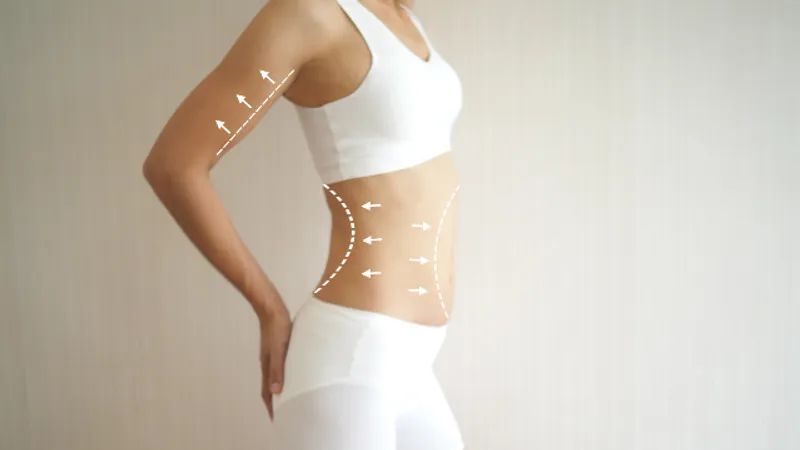
Renuvion Tightening vs Liposuction Alone: What Actually Changes
Medically reviewed by Dr. Kim Ki-Tae, Board-Certified Specialist in Plastic Surgery, issued by the Korean Society of Plastic and Reconstructive Surgeons
Liposuction answers one question: how much subcutaneous fat comes out, and from where. Whether the skin above the treated area draws back to the smaller shape underneath is a second question, and it is decided largely by the skin itself rather than by how much fat came out. Adding a tightening step is how that second question gets addressed. This article explains what each part does, what adding the tightening changes about recovery, and when neither is the right answer — using what TAE Plastic Surgery Clinic publishes about both, alongside independent patient education.
What liposuction does

The clinic describes liposuction as a treatment that draws unnecessary subcutaneous fat cells out of targeted areas of the face and body where diet and exercise have not worked. In the procedure itself, tumescent fluid is infused into the target fat layer, specialized energy probes or cannulas break down or melt the fat cells, and suction draws the emulsified fat out.
Its stated treatment areas are specific: face, abdomen, flanks, front and back thighs, under-buttock fat, knees and calves, the back along the bra line, and the arms and accessory breast area. The clinic states that it does not use one standardized method for everyone, and that technique and equipment are selected according to the characteristics of each region of the body.
On results, the clinic's position is that the fat cells taken out do not come back, so contour improvement is long-lasting provided weight stays relatively stable. Recovery runs about one to two weeks for the acute swelling to drop, while full contour refinement and settling occur over three to six months. The procedure typically takes one to three hours depending on the zones treated, under local anesthesia with intravenous sedation or general anesthesia depending on the number and size of the areas.
The American Society of Plastic Surgeons, the professional body representing board-certified plastic surgeons in the United States, describes liposuction in compatible terms and is clear that it is a contouring procedure rather than a weight-loss method. The clinic says the same thing from the other direction: people looking for a primary treatment for general obesity, or expecting drastic weight loss, are not suitable candidates.
Where skin quality enters the assessment
Here is the sentence that this whole comparison turns on. Among the clinic's stated criteria for an ideal liposuction candidate are localized fat deposits, a stable weight, reasonable expectations — and good skin elasticity.
That last criterion is doing quiet work. Skin that has retained its springiness will generally draw back over a smaller contour on its own. Skin that has lost it may not, and the result can be a smaller shape under looser skin. Nothing about taking the fat out changes that; it is a property of the tissue the patient arrives with.
MedlinePlus, the patient education service of the National Library of Medicine, gives the general background: the years take fat out of the skin and reduce its thickness, so the surface reads as less full, and repair takes longer. Age is not the only factor — significant weight change matters too — but it explains why two people with identical fat distribution can get different answers to the same question about their skin.
The clinic's assessment for liposuction reflects this. It analyzes regional skin thickness, fat firmness, the size of the deposit, fibrous content and circulatory factors before selecting an approach.
What the tightening step is
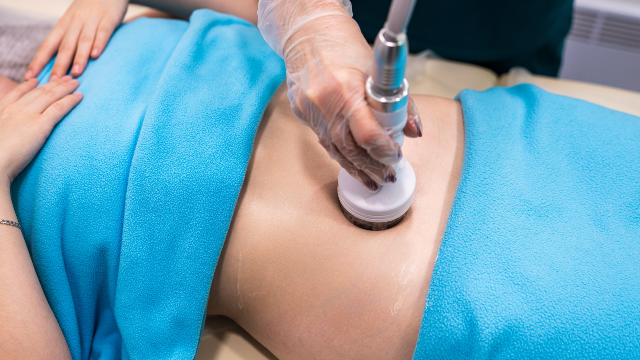
Renuvion Tightening is how the clinic addresses the skin side of the problem. It describes the treatment as using helium plasma and radiofrequency energy to contract sagging tissue beneath the skin surface without requiring large surgical incisions. Tiny entry points are made, micro handpieces are passed underneath the skin to deliver the energy directly to the target tissue, and tissue contraction occurs immediately.
Its stated candidates are worth reading closely, because they describe a specific pattern rather than a general wish: patients with sagging skin, those hesitant about facelift surgery, those with loose skin after dieting or weight loss, those dissatisfied with previous treatments, those who have lost jawline definition, those whose body contour remains poor even after weight loss, those with skin laxity that does not improve with exercise, and — the item most relevant here — those with noticeable sagging after fat reduction.
The clinic's stated benefits are immediate tissue contraction, collagen regeneration, minimal scarring because the incisions are tiny, reduced downtime, and visible firming from a single session. Treatment takes roughly one to two hours depending on the areas, typically as one main treatment visit followed by routine progress checks, under local anesthesia with sedation or general anesthesia depending on extent.
The consultation for it evaluates skin elasticity, determines the target areas on the face or body, selects the appropriate handpiece size and plans the energy delivery.
What adding the step changes about recovery
This is the practical trade patients are making, and it is smaller than most expect. The clinic gives initial recovery for the tightening treatment as around one to two weeks for swelling and bruising to subside, with continued refinement of the contour and structural improvement showing over six weeks to six months. Its stated risks are temporary swelling, bruising, mild soreness, temporary numbness, or uncommon skin burns if energy is applied improperly.
Liposuction's own recovery window is described in the same range — one to two weeks for acute swelling, three to six months for full refinement — so the tightening step does not obviously extend the calendar. What it adds is a second set of things that can go wrong: the clinic names burns or thermal effects, infection, bleeding, contour irregularity, prolonged swelling, changes in sensation and scarring among the potential risks of energy-based treatment.
Aftercare for both centers on the same practical points: wearing the supportive compression garment as directed, keeping the small incision sites clean and dry, holding off on strenuous workouts, and attending the follow-up checks. Preparation likewise — stopping blood thinners and certain medications, completing blood evaluations, staying hydrated, and fasting if sedation or general anesthesia is planned.
When the answer is surgical rather than energy-based
Some patients are outside the territory of any energy device, and saying so is part of an honest comparison. The clinic states that individuals with severe tissue excess requiring surgical skin resection are not suitable candidates for the tightening treatment.
What that means in practice is described well by the society's patient material. A tummy tuck, or abdominoplasty, takes away excess fat and skin and in most cases restores weakened or separated muscles, producing a smoother and firmer abdominal profile — and the society notes that it does not do the work of weight loss or an exercise program, and that significant later weight fluctuation can undo the benefit. Its body-lift material covers the equivalent problem after major weight change, where sagging skin across several areas is the dominant issue.
The society also draws the boundary that matters for anyone shopping among device treatments: non-surgical fat reduction methods work gradually and modestly, and are a different category of intervention from an operation. A patient with a large apron of loose tissue is being offered the wrong tool by any device, however the marketing is phrased.
The question patients actually ask afterwards
There is a useful piece of realism in how the clinic thinks about results for body work. What patients report caring about after body treatment is narrower than the brochures suggest: whether clothing fits differently afterwards, and whether skin quality matched what they were led to expect. Those two questions, more than any measurement, are what a body contouring plan is judged by.
They also explain why the tightening step exists as a separate decision. Taking fat out changes how clothing fits. Skin quality is the part that liposuction alone does not address, and it is where the disappointment comes from when skin does not draw back as hoped.
What neither approach promises
The clinic is direct about limits on both sides. For liposuction it states that a specific amount of weight loss, exact body measurements, perfectly smooth contours, complete symmetry, absence of scars or a complication-free recovery cannot be promised, and that residual fat, contour irregularities, skin laxity and future weight changes can all affect the result. For the tightening treatment it states that a specific degree of tightening, an identical result between patients, or full correction of skin laxity without surgery cannot be promised, and that results vary with skin laxity, tissue characteristics, treatment area and individual healing.
Both statements point the same way. These are contouring interventions with real but bounded effects, and the bound is set largely by the tissue you bring to them.
An individual assessment is the only way to find out which side of that line you fall on. Booking one goes through the clinic's patient enquiry page, and there is further detail about how the practice is run on its clinic information page.
The Bottom Line
- Liposuction decides how much fat leaves; your skin decides whether the surface follows, and good skin elasticity is one of the clinic's stated candidacy criteria.
- The tightening treatment uses helium plasma and radiofrequency energy delivered through tiny entry points to contract tissue beneath the skin, with immediate contraction and continued change over six weeks to six months.
- Noticeable sagging after fat reduction is one of the clinic's named indications for that treatment, which is exactly the gap liposuction alone leaves.
- Recovery windows for the two are broadly similar — one to two weeks of swelling, months of refinement — but energy treatment adds its own risk set, including burns.
- Severe tissue excess requiring surgical skin resection is outside the range of any energy device, and the society describes abdominoplasty and body-lift surgery as the interventions for that situation.
FAQ
Will liposuction alone leave me with loose skin?
It depends on your skin, not on how much fat came out. The clinic names good skin elasticity among the criteria for an ideal liposuction candidate, which is the polite way of saying that skin which has lost its springiness may not draw back over the smaller contour on its own.
Who is the tightening treatment actually for?
The clinic's named indications include sagging skin, loose skin after dieting or weight loss, poor body contour despite weight loss, skin laxity that does not improve with exercise, loss of jawline definition, and noticeable sagging following fat reduction.
How long is the recovery?
For the tightening treatment the clinic gives around one to two weeks for swelling and bruising to subside, with contour refinement and structural improvement continuing over six weeks to six months. Liposuction recovery is described in a similar range: one to two weeks for acute swelling, three to six months for full refinement.
What are the risks of the energy treatment?
The clinic lists temporary swelling, bruising, mild soreness and temporary numbness as common, and uncommon skin burns if energy is applied improperly. Its fuller risk list adds infection, bleeding, contour irregularity, prolonged swelling, changes in sensation and scarring.
What anesthesia is used?
For liposuction, local anesthesia with intravenous sedation or general anesthesia, depending on the number and size of the treatment zones. For the tightening treatment, local anesthesia with sedation or general anesthesia depending on how much area is being treated.
Is there a point where surgery is the only sensible answer?
Yes. The clinic states that individuals with severe tissue excess requiring surgical skin resection are not suitable candidates for the energy treatment. The American Society of Plastic Surgeons describes abdominoplasty as taking away excess fat and skin and restoring weakened muscles, and its body-lift material covers the equivalent problem after major weight change.
Does liposuction help me lose weight?
No. The clinic states that people seeking a primary treatment for general obesity or expecting drastic weight loss are not suitable candidates, and the society treats liposuction as a contouring procedure rather than a weight-loss method. A stable weight is one of the stated candidacy criteria.
What aftercare should I expect?
Compression garments worn as directed, incision sites kept clean and dry, strenuous exercise avoided for several weeks, and follow-up checks attended. Preparation involves stopping blood thinners and certain medications, blood evaluations, hydration and fasting where sedation or general anesthesia is planned.
This article is for general informational purposes and does not constitute individualized medical advice, and it is not a self-diagnosis tool. The procedures described are performed in the Republic of Korea under Korean medical licensure rather than United States licensure. Speak with a qualified plastic surgeon about your own body, your own skin and your own medical history before making any treatment decision.
References
- ASPS: Liposuction
- ASPS: Nonsurgical Fat Reduction
- ASPS: Tummy Tuck
- ASPS: Body Lift
- MedlinePlus: Skin Aging