Personalized plastic surgery, laser & anti-aging care in Haeundae, Busan
en-US

Renuvion vs CoolSculpting: Which Technology Fits Your Goal
Renuvion vs CoolSculpting and the surgical alternative: a skin tightening technology comparison built around three different goals, not three brand names.

Renuvion vs CoolSculpting: Matching the Technology to the Problem
Medically reviewed by Dr. Kim Ki-Tae, Board-Certified Specialist in Plastic Surgery, issued by the Korean Society of Plastic and Reconstructive Surgeons
Renuvion vs CoolSculpting is one of the most common skin tightening technology comparisons US patients bring to a Korean clinic, and it is built on a mistaken premise. These are not two solutions to one problem. One addresses loose skin; the other addresses fat volume; and behind both sits a third option that does something neither can do — removing excess skin surgically. TAE Plastic Surgery Clinic in Haeundae, Busan keeps energy-based and surgical routes to loose skin as separate services for exactly this reason. This article sorts the choice by goal rather than by brand.
Start from the goal, not the device
Before comparing technologies, answer one question about yourself: what is actually bothering you when you look in the mirror?
There are three distinct answers, and each points to a different category of treatment. If the skin itself has lost its grip — it hangs, it creases, it no longer follows the shape underneath — the target is laxity. If the shape is wrong because there is a localized deposit of fat where you do not want one, the target is volume. And if there is a genuine surplus of skin, a fold that persists whatever you do, the target is excess tissue, and the only thing that removes it is removal.
Choosing a technology before answering that question is how patients end up disappointed by treatments that worked exactly as intended.
Loose skin: what plasma energy addresses
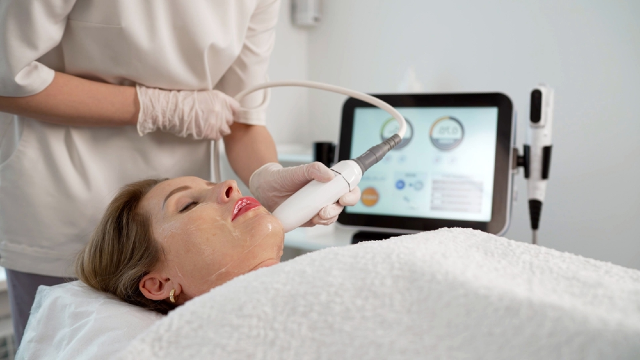
Renuvion is a skin tightening treatment. It delivers energy beneath the skin through small entry points rather than through a surgical opening, producing contraction of the tissue there. The clinic's described candidates make the target clear: people with sagging skin, people left with loose skin after dieting or weight loss, people whose jawline has lost definition, people hesitant about lifting surgery, and people dissatisfied with previous treatments.
What it is aimed at is skin quality and tightness in areas where laxity is present but the surplus is not extreme. It is documented as treating laxity that does not respond to exercise, poor contour that persists after weight has come off, and noticeable sagging following fat reduction — which is itself a useful hint about how often the two problems arrive together.
Fat volume: what cooling addresses, and what it does not
Cryolipolysis belongs to a different category entirely. The American Society of Plastic Surgeons places it within nonsurgical fat reduction — a group of technologies using heat, cooling or an injected medication to reduce fat cells — and names CoolSculpting as its example of the cooling approach. The same source notes that patients who are pregnant or breastfeeding should not undergo any of these treatments.
The important word in that description is "fat". These technologies reduce fat cells. They are not skin tightening treatments, and asking a fat-reduction technology to fix loose skin is asking it to do something it was not built for. That distinction matters most in exactly the situation where patients most often confuse the two: after significant weight loss, when both problems are present at once and only one of them is fat.
Excess skin: when removal is the only answer
The third option is surgical. The American Society of Plastic Surgeons describes a body lift as improving the shape and tone of the underlying tissue that supports skin and fat, with excess sagging skin and fat removed in the process, and lists the abdomen — locally or extending around the sides into the lower back — along with the buttocks and the thighs as the areas it may cover. It attributes the loss of tissue elasticity behind that sagging to aging, sun damage, pregnancy, significant weight fluctuation and genetic factors.
Two of its statements deserve to be read side by side, because together they draw the boundary this whole comparison turns on. A body lift is not intended strictly for the removal of excess fat. And where skin elasticity is poor, body lift techniques may be recommended alongside fat removal rather than as an alternative to it.
That is the honest ceiling of the energy-based option. Where the volume of excess tissue requires surgical excision, plasma energy does not do what an operation does — the clinic names severe tissue excess requiring surgical skin resection as a reason someone is not a candidate for the energy treatment at all. The clinic keeps body lifting as a separate service from its energy-based tightening precisely so both answers stay available.
The boundary in practice
Put concretely, the decision tends to fall out like this. Mild to moderate laxity with reasonable tissue quality is the territory of energy-based tightening. A discrete fat deposit with skin that still holds its shape is the territory of fat reduction. A hanging fold of surplus skin after major weight loss is the territory of surgery, and describing it as anything else is a disservice.
Plenty of people sit between those descriptions, which is why the assessment is the decision and the technology choice merely follows from it. An examination can be arranged through the clinic's enquiry and appointment page.
What a body lift actually involves, if that is the answer
It is worth knowing what the surgical option costs you in time and recovery, because that knowledge often clarifies the choice.
The clinic describes body lifting as performed under general anesthesia, with intravenous pain medication and local anesthetic blocks during immediate recovery. Surgery runs four to six hours. It requires a three to five day inpatient stay, followed by several follow-up visits over two to three weeks for drain and stitch management. Light daily walking resumes within one to two weeks, and non-strenuous work by around week three or four. A tight medical compression garment is worn continuously, wound dressings kept clean, and heavy lifting avoided for six weeks. Structural improvement is visible immediately, while scars and tissue continue settling across six to twelve months.
Candidacy is correspondingly strict: weight-stable adults in good general health with significant skin laxity, realistic expectations and non-smoking status. Anyone actively losing weight, smoking, managing an uncontrolled condition such as diabetes, or planning a future pregnancy is not a candidate. Weight has to have been stable for at least three months, and smoking stopped four to six weeks beforehand.
Set against a treatment measured in hours with a recovery measured in days, that is a different order of undertaking — which is exactly why it should be reserved for the problem only it can solve.
A note on how these comparisons are usually written
Most comparison pages in this space are written by whoever owns one of the devices, which is worth remembering while reading any of them — including this one. The test of a comparison is whether it tells you when the author's own option is the wrong choice. A page that cannot bring itself to say that has told you about its inventory rather than about your face.
Applied here, the disclosure is straightforward: this clinic offers energy-based tightening and offers surgery, and the assessment decides which. A patient whose problem is a discrete fat deposit with good skin quality is not the patient either of those is built for, and should be told so.
Recovery, compared honestly

For the energy-based option, expect swelling and bruising over roughly the first week or two, with continued refinement over subsequent months, and no hospital stay. For surgery, expect several days as an inpatient, weeks before ordinary activity, and months before the result finishes settling. Nonsurgical fat reduction generally sits at the lightest end, though it typically requires more than one session for a modest change.
None of those recovery profiles is a selling point on its own. They are costs attached to different results, and comparing them without comparing what each result is worth to you produces the wrong answer.
What none of them promises
No outcome guarantee applies to any option here. For the energy-based treatment, a specific degree of tightening, a result identical to another patient's, or full correction of laxity without surgery are all outside what can be promised. For surgery, a completely tightened contour, removal of all excess skin, a permanent result, specific measurements, perfectly smooth skin or a complication-free recovery cannot be promised either.
The American Academy of Dermatology's standing advice covers all three options equally: find out who is going to carry out the treatment, what qualifications that person holds, and what outcome someone with your anatomy should expect — then decide. How the practice itself is set up is described separately on its clinic background page.
The Bottom Line
- These technologies address three different problems: skin laxity, fat volume, and surplus skin. Pick the problem first.
- The American Society of Plastic Surgeons places cryolipolysis — its example is CoolSculpting — within nonsurgical fat reduction; it reduces fat cells and is not a skin tightening treatment.
- Energy-based tightening delivers energy beneath the skin without an open incision and suits laxity that is present but not extreme.
- The American Society of Plastic Surgeons notes that a body lift is not intended strictly for fat removal, and where elasticity is poor a lift may be recommended alongside fat removal; severe tissue excess requiring surgical excision rules out the energy option.
- Surgery costs four to six hours in theater, a three to five day stay and months of settling — reserve it for the problem only it solves.
FAQ
Does CoolSculpting tighten skin?
No. The American Society of Plastic Surgeons classifies cryolipolysis, for which it gives CoolSculpting as the example, within nonsurgical fat reduction — technologies that reduce fat cells using heat, cooling or an injected medication. Fat reduction and skin tightening are different objectives.
I have loose skin after weight loss. Which should I be looking at?
That depends on how much surplus there is. Where laxity is present but moderate, an energy-based tightening treatment is the relevant category. Where a genuine fold of excess skin persists, the American Society of Plastic Surgeons' description of a body lift — excess sagging skin and fat removed, underlying tissue tightened — is what addresses it, and the clinic will say so.
Can energy-based tightening avoid an operation for me?
Sometimes, and sometimes not. The clinic names severe tissue excess requiring surgical skin resection as a reason someone is not a candidate for the energy treatment. Where that is the finding, the energy option is not a gentler version of the right answer.
Why does the clinic keep both options as separate services?
Because they solve different problems. Maintaining a surgical route and an energy-based route to loose skin as distinct offerings is what allows the assessment to produce either answer rather than routing everyone to one of them.
How long is the recovery for each?
Energy-based tightening: swelling and bruising over roughly the first week or two, no hospital stay, refinement over subsequent months. Surgery: three to five days as an inpatient, light walking within one to two weeks, non-strenuous work by week three or four, and six to twelve months of settling. Nonsurgical fat reduction is the lightest but generally needs repeated sessions.
Who is not a candidate for a body lift?
Anyone still actively losing weight, anyone smoking, anyone with an unmanaged systemic illness such as uncontrolled diabetes, and anyone planning a future pregnancy. Weight needs to have been stable for at least three months beforehand.
What can be guaranteed?
Nothing, by any of these options, and no clinic should suggest otherwise. A specific degree of tightening, an identical result to someone else's, removal of all excess skin, exact measurements or a complication-free recovery are all outside what can honestly be promised.
This article is for general informational purposes and does not constitute individualized medical advice, and it is not a self-diagnosis tool. Care described here is delivered in the Republic of Korea under Korean medical licensure rather than United States licensure, and the clinic is closed on Sundays and observes a daily lunch break, which affects scheduling for short international trips. Speak with a qualified plastic surgeon about your own circumstances before making any treatment decision.
References
- American Society of Plastic Surgeons: Nonsurgical Fat Reduction
- American Society of Plastic Surgeons: Body Lift
- American Academy of Dermatology: Questions to Ask
- American Academy of Dermatology: Cosmetic Treatment Safety
- MedlinePlus: Plastic and Cosmetic Surgery
- MedlinePlus: Skin Conditions