Personalized plastic surgery, laser & anti-aging care in Haeundae, Busan
en-US

Revision Eye Surgery Korea: Fixing a Previous Result
Revision eye surgery in Korea starts by identifying why the first operation disappointed. What US patients should understand before planning a second one.
Revision Eye Surgery in Korea: What to Know Before Correcting a Previous Eyelid Result
Medically reviewed by Dr. Kim Ki-Tae, Board-Certified Specialist in Plastic Surgery, issued by the Korean Society of Plastic and Reconstructive Surgeons
Revision eye surgery in Korea is a corrective eyelid procedure performed after a previous operation has left an unsatisfactory aesthetic or functional result. At TAE Plastic Surgery Clinic in Haeundae, Busan, it is approached as a diagnostic problem before it is approached as a surgical one: the first task is to establish why the earlier result turned out the way it did. This article covers what revision can address, why timing matters so much, and what a second operation realistically involves.
Revision is a diagnosis, not a menu item
Dr. Kim Ki-Tae's published position on aesthetic work applies with particular force here: "In aesthetic medicine, the process of diagnosis is very important."
Many people arriving for a second opinion describe the outcome they dislike — one eye looks different from the other, the crease sits too high, the fold has faded — but the description is not the diagnosis. An asymmetry produced by uneven crease design and an asymmetry produced by residual weakness in the muscle that lifts the eyelid look similar in a mirror and require entirely different operations. Beginning with the technique rather than the cause is how a second disappointing result happens.
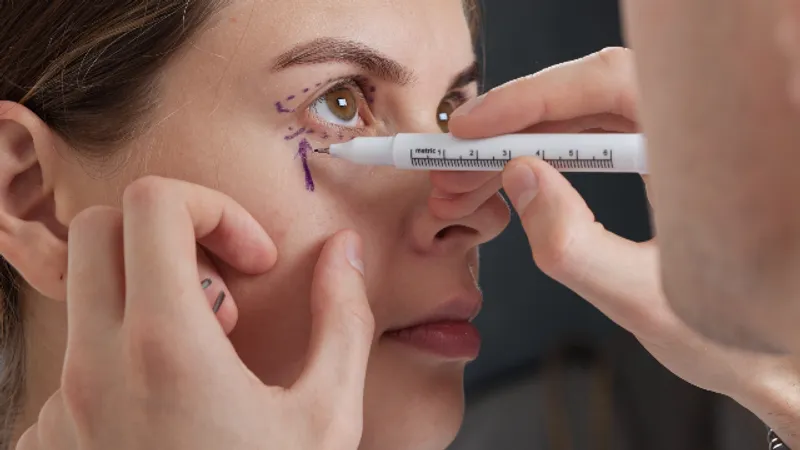
The clinic's stated method is accordingly cause-based. Its assessment considers the existing crease height and shape, eye shape, the condition of the eyelid and its muscle, scar tissue and adhesions from the first procedure, how much usable skin remains, and the volume of fat present, and the revision method is selected from that finding. The clinic's approved description of the service names the same sequence: customized revision based on the cause of the previous result, following assessment of crease, eye shape, eyelid and muscle condition, and fat volume.
What revision eye surgery can address
The problems the clinic identifies as revision indications are concrete. A crease that is excessively high or thick. Eyelids that are asymmetric. A crease that has loosened or faded until it is barely visible. Scarring or an appearance that reads as obviously operated. Puffiness, sometimes described by patients as a heavy or sausage-like fold. And functional problems, including incomplete eyelid closure or residual difficulty opening the eye fully.
The clinic maps techniques onto those causes rather than onto complaints. Where the eyelid is thick and puffy, unnecessary tissue or fat may be reduced and the crease redesigned. Where the two sides differ, the existing line may be released and redesigned. Where the line is weak or has faded, either a natural-adhesion method or an incisional revision may be appropriate. Where the concern is that the surgery simply looks like surgery, the line can be made shallower and the scarring addressed.
Depending on the underlying anatomy, revision may be combined with correction of eyelid opening, upper or lower eyelid procedures, fat repositioning or grafting, or treatment of scar tissue and adhesions. The clinic's own framing is that any combination should follow from the underlying cause rather than being performed simply to add procedures — which is a more restrained position than the packaging common elsewhere in this market.
Why timing is the hardest part
The single most consequential decision in revision is when, not how. Acute swelling after an operation distorts everything a surgeon would want to measure, so early assessment is unreliable. The clinic states that a revision decision should not be made on the basis of early postoperative swelling, and notes that routine revision is generally assessed after the tissues have stabilized, with practice in Korea commonly placing that at around six months, while selected complications may need earlier attention.
Behind that interval is the biology of healing. Scar tissue does not stay the same. The American Academy of Dermatology explains that a scar continues to change in appearance over months as it matures, and that treatments are generally considered once that process has progressed rather than while it is still active. Operating into tissue that is still remodeling means operating on a moving target — and the tissue a revision surgeon meets is not the anatomy the first surgeon met, because the first operation altered it.
That last point deserves emphasis. Revision is technically more demanding than a primary procedure precisely because the normal planes have been changed and scar tissue is present. The available skin, muscle and fat may differ substantially from what the textbook describes, and what is achievable is bounded by what remains.
Who is and is not a candidate
Suitable candidates are people whose problems after previous eyelid surgery are stable and persistent, and whose tissues have healed enough for a meaningful assessment. That includes asymmetric creases, an excessively high or thick crease, a loosened or faint crease, visible scarring, persistent puffiness, and residual eyelid-opening problems.
The clinic identifies three groups for whom revision is not currently appropriate: people whose postoperative tissues have not adequately healed; people whose expectations exceed what their remaining tissue can support; and people whose underlying problem can be managed without another operation. That third category is easy to overlook and is genuinely in the patient's interest — not every unsatisfactory result requires a return to the operating room.
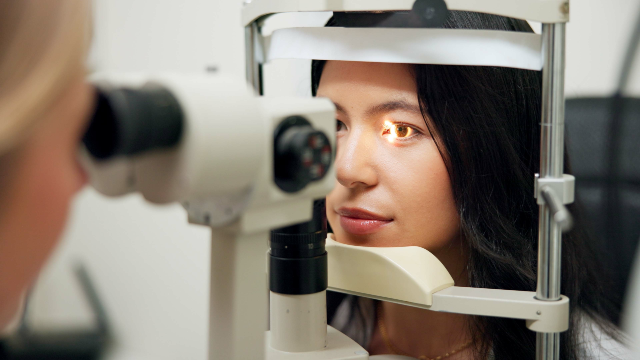
The clinical literature reinforces how much the examination governs. StatPearls, published on the National Library of Medicine's Bookshelf, describes formal tests of eyelid tone and position used before lower eyelid surgery — measuring how far the lid can be drawn from the globe and how promptly it returns, checking movement at the inner and outer corners, and recording where the lid margin sits relative to the iris. In a revision setting those measurements carry more weight, because a previous operation is one of the recognized causes of lower eyelid retraction.

What to bring, and what to expect
Preparation for a revision consultation is different from preparation for a first consultation. The clinic asks for details of the previous eyelid operations, including approximate dates and the techniques used where these are known, and for previous operative records and photographs where available. Medications, medical conditions and any complications from the first procedure should all be discussed.
If you had your original surgery elsewhere, gathering those records before you travel is worth the effort. An operative note that specifies what was done removes a layer of guesswork that otherwise has to be reconstructed from examination alone.
On duration, many straightforward revision eyelid procedures take about an hour, while more complex cases involving scar release or reconstruction take longer; Korean clinic practice commonly reports something in the region of sixty to ninety minutes. Where sutures are used they are typically removed around five to seven days afterward, with further follow-up depending on the case.
Recovery runs longer than for uncomplicated primary surgery. Initial swelling and bruising generally improve over the first several days to weeks. Some clinics in Korea quote roughly five to seven days for a basic return to daily activities, though revision cases can remain visibly swollen for longer, with reports of ten to twenty-one days before looking presentable. The final result continues to develop over approximately six to twelve months as swelling resolves and the scar matures.
Risks that are specific to a second operation
The clinic lists persistent asymmetry, recurrence or loosening, visible or excessive scarring, contour irregularity, puffiness, insufficient or excessive correction, altered eyelid sensation, dry-eye symptoms, difficulty closing the eyes, and eyelid-opening problems.
Reading that list honestly: revision can improve a result and cannot promise to erase the history of the first operation. Outcomes cannot be guaranteed, and they depend heavily on scar tissue, the quality and quantity of remaining tissue, and the cause of the original problem. A surgeon who tells you otherwise about a revision case is telling you something the anatomy does not support.
Postoperative care follows the surgeon's wound-care and medication instructions, protecting the surgical area, avoiding rubbing or trauma, and attending the scheduled checks. MedlinePlus, the U.S. National Library of Medicine's patient-education service, sets out general wound-healing expectations, including which changes are part of normal healing and which warrant contacting the treating team promptly.
Questions worth asking
Before agreeing to a revision, it is reasonable to ask what the surgeon believes caused the first result, what specifically will be done differently, how much usable tissue remains, and what the plan would be if the second result is also imperfect. The American Academy of Dermatology recommends establishing who will perform the procedure and what outcome is realistic for your individual case before any cosmetic treatment. Some practice background may help you weigh that. A revision assessment is arranged through the contact page.
The Bottom Line
- Revision eye surgery at TAE Plastic Surgery Clinic begins with identifying the cause of the previous result — crease height, eye shape, eyelid and muscle condition, scar tissue and fat volume are assessed before a method is chosen.
- Timing governs everything: acute swelling makes early assessment unreliable, and routine revision is generally considered once the tissues have stabilized.
- Revision is technically harder than a first operation because previous surgery changes the anatomy and leaves scar tissue, and what is achievable is bounded by what remains.
- Recovery runs longer than for primary surgery, with the final result continuing to develop over roughly six to twelve months.
FAQ
How soon after my first eyelid surgery can I have a revision?
Not immediately. Acute postoperative swelling makes assessment unreliable, and routine revision is generally assessed after the tissues have stabilized — practice in Korea commonly places that at around six months. Selected complications may need earlier attention, which is a judgment for the examining surgeon.
What can revision eye surgery actually correct?
An excessively high or thick crease, asymmetry between the two sides, a crease that has loosened or faded, visible scarring, an appearance that reads as obviously operated, persistent puffiness, and in appropriately selected cases problems with eyelid opening or incomplete closure.
Why is revision harder than the original operation?
Because the first operation changed the anatomy. Scar tissue and adhesions are present, the normal tissue planes have been altered, and the amount of usable skin, muscle and fat may differ substantially from what was there originally.
What should I bring to the consultation?
Details of your previous eyelid operations, including approximate dates and the techniques used if you know them, plus previous operative records and photographs where you have them. Also bring your medication list and details of any complications from the first procedure.
How long does the procedure take?
Many straightforward revision eyelid procedures take about an hour, with more complex scar-release or reconstruction cases taking longer; reported times in Korean practice are commonly in the sixty to ninety minute range. Sutures, where used, typically come out around five to seven days afterward.
When will I look presentable again?
Initial swelling and bruising improve over the first several days to weeks. Basic return to daily activities is often quoted at around five to seven days, though revision cases can stay visibly swollen longer, with ten to twenty-one days reported before looking presentable. The result continues developing for six to twelve months.
What are the risks?
Persistent asymmetry, recurrence or loosening of the crease, visible or excessive scarring, contour irregularity, puffiness, insufficient or excessive correction, altered sensation, dry-eye symptoms, difficulty closing the eyes, and eyelid-opening problems. Individual risk should be discussed against your own examination findings.
This article is for general informational purposes and does not constitute individualized medical advice, and it is not a self-diagnosis tool. Care described here is delivered in the Republic of Korea under Korean medical licensure rather than United States licensure, and the clinic is closed on Sundays and observes a daily lunch break, which affects scheduling for short international trips. Speak with a qualified plastic surgeon about your own circumstances before making any treatment decision.
References
- American Academy of Dermatology: Scars and Stretch Marks
- MedlinePlus: Wounds and Injuries
- MedlinePlus: Plastic and Cosmetic Surgery
- StatPearls: Transconjunctival Blepharoplasty
- American Academy of Dermatology: Questions to Ask
- MedlinePlus: Pain