Personalized plastic surgery, laser & anti-aging care in Haeundae, Busan
en-US

Skin Booster Korea: Matching the Booster to Your Skin
Skin booster Korea explained: how boosters differ from fillers, what the DoubleTite RF-plus-booster approach involves, and how the product is selected.
Skin Boosters in Korea: How the Product Gets Matched to the Skin
Medically reviewed by Dr. Kim Ki-Tae, Board-Certified Specialist in Plastic Surgery, issued by the Korean Society of Plastic and Reconstructive Surgeons
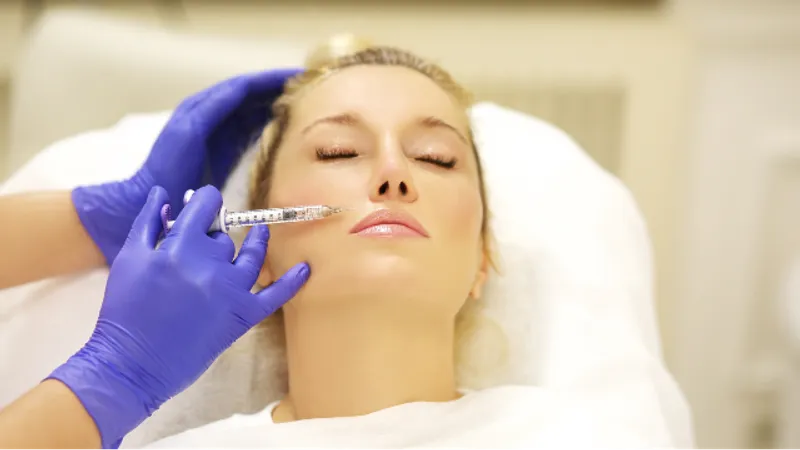
A skin booster Korea search returns a wall of product names and very little about how any of them is chosen. That is the wrong way round. A skin booster is a minimally invasive treatment in which injectable skin-quality products are delivered into or around the dermis to improve hydration, texture, elasticity and overall skin quality — and which product, delivered how, is the entire clinical decision. TAE Plastic Surgery Clinic in Haeundae, Busan states that the booster is selected according to individual skin type, and this article explains what that selection rests on.
Booster or filler: the distinction that decides everything
These two get confused constantly, and the confusion produces disappointed patients on both sides.
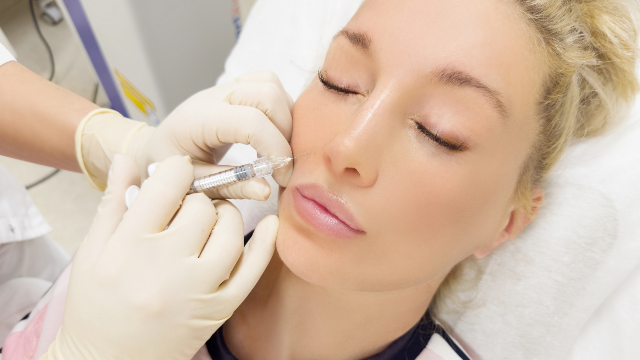
A dermal filler adds volume. The American Society of Plastic Surgeons describes injectable fillers as diminishing facial lines and restoring volume and fullness — plumping thin lips, enhancing shallow contours, softening creases, improving the appearance of recessed scars. The problem being solved is a loss of facial volume, which the same source explains happens as subcutaneous fat is lost with age and the skin itself stretches.
A skin booster is not doing that. Boosters are delivered to improve the quality of the skin — how hydrated it is, how smooth its texture, how elastic it feels — rather than to change the contour of a face. The clinic states the distinction the same way: boosters are generally intended for skin-quality improvement rather than adding substantial facial volume.
Two practical consequences follow. If your complaint is that your face looks deflated, a booster is the wrong treatment. And whichever you choose, the American Society of Plastic Surgeons is clear that minimally invasive injectables are temporary treatments for facial aging and that ongoing treatment is needed for a long-term result — which is a fact to plan around rather than a disappointment to discover later.
What the clinic's DoubleTite approach involves
TAE Plastic Surgery Clinic's documented technique is not conventional hand injection. It uses DoubleTite, a device from AGNES Medical, which the clinic describes as carrying thirteen needles of differing heights that distribute radiofrequency energy through the papillary and reticular dermis while the booster solution is delivered into the skin at the same time. Independent technical material for the device describes five long and eight short microblades, radiofrequency delivery and simultaneous injection capability.
Two things are worth drawing out of that description. First, the needles being of different heights means energy is placed at more than one level of the dermis in a single application, rather than at one uniform depth. Second, the delivery of energy and the delivery of the solution happen together, which is a different proposition from injecting a booster and separately running a radiofrequency treatment.
The clinic also describes tip guidance and skin cooling as part of the system, and states that pain is not significant, allowing comfortable treatment with numbing cream. Comfort features are easy to dismiss as marketing; in an injectable treatment delivered across a whole face, they are what determines whether the planned pattern of injections can actually be completed evenly.
How the product gets selected
The clinic emphasizes one-to-one treatment planning, considering skin condition, tissue structure, aesthetic goals and recovery needs. For boosters specifically, the consultation's job is to establish the main concern — hydration, texture, pores, elasticity, pigmentation or general signs of aging — and then to choose the booster and the delivery method that suit it.
That sequence is worth insisting on, because the common failure mode in this category is arriving having chosen a product from social media and asking for it by name. Different boosters occupy different ground: hyaluronic-acid based boosters are directed primarily at hydration and skin quality, while polynucleotide-type preparations are generally positioned toward skin repair and regeneration. The clinic associates its own combined approach with improvement in elasticity and pores, reduction of internal dryness and a more hydrated appearance.
Who it suits, and who should wait
The described candidates are adults looking for improvement in hydration, dryness, fine texture, mild loss of elasticity, pores that look enlarged, or generally dull skin — without needing major correction of facial volume.
Treatment is generally deferred for people who are pregnant or breastfeeding, who have an active skin infection or inflammation at the treatment site, who have a known allergy to the proposed material, who have significant uncontrolled medical problems, or where consultation identifies another contraindication. Suitability is both product-specific and patient-specific, which is another reason the product cannot sensibly be chosen before the assessment.
Choosing where to have it done
This is a treatment that is frequently commoditized, and the American Academy of Dermatology's guidance is the right correction to that. Before any cosmetic procedure, establish who will perform it, what training they hold, and what result is realistic for your individual case. For an injectable specifically, add: what is being injected, at what depth, and what the plan is if a nodule or a persistent swelling develops afterward.
A clinic that answers those questions with a product name and nothing else has told you very little. One that answers with an assessment of your skin, a reason for the choice and a stated plan for complications has told you a great deal. An individual assessment here begins at the booking and enquiry page.
What a session involves
Treatment typically takes fifteen to thirty minutes, with the exact timing depending on the plan agreed at consultation. A topical numbing cream, or ice, is typically used, confirmed individually beforehand.
The sequence is: assessment and planning, cleansing and disinfection, topical anesthetic where appropriate, mapping of the treatment area, delivery of the booster by the selected technique, and calming of the skin afterward. Where the clinic's combined device is used, radiofrequency energy is delivered through the multi-needle handpiece while the solution is administered. It is an outpatient treatment with no overnight stay, and a short period of observation afterward.
Preparation is minimal: tell the clinician about allergies, medications and supplements, previous injectable treatments, active skin conditions, any history of abnormal scarring and any previous reactions. Alcohol and blood-thinning medication are generally avoided on the day of treatment.
Recovery and the timeline
Mild swelling or bruising at the injection points usually settles within a few days. For twenty-four hours afterward, the clinic asks patients to avoid touching or massaging the skin, strenuous exercise, and heat exposure; its written aftercare guidance sets out the specific timeline. Ordinary aftercare otherwise means gentle cleansing, sun protection and leaving the treated skin alone.
Results are usually visible within a few days, with the final result generally reached within one to two weeks. How long it lasts depends heavily on the product used, the concentration, the injection technique, the number of sessions and the condition of your skin — the clinic's stated range runs from several months up to around a year. Routine follow-up is generally not required beyond an optional touch-up appointment.
For an international patient, the visit shape is undemanding: the clinic advises that as little as a single day can be practical, since downtime is minimal, with most patients able to fly home the same day or the next and long-haul timing confirmed by the treating doctor.
Risks
Any injectable treatment is an intervention rather than a skincare step, and it should be weighed as one. MedlinePlus, the National Library of Medicine's consumer health service, makes the general point that cosmetic procedures carry real risks alongside their benefits — a framing worth keeping in mind for a treatment marketed with the vocabulary of a facial.
The common short-term reactions after injectable boosters are redness, swelling, tenderness, bruising, visible needle marks and temporary discomfort. Small papules or nodules can also occur depending on the product and the injection technique.
The less common risks vary according to what is injected: persistent swelling, infection, nodules, inflammatory reactions, pigmentary changes and, rarely, vascular compromise. That last one is the reason the question about who is injecting matters more than the question about which brand — it is a complication of technique and anatomy rather than of product choice.
What is realistic
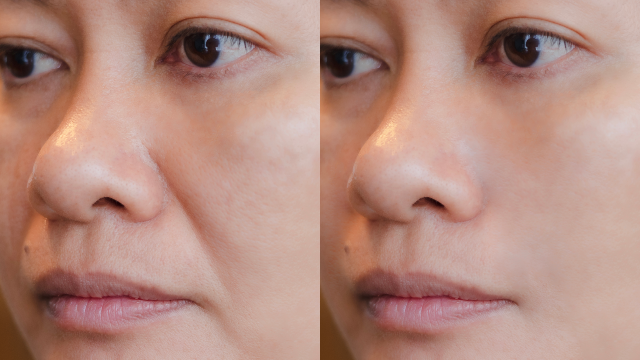
Improved hydration, smoother texture, better radiance and improved elasticity are the realistic goals, with the clinic specifically associating its combined approach with elasticity, pores and internal dryness. The clinic's own framing is that these are improvements the treatment aims at, not outcomes anyone can promise in advance.
Four things sit outside what anyone can promise here: a measurable degree of change specified in advance, an outcome matching another patient's, perfect symmetry, and certainty that no further treatment will be wanted. No outcome guarantee is published for this service, and none should be inferred from any description of it. Further background on the practice is available on its about us page.
The Bottom Line
- A skin booster improves skin quality — hydration, texture, elasticity — while a filler adds volume; choosing the wrong one is the most common mistake in this category.
- The clinic's documented technique uses DoubleTite, with thirteen needles of differing heights delivering radiofrequency through the papillary and reticular dermis while the booster is administered at the same time.
- Which booster is used is decided from your main concern at consultation, not chosen by product name in advance.
- Treatment takes fifteen to thirty minutes, results appear within days and settle within one to two weeks, and the effect lasts from several months up to around a year depending on the product.
- Injectable results are temporary by nature, and no outcome guarantee is published.
FAQ
What is the difference between a skin booster and a filler?
A filler adds volume to change contour — the American Society of Plastic Surgeons describes fillers as restoring fullness and softening creases. A booster is delivered to improve the quality of the skin itself: hydration, texture and elasticity. They solve different problems and are not interchangeable.
What does DoubleTite do that a hand injection does not?
It delivers radiofrequency energy through a multi-needle handpiece while administering the booster solution at the same time. The needles are of differing heights, so energy reaches more than one level of the dermis in a single application, and the system includes tip guidance and skin cooling.
How is my booster chosen?
At consultation, from your main concern — hydration, texture, pores, elasticity, pigmentation or general aging — together with your skin condition, tissue structure and how much recovery you can accommodate. The clinic states the booster is selected according to individual skin type.
Does it hurt?
The clinic states that pain is not significant with its combined approach, which uses skin cooling and a tip guide, and that treatment is comfortable with numbing cream. A topical anesthetic or ice is typically used.
How long do the results last?
Results usually appear within a few days and settle within one to two weeks. Duration varies considerably with the product, concentration, technique, number of sessions and your own skin, with the clinic's stated range running from several months up to around a year.
What should I avoid afterward?
Touching or massaging the treated skin, strenuous exercise and heat exposure for about twenty-four hours. Gentle cleansing and sun protection are the sensible defaults after that, following the written aftercare guidance provided.
What can go wrong?
Redness, swelling, tenderness, bruising and visible needle marks are common and temporary, and small papules can occur. Less commonly there may be persistent swelling, infection, nodules, inflammatory reactions or pigmentary changes, and rarely vascular compromise — which is why who performs the injection matters more than which product is used.
This article is for general informational purposes and does not constitute individualized medical advice, and it is not a self-diagnosis tool. Care described here is delivered in the Republic of Korea under Korean medical licensure rather than United States licensure, and the clinic is closed on Sundays and observes a daily lunch break, which affects scheduling for short international trips. Speak with a qualified plastic surgeon about your own circumstances before making any treatment decision.
References
- American Society of Plastic Surgeons: Dermal Fillers
- American Academy of Dermatology: Questions to Ask
- American Academy of Dermatology: Cosmetic Treatment Safety
- American Academy of Dermatology: Cosmetic Treatments
- MedlinePlus: Skin Conditions
- MedlinePlus: Plastic and Cosmetic Surgery