Personalized plastic surgery, laser & anti-aging care in Haeundae, Busan
en-US

TAE-SFCT in Korea: Scar Treatment and Tattoo Removal
TAE-SFCT scar treatment combines N-Derm micro-coring with laser in one clinic protocol used for both scars and tattoo removal at TAE in Haeundae, Busan.
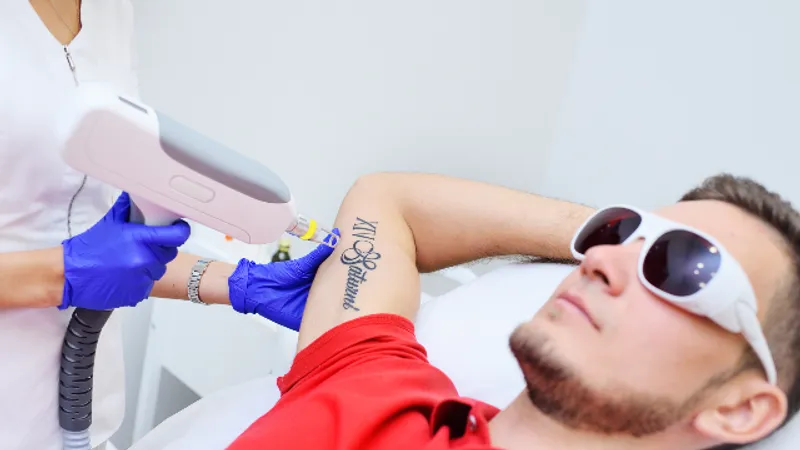
TAE-SFCT: One Protocol Used for Both Scars and Tattoos
Medically reviewed by Dr. Kim Ki-Tae, Board-Certified Specialist in Plastic Surgery, issued by the Korean Society of Plastic and Reconstructive Surgeons
TAE-SFCT scar treatment is unusual in carrying a clinic's own name, and more unusual in being applied to two different problems. The initials stand for TAE-Scar Fractional Coring Technique, and the method combines N-Derm micro-coring technology with laser treatment. At TAE Plastic Surgery Clinic in Haeundae, Busan it is recorded as a method within both scar treatment and tattoo removal. This article explains what the protocol involves, why two apparently separate concerns share it, and what each application can realistically achieve.
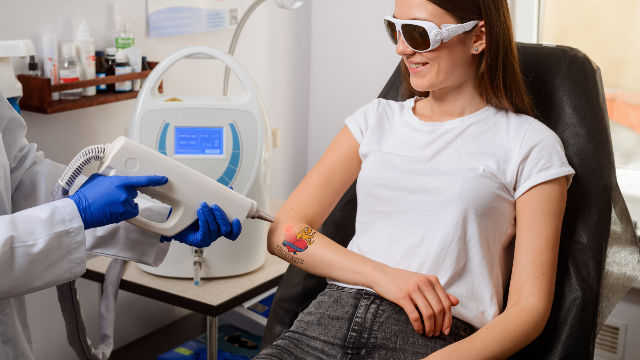
What the protocol is
TAE-SFCT is a combination rather than a single device. Micro-coring technology removes tissue through controlled columns, and laser treatment is applied as the other half of the same protocol. The clinic states that this combined approach is used for both scar and tattoo-related concerns, and that it was developed out of its own scar treatment experience.
Two things follow from that structure. First, the treatment is not chosen from a menu of devices but assembled around the problem: the clinic's stated position is customized diagnosis rather than a standardized procedure. Second, the two applications share a protocol because they share a physical situation — pigment or altered tissue held in the dermis, where a single modality working alone has known limits.
Why one method does not fit every scar
The clinic's reason for building a customized protocol is stated plainly: scars cannot be treated effectively with one universal method, because their characteristics vary too much. Cause, shape, depth, tissue condition and extent all differ, and the assessment considers each before any treatment is selected.
This matches what patient-facing dermatology guidance says about the category. The American Academy of Dermatology's material on scars describes a range of scar types with different appearances and different responses to treatment, and treatment selection that follows from which type is present. A raised scar and a depressed one are not variants of one problem.
The clinic's scar clinic therefore evaluates the scar itself first — its shape, its tissue condition, its depth and how far it extends — and selects treatment methods, equipment and laser technologies from that analysis.
What is treated
The scar types the clinic names are surgical scars, acne scars, burn scars, traumatic scars, chickenpox marks, keloid scars, atopic scars and scars related to previous tattoo removal. That last category is a reminder that tattoo treatment done badly creates work for scar treatment later.
On the tattoo side, the described candidates are people with unwanted tattoos or permanent makeup, people with tattoo-related scarring, and people whose tattoos have proven difficult to treat by other means. The clinic describes its approach as accommodating tattoos of different pigment types, depths and sizes.
The equipment behind the protocol
The clinic lists specialized scar treatment equipment selected according to individual conditions — its named devices include ProFractional, BBL, Q-Plus R Evo, Discovery Pico, Cell Unit and Ibex, alongside the N-Derm micro-coring system that gives the protocol its distinctive component.
An inventory like that is only meaningful if the selection between items is real, and that is the claim the clinic is making: equipment and laser technology chosen to fit the scar rather than the scar routed to whichever device is available. It is a fair question to put at consultation — which device is proposed for your scar, and why that one.

Why tattoo ink stays, and what treatment does about it
The physiology here is worth understanding, because it explains both why tattoos are permanent and why removal takes time. The American Society of Plastic Surgeons explains that a tattoo consists of thousands of ink particles suspended in the skin; the immune system normally clears small foreign particles, but these particles are too large for it to remove, which is what makes a tattoo permanent. Laser treatment works by breaking those particles into smaller pieces that the immune system can then carry away.
That mechanism sets the pace of treatment. Complete clearance is not usually achieved in one session — the same society puts the typical range at one to ten sessions depending on the design, size and colors involved, with about six weeks between sessions so the skin can heal and the body can absorb as much ink as possible. Some colors are harder to clear than others and may not clear completely.
It also explains the clinic's rationale for adding a coring step. The clinic describes N-Derm as using a coring technique to physically extract tattoo-related tissue, combined with laser treatment, in an approach designed to address the limits of laser-only treatment. Where the laser depends entirely on fragmentation and immune clearance, extraction removes a portion of the problem directly.
For context on the alternatives, the American Society of Plastic Surgeons notes that dermabrasion, chemical peels using trichloroacetic acid, and surgical excision are all used for tattoo removal but are more invasive and correspondingly less common today; dermabrasion in particular can produce significant scarring and requires a practitioner well trained in the technique.
The session, comfort and aftercare
A session typically takes thirty minutes to an hour, with exact timing depending on the plan agreed at consultation. It is normally performed under topical numbing cream, with cooling used during treatment for comfort; the approach is confirmed individually. Most patients describe mild warmth or tingling rather than significant pain, and the clinic states it can adjust comfort measures on request.
Afterward, redness or mild flaking at the treated site generally settles within several days between sessions. The clinic asks for the site to be protected from sun and from heat such as saunas for a short period, and for gentle skincare in the meantime. Written aftercare guidance covering the day-by-day timeline is provided.
Sun avoidance before treatment matters as much as after it: recently tanned skin at the treatment site is a reason to postpone, along with active infection, and pregnancy or breastfeeding. Patients are asked to disclose previous scar treatments, medications, skin conditions and any history of raised or keloid scarring, since that history changes what should be attempted.
Because sessions are spaced and courses are usual rather than exceptional, anyone traveling for this treatment should establish the expected number of sessions and their spacing before committing to a schedule. A realistic plan can be discussed through the clinic's treatment enquiry page.
What it is combined with
Combination is central to how the clinic treats this category rather than an occasional addition. Beyond pairing micro-coring with laser inside the protocol itself, the clinic records combining laser treatment with a regenerative approach using the patient's own stromal vascular fraction for scar work — a second axis of treatment aimed at the quality of the tissue rather than at the contour of the scar.
Whether a combination is appropriate is decided from the assessment, and it is a question worth raising early for a traveling patient, since combining approaches usually changes the number of visits rather than the length of any one of them.
Risks
For scar work, the possible effects include temporary redness, swelling, tenderness, itching, dryness, crusting and irritation. Depending on the technique used, there can also be post-inflammatory hyperpigmentation or hypopigmentation, infection, delayed healing or changes in scar texture. Rarely, treatment can worsen a scar or contribute to raised or keloid scarring — which is why a personal history of abnormal scarring changes the assessment.
For tattoo work, temporary redness, swelling, tenderness, irritation, crusting or pigment changes can follow treatment, with less common risks including prolonged inflammation, infection, delayed healing and, less commonly, scarring or textural change. Risk varies with skin type, the characteristics of the tattoo and how intensively it is treated.
Wound care after either is not optional. MedlinePlus, the National Library of Medicine's consumer health service, sets out the general principles for caring for a healing wound, including keeping it clean and watching for signs of infection — advice that applies directly to skin that has been deliberately treated.
What is realistic
The clinic is direct about this, and the honesty is worth repeating. For scars, realistic improvement means better appearance, texture and color — not removal. A scar that has formed cannot be erased. Visible improvement typically builds across the first two to three sessions, with the fuller result after the recommended course is completed.
For tattoos, fading occurs progressively rather than immediately, and multiple sessions may be needed depending on the tattoo. What cannot be promised in either application is complete removal, a specific percentage of improvement, or an identical response between patients — or even between two different scars on the same patient. The clinic publishes no outcome guarantee for either service. Background on the practice itself is available on its clinic information page.
The Bottom Line
- TAE-SFCT combines N-Derm micro-coring with laser treatment in one named protocol, applied to both scar treatment and tattoo removal.
- The clinic's stated position is that no single method suits every scar, so equipment and technique are selected from the scar's cause, shape, depth and tissue condition.
- Tattoo ink persists because the particles are too large for the immune system to clear; laser fragments them, and the coring component extracts tissue directly.
- Expect a course rather than a single session — the American Society of Plastic Surgeons puts typical laser tattoo removal at one to ten sessions spaced about six weeks apart.
- Realistic scar outcomes are improvement in appearance, texture and color; a formed scar cannot be erased, and no outcome guarantee is published.
FAQ
What does TAE-SFCT stand for?
TAE-Scar Fractional Coring Technique. It names a protocol that combines N-Derm micro-coring technology with laser treatment, used by the clinic for both scar treatment and tattoo removal.
Why is the same protocol used for scars and tattoos?
Because both involve altered tissue or pigment held in the dermis, where a single modality has known limits. The clinic combines tissue extraction with laser treatment for both, adjusting the plan to the individual condition being treated.
Why does tattoo removal take several sessions?
Ink particles are too large for the immune system to clear on its own. Laser treatment breaks them into pieces the body can remove, and that happens gradually. The American Society of Plastic Surgeons puts the typical range at one to ten sessions, with about six weeks between them for healing and absorption.
Will my tattoo disappear completely?
Not necessarily. Some ink colors are harder to clear than others and may not clear completely, and fading is progressive rather than immediate. The clinic publishes no guarantee of complete removal.
Which scars can be treated?
Surgical scars, acne scars, burn scars, traumatic scars, chickenpox marks, keloid scars, atopic scars and scarring left by previous tattoo removal. Which treatment is appropriate depends on the scar's cause, shape, depth and extent.
Does it hurt, and what is the recovery like?
The clinic describes the sensation as mild warmth or tingling rather than significant pain; treatment is normally performed under topical numbing cream with cooling. Redness or mild flaking generally settles within several days between sessions.
Who should postpone treatment?
Anyone pregnant or breastfeeding, anyone with an active infection at the site, and anyone whose skin there has recently been tanned. A history of raised or keloid scarring needs particular assessment before treatment is planned.
This article is for general informational purposes and does not constitute individualized medical advice, and it is not a self-diagnosis tool. Care described here is delivered in the Republic of Korea under Korean medical licensure rather than United States licensure, and the clinic is closed on Sundays and observes a daily lunch break, which affects scheduling for short international trips. Speak with a qualified plastic surgeon about your own circumstances before making any treatment decision.
References
- American Society of Plastic Surgeons: Tattoo Removal
- American Academy of Dermatology: Scars and Stretch Marks
- MedlinePlus: Wounds and Injuries
- American Academy of Dermatology: Cosmetic Treatment Safety
- American Academy of Dermatology: Questions to Ask
- MedlinePlus: Skin Conditions