Personalized plastic surgery, laser & anti-aging care in Haeundae, Busan
en-US

Thread Lifting vs Surgical Facelift: When Each Makes Sense
An honest decision framework for thread lifting against facelift surgery: what each corrects, how long each lasts, and the laxity threshold that separates them.

Thread Lifting vs Surgical Facelift: Choosing Between Them
Medically reviewed by Dr. Kim Ki-Tae, Board-Certified Specialist in Plastic Surgery, issued by the Korean Society of Plastic and Reconstructive Surgeons
Thread lifting and facelift surgery are often presented as two intensities of the same idea. They are not. One repositions soft tissue mechanically through small entry points and holds it there for a period; the other is an operation that alters the anatomy of the face and neck. Deciding between them is mostly a question of how much descent there is to correct and how long you want the correction to last. TAE Plastic Surgery Clinic offers thread lifting within its facial lifting range, and this article sets out the framework its own material uses, alongside public patient education describing the surgical comparator.

What thread lifting actually does
The clinic describes thread lifting as producing a mechanical lifting effect, with some thread designs and treatment plans also contributing to longer-term tissue remodeling. It is intended for selected patients with mild to moderate facial laxity, not for advanced descent of skin and tissue. The stated candidates are adults with early jowling or lower-face sagging, loss of definition along the jawline, or selected midface and lower-face laxity, who want a minimally invasive option — and the clinic adds a qualifier worth taking seriously: results are generally best when there is enough tissue quality for the threads to engage and when expectations are realistic.
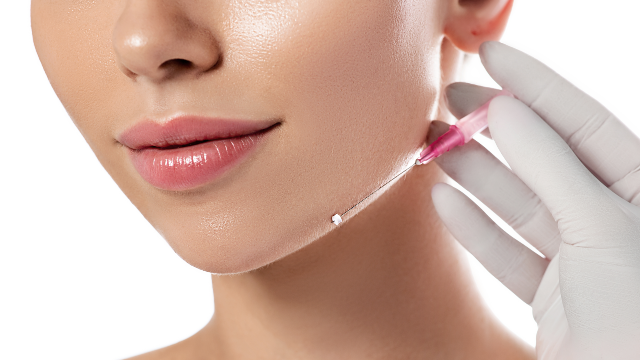
The procedure itself is short and done as an outpatient, with no overnight stay in routine cases: the face is assessed and the treatment designed, the skin is cleansed and disinfected, local anesthesia is given, small entry points are created, the medical thread is placed into the planned tissue plane, tensioned in the planned direction, and the entry points checked and treated. The clinic gives a practical general estimate of roughly thirty to sixty minutes, varying with the area and the number and type of threads used.
One line in the clinic's planning notes deserves emphasis, because it separates a considered treatment from a template one: thread type, number, entry points and vector should be selected according to anatomy rather than applying the same pattern to every patient. The assessment behind that covers where the face is sagging, the degree and direction of tissue descent, skin thickness and quality, facial asymmetry, fat distribution and overall proportion.
What a facelift does, from public sources
The American Society of Plastic Surgeons describes a facelift, or rhytidectomy, as a surgical procedure that improves visible signs of aging in the face and neck — relaxation of facial skin causing sagging, deepening folds between the nose and the corner of the mouth, fat that has fallen or disappeared, jowls developing along the cheeks and jaw, and loose skin and excess fat of the neck. It attributes the loss of youthful contour to thinning skin, loss of facial fat, gravity, sun damage, smoking, heredity and stress.
The society is also direct about the limits. A facelift is restorative rather than transformative: it does not change your fundamental appearance, and it has no power over the passage of time, which continues afterwards as before. And it draws the boundary this whole comparison turns on: only an operation produces a facelift, and treatments short of one — however useful beside it, and however much they postpone it — do not reach the same endpoint.
StatPearls, the peer-reviewed clinical reference carried on the Bookshelf platform of the National Center for Biotechnology Information, treats cervicofacial rhytidectomy not as one standardized operation but as a set of named anatomic techniques, picked after the patient has been examined. That framing is useful for a patient: "facelift" names a category of surgery, and which technique applies is an examination finding.
The trade-off, in the clinic's own words
The clinic's comparison is short and unusually candid. Set against a traditional facelift, thread lifting generally involves smaller access points and a shorter recovery period, but provides a more limited and more temporary lifting effect — and a surgical facelift may provide stronger correction where laxity is significant.
Its wider framing of the facial lifting category adds a second axis. Thread lifting is described as more mechanical repositioning and support, with generally more downtime than energy-based tightening, while radiofrequency and other energy treatments are described as less invasive collagen remodeling. So threads sit in the middle of the clinic's own range: more than a device, less than an operation.
That middle position is the honest reason to choose it, and also the honest reason not to. If what you have is early jowling and you want visible change with small entry points, the middle is exactly where you should be. If what you have is substantial descent, the middle will disappoint you, and choosing it will have cost you a recovery for a result that was never going to be enough.
Recovery and how long each lasts
For threads, the clinic states that most patients can return to light daily activities relatively quickly, but that swelling, bruising, tenderness and tightness can persist for several days to a few weeks depending on the number and location of threads and on individual healing. Most visible recovery happens within one to two weeks, with subtler settling continuing beyond that.
Timing of the result is its own subject. Some lift can be noticeable immediately because the repositioning is mechanical, but early swelling can make the face look uneven, so the appearance settles progressively over the following weeks, and the final assessment is usually made around one to three months. On longevity the clinic is explicit that it varies considerably with thread material, technique, treatment area, tissue laxity and individual factors — and its realistic-results statement is that a thread lift generally does not create the same degree of correction as comprehensive surgical lifting.
Aftercare is straightforward but genuinely restrictive for a short period: avoid strong pressure or massage on the treated areas, excessive facial movement, saunas and strenuous activity during early recovery, and follow the specific instructions given.
Risks belong in the decision, not the footnotes
The clinic lists the common short-term effects of thread lifting as swelling, bruising, pain or tenderness, tightness, temporary numbness and contour irregularity. Less common but clinically important complications include infection, a thread becoming visible, thread displacement, inflammatory reaction or granuloma, hematoma, nerve injury and injury to nearby glands or vessels. Treatment should be avoided where there is active skin infection or inflammation at the site, an uncontrolled bleeding disorder, significant healing problems, or unrealistic expectations.
The society's patient material on thread lifting covers the same ground from outside the clinic, describing the use of absorbable barbed sutures to produce a mechanical lift with an associated collagen response, and setting out candidacy in comparable terms. Reading a clinic's account and an independent professional body's account of the same procedure is a reasonable way to check that nothing has been softened.
Preparation matters too. The clinic asks patients to disclose all medications and supplements, particularly anything that increases bleeding risk, and to declare previous thread lifts, fillers, energy treatments or facial surgery.
Which one your face is asking for
Three questions usually settle it. How much descent is there — early jowling and softening definition, or established sagging with excess skin? How long do you want the correction to hold — a period measured in months to a year or two, or a structural change? And how much recovery can you absorb — a week or two of swelling, or a surgical recovery with a longer restricted period?
Background is worth carrying into that conversation. The National Library of Medicine's MedlinePlus pages record that aging skin grows thinner and gives up some of its fat, so it no longer sits as fully over the tissue beneath, and that wounds may close more slowly; they name sun exposure as a leading cause and report that wrinkling rises with how heavily and how long a person has smoked. Some of what looks like sagging is volume loss and some of it is surface damage, and neither is corrected by lifting tissue.
The clinic's answer to all three questions is an examination rather than a description, and its stated planning method assumes that. An assessment can be arranged through the clinic's consultation request form, and readers who want to understand the practice first will find that on the about the clinic page.
The Bottom Line
- Thread lifting repositions tissue mechanically through small entry points; a facelift is an operation that alters facial and neck anatomy — they are different categories, not two strengths of one thing.
- The clinic's own comparison: smaller access points and shorter recovery with threads, but a more limited and more temporary effect, with surgery offering stronger correction where laxity is significant.
- Threads are intended for mild to moderate laxity and enough tissue quality for them to engage; advanced descent is outside their stated territory.
- Recovery from threads runs from several days to a few weeks, with the final appearance usually assessed around one to three months.
- The American Society of Plastic Surgeons states that only an operation produces a facelift, and that lesser treatments may postpone it without reaching what it reaches.
FAQ
Am I a candidate for thread lifting?
The clinic describes suitable candidates as adults with mild to moderate facial or neck laxity who want a subtle lifting effect without conventional surgery, with enough tissue quality for the threads to engage. Early jowling, softening jawline definition and selected midface or lower-face laxity are the stated territory. A consultation assesses skin quality, laxity and expectations.
How long does a thread lift last?
The clinic states that longevity varies considerably according to thread material, technique, treatment area, tissue laxity and individual factors, and describes the lifting effect as more limited and more temporary than surgical correction. It does not publish a single duration, because the variables above genuinely change the answer.
How much recovery should I plan for?
Swelling, bruising, tenderness and tightness are common in the first several days, with most visible recovery inside one to two weeks and subtler settling continuing afterwards. The exact pattern depends on how many threads were placed and where.
When will I see the final result?
Some lift may be visible immediately because the repositioning is mechanical, but early swelling can make the appearance uneven. The clinic describes the result settling progressively over the following weeks, with the final appearance usually assessed around one to three months.
What are the risks?
Common short-term effects are swelling, bruising, tenderness, tightness, temporary numbness and contour irregularity. Less common but important complications include infection, a thread becoming visible, thread displacement, inflammatory reaction or granuloma, hematoma, nerve injury and injury to nearby glands or vessels.
When is surgery the better answer?
When laxity is significant. The clinic states that a surgical facelift may provide stronger correction in that situation, and that thread lifting is intended for mild to moderate laxity rather than advanced tissue descent. The American Society of Plastic Surgeons adds that a facelift can only be performed surgically.
What anesthesia is used for a thread lift?
The clinic performs it under local anesthesia, sometimes with additional numbing measures depending on the treatment area and patient preference. Some pressure or brief stinging may be felt during placement.
What should I tell the clinic beforehand?
All medications and supplements, especially anything that increases bleeding risk, plus any previous thread lifts, fillers, energy-based treatments or facial surgery. Active skin infection or inflammation at the treatment site means the procedure should not go ahead.
This article is for general informational purposes and does not constitute individualized medical advice, and it is not a self-diagnosis tool. The treatments described are delivered in the Republic of Korea under Korean medical licensure rather than United States licensure. Speak with a qualified plastic surgeon about your own anatomy, your own goals and your own recovery time before making any treatment decision.
References
- ASPS: Thread Lift
- ASPS: Facelift Surgery
- StatPearls: Cervicofacial Rhytidectomy
- ASPS: Skin Rejuvenation and Resurfacing
- MedlinePlus: Skin Aging