Personalized plastic surgery, laser & anti-aging care in Haeundae, Busan
en-US

Trinity Breast Surgery Korea: A Combination Approach
Trinity Breast Surgery at TAE Plastic Surgery Clinic combines customized implant selection with fat transplantation and contouring in one surgical plan.
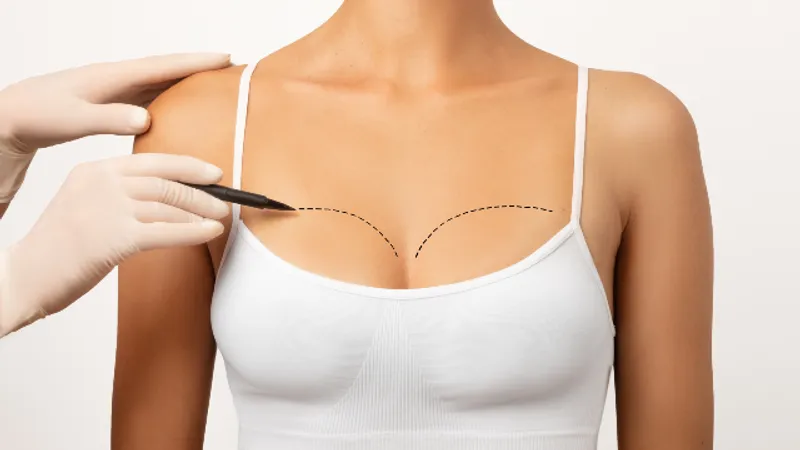
Trinity Breast Surgery: A Combination Approach to Breast Aesthetics
Medically reviewed by Dr. Kim Ki-Tae, Board-Certified Specialist in Plastic Surgery, issued by the Korean Society of Plastic and Reconstructive Surgeons
Trinity Breast Surgery is TAE Plastic Surgery Clinic's customized approach for people who want a more defined breast line, or whose simulation with implants alone does not produce the appearance they are looking for. Rather than treating implant selection as the whole of the operation, it adds further techniques where the plan calls for them. This article explains what those components are, who the approach is designed for, and what the combination means for recovery.
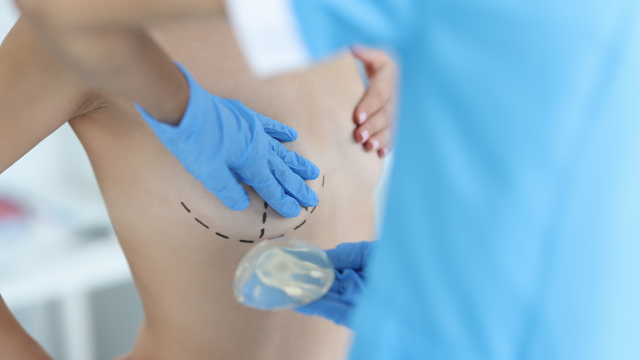
The problem it is built around
There is a specific situation this procedure exists to address. A patient arrives, an implant-based simulation is run, and the projected result is technically correct but does not deliver the breast line or the overall proportion the patient was hoping for. Increasing implant volume is the obvious lever, and it is frequently the wrong one — a larger implant changes the amount of projection, not the distribution of it, and it can push a result further from balance rather than closer.
The clinic's framing is that it considers the direction and distribution needed to achieve the intended breast volume rather than simply inserting an implant. Pre-operative Body Balance Design is used to plan a breast line that complements the overall body profile, with individualized diagnosis and a range of implants available so the plan follows the person's body type and characteristics.
What can be combined
Trinity is a base operation plus selected additions, chosen according to what the assessment finds. The components the clinic describes are:
- Customized implant selection. The clinic stocks a range of sizes and shapes so that the implant is chosen for the individual rather than the individual fitted to available stock. Among the implant options it lists are Mentor Smooth, Mentor Memory Gel Extra and Motiva Ergonomics.
- Stem cell (SVF) transplantation. Fat containing stem cell components is transplanted alongside implants. The fat-derived material is taken from areas such as the abdomen and thighs and used to support natural shape and soft texture while improving volume in regions such as the cleavage.
- ELSA ultrasonic liposuction. Customized probes for different body areas are used to melt and remove fat through ultrasonic energy, helping to create smoother body lines where contouring is part of the plan.
- A signature scar-improvement program. The clinic uses a set of named technologies, including DDR, ProFractional, Ruby Laser, Enderm and its own TAE-SFCT method, to address scarring and support skin regeneration.
- Capscare. A program focused on managing capsulitis after breast surgery, intended to support smooth tissue healing around implants and help maintain a soft, natural feel.
The logic running through that list is that the implant provides volume while the other components address texture, transition and contour — the parts of a result that an implant on its own cannot reach. Volume in the cleavage region is a good example: it is governed by soft tissue between and above the implants rather than by the implants themselves, which is why adding tissue there is a different intervention from choosing a bigger device.
Who it is designed for
The clinic identifies three groups as potentially suitable: people who want more defined breast volume and a refined breast line; people who want an approach built around their own body type and characteristics; and people who need additional volume correction, fat removal, scar improvement or implant-related management as part of their overall plan.
That third group is the one most often underserved elsewhere. Someone who wants augmentation and also has a scar they dislike, or who wants contouring attended to at the same time, is otherwise looking at separate procedures on separate visits — a materially different proposition for anyone who has traveled internationally for surgery and has a finite number of days in the country.
The procedure may need postponing or avoiding in the presence of active infection, uncontrolled medical conditions that increase surgical or anesthesia risk, or circumstances that make elective surgery unsuitable. People who are pregnant or breastfeeding will generally need to wait. The clinic also states that candidates should hold realistic expectations about implant-based enlargement and understand the possibility of future monitoring or additional surgery. Final suitability is determined by the surgeon after individual assessment.
How the operation is planned and performed
The stated sequence is: assessment of body type, breast characteristics and desired volume; pre-operative Body Balance Design and simulation; selection of an appropriate implant based on individual body characteristics and the intended shape; the augmentation itself with the selected implant; where appropriate, additional components such as stem-cell-containing fat transplantation, accessory-breast or fat removal, or scar treatment; and then personalized postoperative care and follow-up.
Anesthesia for this procedure is typically local with sedation, or general, depending on the extent of surgery, and the exact approach is confirmed with the patient at consultation based on individual comfort and medical history.
Operating time is not a fixed figure. It depends on the surgical technique used and on whether additional components such as fat transplantation, liposuction or scar treatment form part of the plan. International patients should allow enough time in Korea for early recovery and postoperative assessment before traveling, and the clinic confirms the expected duration, recommended stay and follow-up schedule individually.
Standard surgical preparation applies. Blood-thinning drugs and supplements are paused a week or two ahead, cigarettes and alcohol are set aside, fasting instructions are followed before anesthesia, and routine pre-operative bloods are taken. Chronic conditions and regular medication should be raised at consultation so the plan can account for them.
Recovery and aftercare
Bruising and swelling are at their most noticeable early on and ease over the following fortnight, and light everyday activity is generally possible again somewhere between seven and ten days afterward, though the pace differs from person to person according to skin type, tissue characteristics and general health, and is reviewed at each follow-up. Something recognizable emerges once most of the swelling has gone, around the two-to-three-week point, and the shape that lasts is generally in place by the third month.
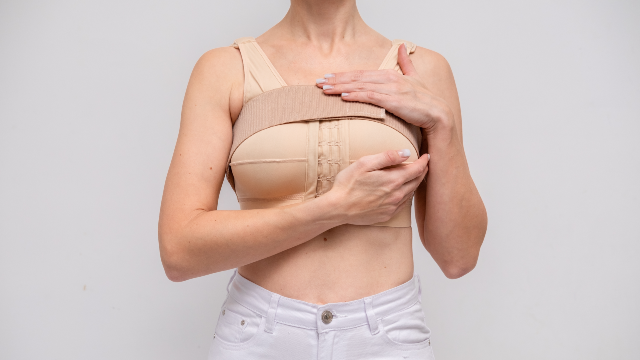
Aftercare at this clinic is structured rather than left to general advice. It includes care from a dedicated aftercare manager, collagen and elastin regeneration management for the chest area, and prevention and management of side effects such as capsular contracture.
That last element connects directly to the Capscare component. Capsular contracture — the tightening of the fibrous capsule the body forms around any implant — is among the more common reasons a breast result changes over time, and a program aimed at managing the tissue response around implants is addressing a known long-term issue rather than a cosmetic afterthought.
Risks, including those specific to the combination
Because Trinity can combine implant surgery with fat transplantation and contouring, its risk profile covers all of them.
For the implant component, the clinic lists pain, swelling, bruising, bleeding, infection, scarring, changes in breast or nipple sensation, breast asymmetry, implant displacement, implant rupture or leakage, rippling, changes in breast shape, and capsular contracture, noting that additional surgery may sometimes be required and that rare but serious implant-associated complications can occur.
Published clinical guidance is worth reading alongside that list. StatPearls, on the National Library of Medicine's Bookshelf, describes capsular contracture as a fibrous response around the implant that can make the breast firm, painful or distorted and is graded by severity, with more pronounced cases sometimes requiring surgical correction. It also notes that rippling is more commonly associated with saline than with silicone devices, and that a change in shape, firmness or contour is a reason to seek assessment rather than to wait.
For the fat transplantation component, the clinic separately identifies fat resorption, contour irregularities, infection and fat necrosis. Fat resorption is expected biology rather than a complication in the ordinary sense — a proportion of transferred tissue does not survive in its new site — which is why the planned volume and the final volume are not the same number.
Outcomes cannot be guaranteed. Individual risk depends on the implant, the surgical technique, anatomy, medical history and healing, and should be discussed with the surgeon before treatment.
What to establish at consultation
For a procedure assembled from components, the useful consultation output is the specific list: which implant, why that one, which additional components are proposed, and what each is expected to contribute. The American Society of Plastic Surgeons recommends establishing before any breast procedure what the surgeon's assessment actually found and what result is realistic for your anatomy, rather than proceeding from a target size. A practice overview sets out the wider context. Individual assessment begins at the consultation page.
The Bottom Line
- Trinity Breast Surgery is for people who want a more defined breast line or whose implant-only simulation does not produce the appearance they are after, with pre-operative Body Balance Design used to plan a line that suits the whole body profile.
- Components can include customized implant selection, stem cell (SVF) fat transplantation, ELSA ultrasonic liposuction, a signature scar-improvement program and the Capscare capsulitis-management program.
- The risk profile is the combined one: implant risks including capsular contracture, rupture and rippling, plus fat-transplantation risks including resorption, contour irregularity and fat necrosis.
- Aftercare is structured, with a dedicated manager, chest-area regeneration management, and prevention and management of capsular contracture.
FAQ
What makes Trinity different from standard breast augmentation?
It treats the implant as one element of a plan rather than the whole of it. Where the assessment calls for them, additional components — fat transplantation, contouring, scar treatment or capsulitis management — are incorporated so that texture, transition and contour are addressed alongside volume.
What does Body Balance Design do?
It is the clinic's pre-operative planning step, used with simulation to design a breast line that complements the overall body profile, and it informs the selection of implant and surgical approach for the individual.
What is the SVF component?
Fat containing stem cell components, taken from areas such as the abdomen and thighs, transplanted alongside the implants. The clinic uses it to support natural shape and soft texture and to improve volume in areas such as the cleavage, which implants alone do not address.
Which implants does the clinic use?
It stocks a range of sizes and shapes so the implant can be matched to the individual. Among the options it lists are Mentor Smooth, Mentor Memory Gel Extra and Motiva Ergonomics; which is appropriate for you is a matter for the surgical assessment.
What is Capscare?
A program focused on managing capsulitis after breast surgery, intended to support smooth tissue healing around the implants and help maintain a soft, natural feel. Capsular contracture is a recognized long-term issue with any implant, so managing the tissue response is a substantive part of aftercare.
What anesthesia is used?
Either local anesthesia combined with sedation, or a general anesthetic, according to how extensive the operation is. Which of the two applies to you is settled at consultation, weighing your own comfort and medical history.
What are the risks?
Pain, swelling, bruising, bleeding, infection, scarring, sensation changes, asymmetry, implant displacement, rupture or leakage, rippling, changes in breast shape and capsular contracture. Where fat transplantation is included, resorption, contour irregularity, infection and fat necrosis are also possible. Rare but serious implant-associated complications can occur.
How long is the operation?
It varies with the technique and with whether fat transplantation, liposuction or scar treatment form part of the plan, so the clinic confirms the expected duration and recommended stay individually rather than quoting a standard figure.
This article is for general informational purposes and does not constitute individualized medical advice, and it is not a self-diagnosis tool. Care described here is delivered in the Republic of Korea under Korean medical licensure rather than United States licensure, and the clinic is closed on Sundays and observes a daily lunch break, which affects scheduling for short international trips. Speak with a qualified plastic surgeon about your own circumstances before making any treatment decision.
References
- StatPearls: Breast Implants
- American Society of Plastic Surgeons: Breast Augmentation
- StatPearls: Autologous Fat Grafting for Facial Rejuvenation
- MedlinePlus: After Surgery
- MedlinePlus: Wounds and Injuries
- American Academy of Dermatology: Scars and Stretch Marks