Personalized plastic surgery, laser & anti-aging care in Haeundae, Busan
en-US

Under-Eye Fat Repositioning vs Fat Correction in Korea
Two under-eye procedures with near-identical names and different operations: what each does with the fat, where the incision goes, and how the choice is made.

Under-Eye Fat Repositioning vs Under-Eye Fat Correction
Medically reviewed by Dr. Kim Ki-Tae, Board-Certified Specialist in Plastic Surgery, issued by the Korean Society of Plastic and Reconstructive Surgeons
Two procedure names that sit one word apart describe two genuinely different operations on the lower eyelid. One moves the fat that is already there; the other takes protruding fat away and grafts fat harvested elsewhere back into the hollow. They are not two labels for the same surgery, and the difference shows up in where the incision goes, what the result depends on, and what can recur later. This article explains both as TAE Plastic Surgery Clinic describes them, and sets out how the choice between them is actually made.
What each operation does with the fat
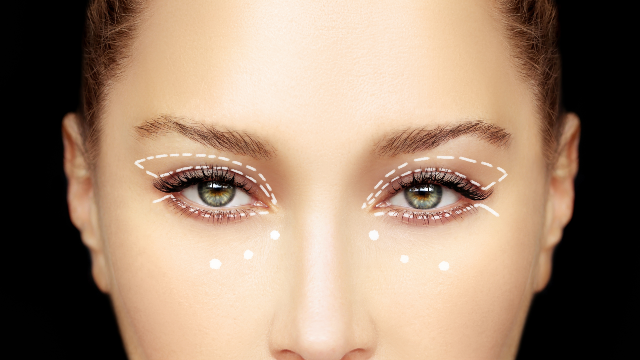
Repositioning takes the orbital fat that is bulging forward and moves it into the hollow area below, using the patient's existing fat as the material that fills the trough. Nothing is removed and nothing is brought in from elsewhere. The clinic's material describes this as sliding existing fat downward.
The clinic's own procedure, Under-Eye Fat Correction, works differently. Protruding fat is taken away, and fat harvested from a separate donor area is grafted back into the under-eye region — removal and grafting performed within the same operation rather than relocating what is already present. The clinic presents that as the point of difference between its method and the repositioning approach.
The practical consequence is easy to miss and matters a great deal. Repositioning is limited by how much fat is available and where it can be moved to. Removal with grafting separates the two problems: how much protrusion to take down, and how much volume to restore, are planned as two decisions rather than one.
Where the incision goes
The clinic's correction procedure is carried out through an incision on the inner conjunctival surface of the eyelid — the transconjunctival route — which it describes as a skin-incision-free technique designed to reduce scarring and recovery time, using a laser through a micro-incision on the inner lid. It presents the approach as carrying comparatively less burden of a scar visible on the skin surface.
By contrast, the clinic's own comparison notes state that the lower blepharoplasty form of the repositioning approach cuts the skin outside the eye, and that this may carry a burden regarding scarring. It also flags two further considerations for that route: the possibility of the eyelid turning outward during the process of pulling and fixing the fat, and the possibility of fat protruding again over time.
StatPearls, the peer-reviewed clinical reference published on the National Center for Biotechnology Information's Bookshelf, treats transconjunctival blepharoplasty as an established approach to the lower lid precisely because it reaches the orbital fat compartments without an external skin incision. Reading an independent clinical reference alongside a clinic's account is a reasonable way to check that a described advantage is a real one.
Candidacy is a diagnosis, not a preference
This is the part patients most often get backwards. You do not choose between these operations the way you choose between two products. The clinic's stated position is that a diagnosis considering eye shape, the amount of fat and skin thickness is required, because the area around the eye has thin skin and a dense concentration of blood vessels and nerves.
Its consultation process begins one step earlier still: establishing whether the under-eye change is caused by fat protrusion, by loss of skin elasticity, by volume loss, or by some combination, because a structural cause has to be identified accurately before a method is chosen. A hollow that is really volume loss and a hollow that is really a shadow cast by a bulge above it look similar in a mirror and call for different operations.
The clinic describes the candidates for its correction procedure as patients whose under-eye shows orbital fat protruding forward, or the combined pattern in which the area looks bulging and hollow at the same time, assessed across eye shape, fat volume and skin thickness together.
The American Society of Plastic Surgeons, writing for a United States audience, describes the concerns lower-eyelid surgery addresses in similar terms: fatty deposits appearing as puffiness, bags under the eyes, and excess skin and fine wrinkles of the lower lid. It also notes that eyelid surgery can be functional as well as cosmetic, which is a useful reminder that an examination may find something a patient had not come in for.
Who should not have either procedure
The clinic lists active eye infection, severe dry eye syndrome, uncontrolled glaucoma, bleeding disorders and unmanaged systemic conditions as reasons to avoid or postpone surgery. More broadly it names pregnancy or breastfeeding, uncontrolled medical conditions affecting surgery or healing, active infection around the treatment area, and unrealistic expectations — with the final decision made by the doctor after assessing individual health, history and goals.
Anesthesia, timing and recovery
The clinic states that its correction procedure normally uses local anesthesia together with sedation, or general anesthesia where the surgery is more extensive, and that the choice is settled with the patient at consultation. It describes light intravenous conscious sedation as the common pairing, and reports that only mild tightness or pressure is generally felt for one to three days afterwards.
Recovery follows a recognizable pattern. Swelling and bruising around the under-eye are most visible in the first few days — acute swelling peaking at around forty-eight hours — and settle gradually over one to two weeks, with minor bruising subsiding within seven to ten days and most patients back to light daily activity within a week to ten days.
The result arrives in stages rather than at once. Initial smoothing becomes noticeable within one to two weeks as the primary swelling and discoloration resolve; a visible change is usually apparent by the second or third week; and complete settling of the tissue over the tear trough is described as reached by around three to six months. The clinic considers the settled result long-lasting.
For anyone traveling, the aftercare list is worth reading before booking: avoid rubbing the eyes, wearing contact lenses, applying eye make-up, heavy lifting, stooping and sauna use for two to three weeks, keep the area clean and protected as advised, sleep with the head elevated where relevant, and attend the scheduled follow-up checks.
Risks, stated plainly
The clinic lists temporary swelling and bruising, discomfort, bleeding or infection, asymmetry, contour irregularities, residual or recurrent bulging or hollowing, over- or under-correction and sensory changes, and — rarely — eyelid malposition, persistent dry eye, visual disturbance or injury to surrounding orbital structures. Minor bleeding under the conjunctiva and temporary dryness or watering of the eye are also named as common short-term effects.
Its stated risk-reduction measures are specific to the route: micro-incisions on the inside of the eyelid, preservation of the orbital septum, and precise use of electrocautery.
One limit deserves its own sentence, because it is the most common disappointment in this area. The clinic states that complete elimination of dark circles caused purely by skin pigmentation, or by thin skin through which vessels show, cannot be promised by repositioning fat alone. If the darkness is pigment rather than shadow, moving or replacing fat will not answer it.
What about filler instead?
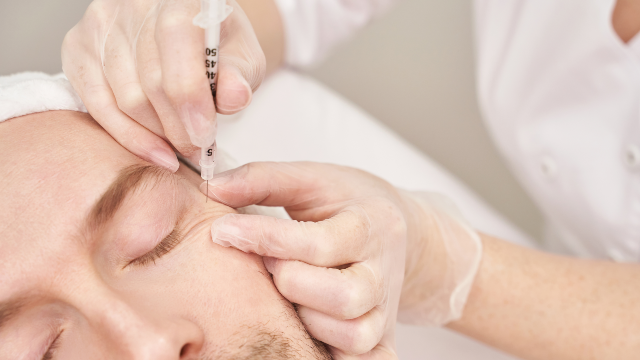
Injectable filler is the usual non-surgical comparison, and the clinic addresses it directly: dermal fillers give temporary volume in the tear trough and require repeated injections, whereas the surgical approach reshapes the tissue itself. The society lists injectable compounds among the methods used to improve facial contouring, and notes separately that fat transfer or fillers may be suggested where fatty volume has been lost.
It is a real option, not a lesser one, and for some patterns it is the right first step. What it does not do is take down a protruding fat pad, which is why it tends to underperform for the combined bulge-and-hollow pattern.
Background worth carrying into the conversation: the National Library of Medicine's MedlinePlus service records that with age the skin loses fat and becomes thinner, so the surface has less beneath it to rest on, and that recovery from injury can take longer — all of which is most pronounced in eyelid skin, the thinnest on the body.
Deciding
Everything above reduces to one question a mirror cannot answer: what is actually causing the appearance you dislike — protruding fat, lost volume, loose skin, pigment, or a combination. That is an examination finding, and it determines which of these two operations, if either, is the right one. An assessment for your own eyelids can be arranged through the clinic's enquiry and appointment page, and background on the practice is published separately on the about the practice page.
The Bottom Line
- Repositioning moves existing orbital fat into the hollow; the clinic's correction procedure takes protruding fat away and grafts separately harvested fat back in.
- The clinic's route is transconjunctival — through the inner surface of the lid — which it presents as carrying less burden of a scar visible on the skin.
- The clinic's notes on the repositioning approach flag skin incision outside the eye, the possibility of the lid turning outward during fixation, and fat protruding again over time.
- Which operation applies is decided by assessing eye shape, fat volume and skin thickness together, after establishing whether the cause is protrusion, volume loss or lost elasticity.
- Darkness caused purely by pigmentation or by thin skin showing vessels is a different problem, and moving fat will not resolve it.
FAQ
What is the actual difference between the two procedures?
What happens to the fat. Repositioning slides the patient's existing protruding fat down into the hollow area. The clinic's correction procedure removes the protruding fat and grafts fat taken from a donor area back into the under-eye, planning the reduction and the volume restoration as two separate decisions.
Will there be a visible scar?
The clinic's approach is made through the inner conjunctival surface of the lid, which it describes as a skin-incision-free technique designed to reduce scarring and recovery time. Its comparison notes state that the lower blepharoplasty form of the repositioning approach cuts skin outside the eye and may carry a scarring burden.
How long is the recovery?
Swelling and bruising are most visible in the first few days, with acute swelling peaking around forty-eight hours and minor bruising subsiding within seven to ten days. Most patients return to light daily activity within a week to ten days, and the area settles over one to two weeks.
When is the result final?
Initial smoothing is usually noticeable within one to two weeks once primary swelling resolves. Complete settling of the tissue over the tear trough is described as reached by around three to six months, and the clinic considers the settled result long-lasting.
What anesthesia is used?
Normally local anesthesia together with sedation, or general anesthesia where the surgery is more extensive, settled with the patient at consultation. Light intravenous conscious sedation is the common pairing, with mild tightness or pressure felt for one to three days afterwards.
Can this get rid of my dark circles?
Partly, and it depends on the cause. Where the darkness is shadow cast by a protruding fat pad or a hollow, surgery addresses it. Where it is caused purely by skin pigmentation or by thin skin through which vessels show, the clinic states that complete elimination cannot be promised by working with fat alone.
Could the bulge come back?
The clinic names residual or recurrent bulging or hollowing among the possible outcomes of under-eye surgery, and specifically flags fat protruding again over time as a consideration for the repositioning approach. This is one of the things the follow-up checks exist to catch.
Is filler an alternative?
For some patterns, yes. The clinic describes dermal filler as giving temporary volume in the tear trough that requires repeated injections, whereas surgery reshapes the tissue itself. Filler does not reduce a protruding fat pad, so it tends to disappoint where bulge and hollow occur together.
This article is for general informational purposes and does not constitute individualized medical advice, and it is not a self-diagnosis tool. The procedures described are performed in the Republic of Korea under Korean medical licensure rather than United States licensure. Speak with a qualified plastic surgeon about your own eyelids, your eye health and your medical history before making any treatment decision.
References
- StatPearls: Transconjunctival Blepharoplasty
- ASPS: Eyelid Surgery
- ASPS: Dermal Fillers
- ASPS: Facelift Surgery
- MedlinePlus: Skin Aging