Personalized plastic surgery, laser & anti-aging care in Haeundae, Busan
en-US

Body Lifting
Body lift surgery in Busan removes excess hanging skin and tightens the deep tissue after weight loss. Performed by Dr. Kim Ki-tae at TAE Plastic Surgery.

Body Lift Surgery in Busan, Korea

Medically reviewed by Dr. Kim Ki-tae, MD — Board-Certified Specialist in Plastic Surgery, Korean Society of Plastic and Reconstructive Surgeons; Director and founder, TAE Plastic Surgery Clinic TAE Plastic Surgery Clinic, Haeundae-gu, Busan
A body lift in Busan is a surgical procedure that removes excess hanging skin and underlying fat across the midsection, thighs, and lower trunk while tightening the underlying tissues to restore a smooth body contour. At TAE Plastic Surgery Clinic in Haeundae-gu it is kept deliberately separate from the clinic's energy-based tightening service, because the two answer different degrees of the same complaint. This is the operation for skin that has to be removed rather than persuaded to contract.
What Is Body Lifting?
Body lifting is an excisional operation: redundant skin and the fat beneath it are cut away, the deep tissue layer is tightened, and the remaining skin edges are closed along planned incision lines.
It addresses excess skin, not localized fat pockets in otherwise firm skin.
The deep muscular fascia is tightened as part of the operation, not only the skin.
The incisions are long by necessity and leave permanent scars.
It is performed on weight-stable patients, after weight loss rather than during it.
It is the surgical route to loose skin; the clinic keeps an energy-based route separate.
The patients who ask for it are a defined group. The clinic records requests after significant weight loss, after bariatric surgery, and post-pregnancy, for loose folding skin that diet and exercise cannot reduce. The complaint is mechanical rather than cosmetic in the usual sense: skin that folds, that traps moisture, and that will not sit flat under clothing.
Where the boundary falls between this operation and a device is stated plainly in the clinic's own comparison. Non-surgical energy treatments such as Renuvion or radiofrequency provide mild tightening for mild laxity. Surgical body lifting is required for severe hanging skin folds. Reading that sentence honestly is most of what a consultation for this procedure does.
The clinic's stated approach is to assess skin condition and the underlying tissue structure together, because the two determine what any single treatment can realistically achieve. Independent patient information on body lift surgery, including its scarring and its recovery demands, is published by the American Society of Plastic Surgeons (ASPS).
What the clinic states the operation provides is unusually practical, and worth quoting in outline because it is not a list of aesthetic adjectives. It documents immediate reduction of loose skin aprons. It documents smoother body proportions. It documents improved skin hygiene, which matters where folds have been trapping moisture. And it documents greater comfort when wearing clothes. Those four are the honest reasons patients give, and none of them requires the word "transformation".
Against that sits a limit stated just as plainly in the clinic's material. Body lifting can address significant excess skin, but it cannot eliminate every contour irregularity and it cannot produce scar-free skin. Both halves of that sentence are part of the offer.
Who Performs Body Lifting at TAE Plastic Surgery Clinic
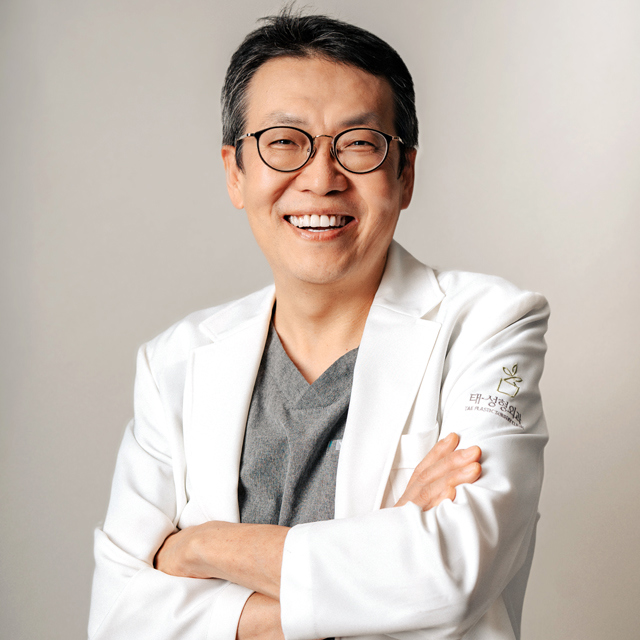
**Dr. Kim Ki-tae
**Board-Certified Plastic Surgeon
Body Lifting is performed by Dr. Kim Ki-tae, the clinic's founder and sole doctor and the listed performing doctor for the parent Fat & Body Contouring specialty.
Lifting procedures and body contouring are both named among his documented core specializations. For an operation of this size that concentration matters less as a marketing point than as a scheduling one: the surgeon who maps your incision lines is the surgeon in the room.
Dr. Kim Ki-tae holds the Board-Certified Specialist designation in Plastic Surgery issued by the Korean Society of Plastic and Reconstructive Surgeons. He graduated from Inje University College of Medicine and trained as a Clinical Fellow in the Department of Plastic Surgery at Pusan National University from March 2003 to February 2004. He founded TAE Plastic Surgery Clinic in 2005 and has practised there ever since.
He chairs the Academic Committee of the Laser Plastic Surgery Research Group at the Korean Society of Plastic and Reconstructive Surgeons, sits on that society's Academic Committee, serves on the Legislation Committee of the Korean Association of Plastic Surgeons, and is General Affairs Director of the Busan Medical Association. He is a full member of the American Society for Laser Medicine and Surgery, an international member of the American Society of Plastic Surgeons, and a full member of the International Confederation for Plastic, Reconstructive and Aesthetic Surgery.
The clinic states he is known as a doctor who teaches doctors, lecturing in Korea and abroad and running live procedure training. His published position on how any plan should begin applies with particular force to an operation that cannot be undone: "In aesthetic medicine, the process of diagnosis is very important." For a body lift, the diagnosis includes deciding that a device would not be enough — a decision made before an incision is drawn, not during recovery. TAE Plastic Surgery Clinic is a single-doctor clinic, so the surgeon who assesses you is the surgeon who treats you. More detail is on his doctor page. Body Lifting is the excisional entry in the clinic's Fat & Body Contouring list.
Who Is a Good Candidate for Body Lifting?
You may be a candidate if
You are an adult in good general health.
Your weight has been stable.
You have significant skin laxity rather than mild looseness.
You have sagging skin and reduced elasticity that exercise and dieting have not improved.
You do not smoke.
You hold realistic expectations, including about scars.
You may need to avoid or postpone treatment if
You are still actively losing weight.
You use nicotine.
You have an unmanaged systemic illness such as uncontrolled diabetes.
You are planning a future pregnancy.
You are pregnant or breastfeeding.
You have an active infection at the surgical site.
The doctor confirms suitability individually at consultation, and for this operation the weight-stability requirement is checked rather than assumed.
What to Expect: Procedure, Recovery, and Results Timeline
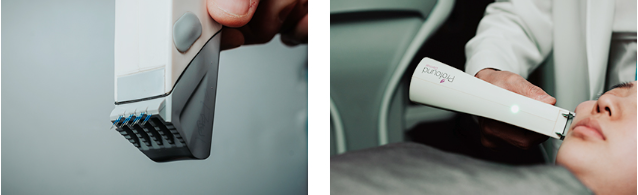
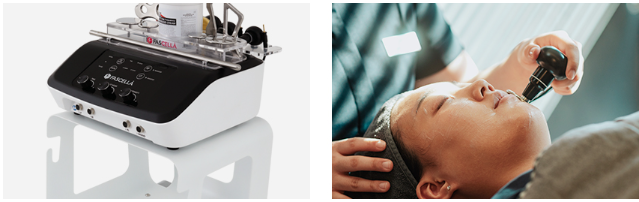
Consultation covers four things: examining tissue laxity, reviewing your weight-loss history and medical records, measuring the skin excess, and mapping the circumferential incision lines. That last step is the one to ask questions about, because it decides where your scars will sit.
The operation follows a fixed sequence. The surgeon marks the incision lines. Anesthesia is administered. Incisions are made and the redundant skin and fat are excised. The deep muscular fascia is tightened. The skin edges are sutured together.
The clinic documents multi-layered deep fascial suspension techniques, paired with concealed circumferential incision placement along the natural bikini lines to reduce how visible the scar is. Surgical electrocautery devices, tissue dissectors, surgical drains, micro-sutures and supportive post-operative compression garments are the equipment named for it.
The procedure is performed under general anesthesia. Intravenous pain medications and local anesthetic blocks are used during the immediate recovery period.
Preparation is stricter than for the clinic's other body-contouring services. Weight must be stable for at least three months. Smoking and blood thinners are stopped four to six weeks beforehand. Routine pre-operative laboratory work is completed. Patients with chronic conditions or regular medication should raise these at consultation.
| Stage | What the clinic documents |
|---|---|
| Surgery | Four to six hours |
| Inpatient stay | Three to five days |
| One to two weeks | Light daily walking resumes |
| Two to three weeks | Several follow-up visits for drain and stitch management |
| Week three or four | Return to non-strenuous work |
| Six weeks | Heavy lifting is avoided until this point |
| Six to twelve months | Scar maturation and tissue settling complete |
Aftercare is demanding and it is not optional. Wear the medical compression garment continuously as directed. Keep the wound dressings clean. Sleep with the knees elevated. Avoid heavy lifting for six weeks. Attend every scheduled follow-up, because the drains and stitches are managed at those visits.
International patients should plan the trip around the inpatient stay and the drain and stitch schedule rather than around a fixed number of days, and should confirm the exact timetable and the point at which flying is appropriate with the clinic before booking a return flight. Obtain postoperative contact instructions before leaving Korea.
Structural improvement is visible immediately once the excess skin is gone. The final appearance takes longer: scar maturation and tissue settling occur over six to twelve months, and the result is long-lasting if weight remains stable.
Combining Body Lifting with Other Treatments
Because this is a long operation, adding to it is a safety judgment rather than a convenience one, and it is made with the surgeon at consultation.
Liposuction – Face & Body — documented as a frequent combination where localized fat sits alongside the excess skin.
Tummy tuck, thigh lift and arm lift procedures — documented as frequent combinations, staged or combined according to the surgical burden.
Breast revision surgery — documented as a frequent combination in post-weight-loss cases.
Renuvion Tightening — the alternative rather than the partner for this operation, used where laxity is mild enough not to need excision.
Safety, Precision, and Clinic Standards
The clinic has operated at the same address in Haeundae, Busan since 2005. TAE Plastic Surgery Clinic is a Registered Medical Institution for Attracting Foreign Patients, certified by the Ministry of Health and Welfare under the Medical Overseas Expansion and Foreign Patients Attraction Act.
The clinic records body lifting as an established surgical technique for post-bariatric body contouring and for correcting substantial skin redundancy. Its stated safeguards for this operation are anatomical: the deep fascial layer is suspended in multiple layers rather than relying on skin closure alone, and the incision lines are placed to sit within natural bikini lines.
The documented risks are significant and should be read before travelling. Persistent swelling and bruising are expected. Wound dehiscence is a recognized complication. Infection is possible. Seroma and hematoma formation are documented risks. Temporary numbness occurs. Scarring is noticeable and permanent. General surgical risks including anesthesia-related complications apply to an operation of this length. The NHS publishes comparable risk information for excisional body-contouring surgery (NHS).
Severe or worsening pain, significant swelling, fever, wound drainage, rapidly worsening redness, or any unexpected symptom should receive prompt medical assessment wherever you are.
TAE Plastic Surgery Clinic publishes neither case volumes nor complication rates for this procedure, and this page claims neither. The clinic reports approximately 240 surgical procedures and approximately 3,600 non-surgical treatments a year; these are clinic-wide totals across everything it offers, not figures for this procedure. The clinic has not published a price or a price range for this procedure, so none is stated here, and cost is confirmed at consultation.
The Bottom Line
Body lifting removes excess hanging skin and fat and tightens the deep fascia beneath it.
It is the surgical answer to severe skin folds; mild laxity is directed to energy-based tightening instead.
Weight must be stable for at least three months, and nicotine use rules the operation out.
The clinic documents four to six hours of surgery and a three to five day inpatient stay.
Scars are permanent; the clinic's stated mitigation is placement along natural bikini lines.
FAQ
Should I have a body lift or a device treatment?
It depends on how much skin there is. Non-surgical energy treatments provide mild tightening for mild laxity, and surgical body lifting is required for severe hanging skin folds. The clinic keeps both routes open and makes the call at assessment. Energy-based lifting does not achieve the same degree of correction as surgery when substantial excess skin is present.
How long will I be in hospital?
The clinic documents a three to five day inpatient stay after a four to six hour operation. Several follow-up visits then follow over two to three weeks, and those visits exist for drain and stitch management. Plan your time in Korea around that schedule rather than around a fixed figure.
What will the scars look like?
They are noticeable and permanent, and that is part of the trade this operation makes. The clinic's stated mitigation is concealed circumferential incision placement along the natural bikini lines. Scar maturation continues for six to twelve months, so the scar you see at three weeks is not the scar you keep.
Why do I have to stop smoking?
Nicotine use is listed as making a patient unsuitable for this operation, and the clinic documents stopping four to six weeks before surgery. The reason is wound healing: this is a long incision under tension, and wound dehiscence is one of the documented complications. Blood thinners are stopped over the same period.
Why does my weight have to be stable first?
The clinic requires weight stability for at least three months before surgery, and patients who are still actively losing weight are listed as unsuitable. Skin removed at one weight will not fit a different weight later. Patients planning a future pregnancy are also advised to wait.
When can I go back to work?
Light daily walking resumes within one to two weeks, and return to non-strenuous work is documented at around week three or four. Heavy lifting is avoided for six weeks. Physical work will take longer, and the clinic sets that timing individually.
Is it painful?
Discomfort is controlled with general anesthesia during the operation. Intravenous pain medications and local anesthetic blocks are used through the immediate recovery period, which is part of why the clinic documents an inpatient stay. Mild soreness afterward is normally managed with standard pain medication, and individual pain tolerance varies.
What cannot be promised?
Complete removal of all excess skin, specific measurements, perfectly smooth skin, or a complication-free recovery. Body lifting can address significant excess skin but cannot eliminate every contour irregularity or produce scar-free skin. Future weight change can alter the result after it has settled.
Book a Consultation at TAE Plastic Surgery Clinic
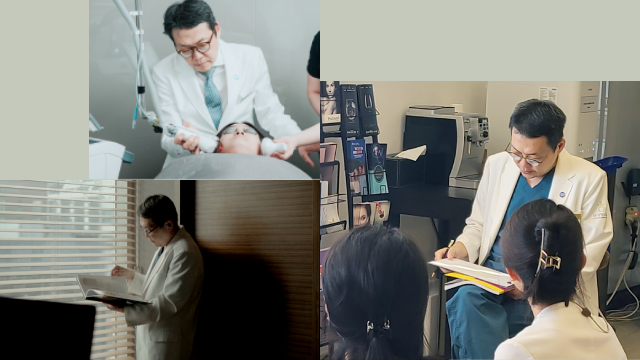
Body lift surgery is available in Busan at TAE Plastic Surgery Clinic, and the consultation is where the skin excess is measured and the incision lines are mapped. English-speaking assistance is available for both online and in-person consultations, and consultations are arranged through the clinic's contact page. TAE Plastic Surgery Clinic is at 4th Floor, Gunam Building, 27 Gunam-ro, Haeundae-gu, Busan, South Korea, and opens Monday to Friday from 09:00 to 18:00 and Saturday from 09:00 to 13:00, closed Sundays and public holidays.
Disclaimer
This page is for general informational purposes and does not constitute individualized medical advice. Candidacy, technique, anaesthesia and outcome can only be determined in an in-person consultation with a qualified doctor. Individual results vary.
References
American Society of Plastic Surgeons — Body lift