Personalized plastic surgery, laser & anti-aging care in Haeundae, Busan
en-US

NP Profound
NP Profound RF microneedling in Busan, Korea, performed by Dr. Kim Ki-tae, a Candela-recognised global key doctor for Profound, at TAE Plastic Surgery.

NP Profound RF Microneedling in Busan, Korea

Medically reviewed by Dr. Kim Ki-tae, MD — Board-Certified Specialist in Plastic Surgery, Korean Society of Plastic and Reconstructive Surgeons; Director and founder, TAE Plastic Surgery Clinic TAE Plastic Surgery Clinic, Haeundae-gu, Busan
NP Profound in Busan is an energy-based lifting treatment that uses fine needles to deliver radiofrequency energy into the deeper layers of the skin. It is aimed at skin firmness and laxity, and at stimulating collagen and elastin remodeling. At TAE Plastic Surgery Clinic in Haeundae-gu it is treated as a lifting treatment, not as a surface skin treatment — which is the distinction that decides whether it is the right choice for you.
What Is NP Profound?
NP Profound is a needle-delivered radiofrequency treatment designed to improve skin firmness and laxity by placing energy in the deeper layers of the skin rather than at the surface.
It is a third-generation RF lifting device that uses fine needles to carry RF energy into deeper skin layers.
The device listing states that it provides lifting and tightening, and claims a 60-times wider coagulation effect intended to promote collagen and elastin production.
The clinic positions it as a lifting treatment rather than a conventional superficial RF treatment.
The clinic's description of the treatment emphasizes deep RF delivery, lifting and tightening at the same time, and a broad coagulation area.
Profound-type RF microneedling creates controlled thermal injury that stimulates collagen and elastin remodeling.
Patients considering this treatment are usually looking for more than superficial skin tightening but are not ready for conventional facelift surgery. The concerns it is positioned for are facial laxity, reduced firmness, fine lines and a loss of definition.
The outcomes the clinic states for the treatment are improved skin firmness, a reduction in the appearance of fine lines, improvement in facial laxity, and a more defined facial contour. Those are the four things it is aimed at. It is not presented as a replacement for surgical lifting, and the clinic does not describe it as producing a facelift-level change.
The clinic's stated approach is to assess skin condition and the underlying tissue structure together, because the two determine what any single treatment can realistically achieve. On a device page that matters more than usual, because the same machine used on two different faces is not the same treatment.
TAE Plastic Surgery Clinic describes itself as a complex aesthetic surgery space, in which surgery is connected to non-surgical treatment and to advanced lasers, and stem cell and anti-ageing care are practised alongside them rather than kept apart. NP Profound sits on the non-surgical side of that arrangement, with surgical options available in the same building if the assessment points there instead.
Who Performs NP Profound at TAE Plastic Surgery Clinic
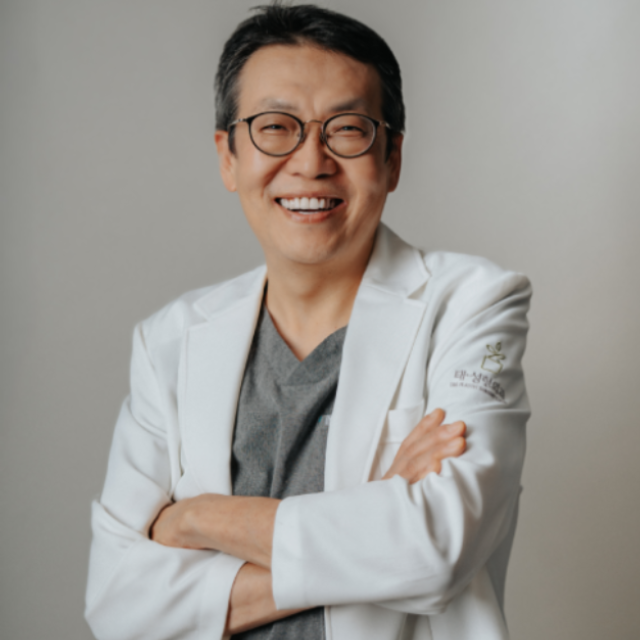
Dr. Kim Ki-tae
Board-Certified Plastic Surgeon
NP Profound is performed by Dr. Kim Ki-tae, the clinic's founder and sole doctor and the listed performing doctor for the parent Facial Lifting & Anti-Aging specialty.
Dr. Kim Ki-tae was recognised by Candela, the manufacturer of Profound, as a global key doctor, and filmed a training video for Profound users worldwide. That is the single most specific piece of evidence on this page: the manufacturer of the device chose him to demonstrate it to other doctors.
The clinic also documents a Profound protocol for Asian skin developed by Dr. Kim Ki-tae. It is stated to minimize swelling and to allow lifting results to be confirmed quickly, and the clinic's reason for developing it is that the manufacturer's standard protocol is designed for Western skin. The patient-facing point of that work is treatment matched to the patient's actual skin rather than to a Western default.
Dr. Kim Ki-tae holds the Board-Certified Specialist designation in Plastic Surgery issued by the Korean Society of Plastic and Reconstructive Surgeons. He graduated from Inje University College of Medicine and trained as a Clinical Fellow in the Department of Plastic Surgery at Pusan National University from March 2003 to February 2004. He founded TAE Plastic Surgery Clinic in 2005 and has practised there ever since.
He chairs the Academic Committee of the Laser Plastic Surgery Research Group at the Korean Society of Plastic and Reconstructive Surgeons, sits on that society's Academic Committee, serves on the Legislation Committee of the Korean Association of Plastic Surgeons, and is General Affairs Director of the Busan Medical Association. He is a full member of the American Society for Laser Medicine and Surgery, an international member of the American Society of Plastic Surgeons, and a full member of the International Confederation for Plastic, Reconstructive and Aesthetic Surgery.
The clinic states that he is known as a doctor who teaches doctors, lecturing at domestic and international academic societies and running live procedure training. On the question of how a device treatment should be selected in the first place, his published position is short: "In aesthetic medicine, the process of diagnosis is very important."
TAE Plastic Surgery Clinic is a single-doctor clinic, so the surgeon who assesses you is the surgeon who treats you. His full profile is on the doctor page, and NP Profound sits within the clinic's Facial Lifting & Anti-Aging specialty.
Who Is a Good Candidate for NP Profound?
You may be a candidate if
You have jowls, neck laxity or crepey skin, which are the presentations the clinic names for this device.
Your laxity is mild to moderate, with reduced firmness, fine lines or early facial aging alongside it.
There is enough skin and tissue quality for needle-delivered RF to act on.
You want more than a superficial skin-tightening treatment but are not going to a conventional facelift.
You accept a recovery longer than that of non-needle RF, because microneedles penetrate the skin.
You can allow the result to develop over weeks to months rather than expecting it at the end of the appointment.
You may need to avoid or postpone treatment if
You have an active skin infection or inflammation.
You have an active inflammatory skin disorder in the treatment area.
You have a significant uncontrolled medical condition affecting healing.
You have poor wound healing.
Your expectations of the treatment are not realistic.
A medical assessment is needed before treatment is booked. Suitability is not decided from photographs alone. Two things carry particular weight in that assessment: whether there is enough skin and tissue quality for the treatment to act on, and whether what you want from it is achievable by an energy-based treatment at all. Patients with substantial tissue descent are generally better served by a different route within the specialty, and the consultation is where that is said plainly rather than after treatment.
What to Expect: Procedure, Recovery, and Results Timeline
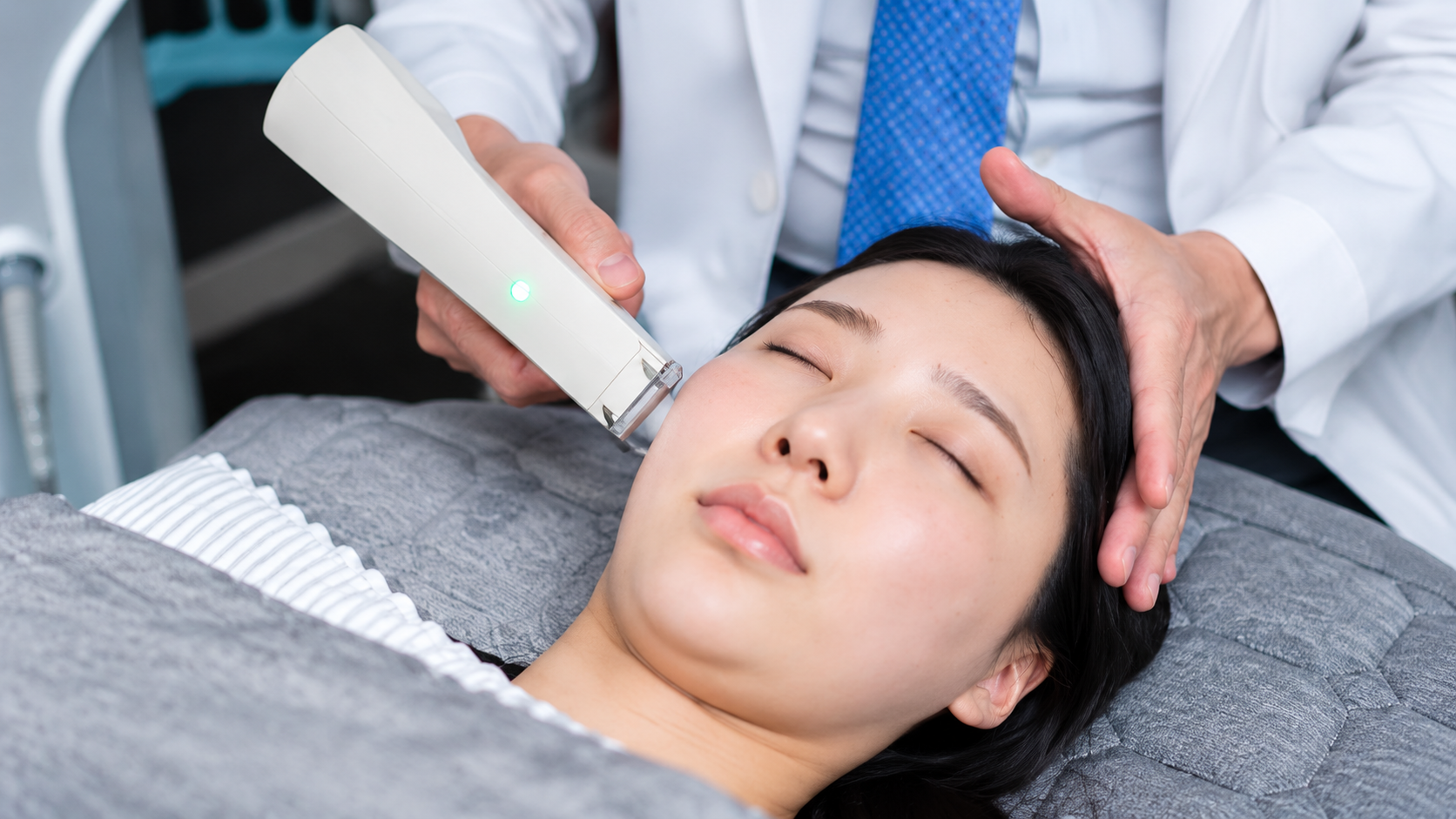
Because needles carry the energy through the skin, this treatment has more recovery attached to it than non-needle RF. That is the trade-off it asks you to make, and it is worth understanding before you book travel.
Preparation is mostly disclosure. Tell the clinic about every medication, supplement, allergy and previous cosmetic treatment before the procedure, and arrive with clean skin. Unnecessary blood-thinning medicines or supplements should be avoided only if your own doctor confirms it is safe to stop them; prescribed medication is never stopped without medical advice. Aggressive or irritating skin treatments in the run-up to the procedure should also be avoided.
Discomfort during treatment is generally limited with appropriate anesthesia, though pressure, warmth or brief sensations may be felt. The procedure is typically performed under topical or local anaesthesia, and the exact approach is confirmed with the patient at consultation. Mild tenderness, swelling and bruising can follow.
Recovery is generally longer than with non-needle RF treatments. Swelling and bruising can be noticeable for several days. Some patients need approximately one week or more before the treated area looks substantially settled. Many patients return to routine activities within several days, while bruising can sometimes persist for about one to two weeks.
Aftercare is straightforward but matters during that window: cleanse gently, avoid unnecessary touching or rubbing, avoid excessive heat and strenuous activity in the early recovery period, and protect the skin from sun exposure. Alcohol, harsh skincare products and picking at treated areas should also be avoided until healing is complete.
| Stage | What to expect |
|---|---|
| First several days | Swelling and bruising are common; pinpoint treatment marks may be visible |
| Around one week | Many patients find the treated area looks substantially settled, though bruising can last one to two weeks |
| After the initial recovery | Early tightening may become noticeable |
| Following weeks to months | Collagen and elastin remodeling develops progressively, and meaningful improvement builds over that period |
| Up to a year | Results continue developing as new collagen and other dermal components are produced, and improvement may continue for up to a year in some patients |
Follow-up usually includes an early visit to assess healing, with further visits scheduled to evaluate developing results. The exact schedule depends on the treatment plan and how recovery goes.
The clinic has not published a price or a price range for this procedure, so none is stated here, and cost is confirmed at consultation.
Safety, Precision, and Clinic Standards
TAE Plastic Surgery Clinic is a Registered Medical Institution for Attracting Foreign Patients, certified by the Ministry of Health and Welfare under the Medical Overseas Expansion and Foreign Patients Attraction Act. TAE Plastic Surgery Clinic publishes neither case volumes nor complication rates for this procedure, and this page claims neither. The clinic has not published an approved-claims list for this procedure and this market, so this page states no efficacy or outcome claim beyond what the clinic itself documents.
The expected short-term effects are swelling or edema, redness, bruising, tenderness, temporary sensitivity and a tight or firm sensation in the treated area. The risks that should be discussed before treatment are prolonged swelling or bruising, infection, pigment changes, burns, scarring, temporary numbness and uneven results. Individual risk depends on the treatment settings, the condition of your skin and the technique used. Settings are therefore not a detail to be delegated — they are the treatment.
The clinic reports approximately 240 surgical procedures and approximately 3,600 non-surgical treatments a year; these are clinic-wide totals across everything it offers, not figures for this procedure. NP Profound is listed by the clinic among its top procedures for the US market, alongside surgical and other device options, so it is considered against those rather than offered as the only answer.
Independent bodies publish general background that is useful to read alongside this page. The American Academy of Dermatology maintains public information on cosmetic skin treatments (AAD), and the US Food and Drug Administration publishes general medical device information for patients (FDA). Neither is affiliated with this clinic, and neither endorses it.
Dr. Kim Ki-tae's published position on device treatments applies directly here: "Even if a treatment is safe and simple, patients differ in skin condition, fat layer thickness, age and how far ageing has progressed — so to get a satisfying result you should have a full consultation with an experienced plastic surgery specialist before being treated."
The Bottom Line
NP Profound delivers RF energy into deeper skin layers through fine needles, and the clinic positions it as a lifting treatment rather than a surface RF treatment.
Dr. Kim Ki-tae was chosen by the device's manufacturer to train other doctors in its use.
The clinic documents a Profound protocol he developed for Asian skin, because the manufacturer's standard protocol is designed for Western skin.
Recovery is longer than with non-needle RF; plan for several days of swelling and bruising, and possibly a week or more.
The result builds over months rather than appearing at once, so this is not a treatment to book days before an event.
The stated targets are firmness, fine lines, laxity and contour definition — not a surgical-level change.
Individual risk depends on settings, skin condition and technique, which is why the assessment and the operator matter as much as the device.
FAQ
Who is a good candidate for NP Profound?
Adults with mild-to-moderate skin laxity, wrinkles, jowls, neck laxity or crepey skin may be suitable. The treatment uses RF energy delivered through microneedles to stimulate collagen, elastin and hyaluronic acid. Final suitability is decided at a medical assessment, not from photographs.
Is it painful?
Discomfort is generally limited when appropriate anesthesia is used, although you may feel pressure, warmth or brief sensations during the treatment. Mild tenderness, swelling and bruising can occur afterward. The procedure is typically performed under topical or local anaesthesia, confirmed with you at consultation.
How long is the recovery?
Swelling and bruising are common in the first several days, and many patients get back to routine activities within several days. Bruising can sometimes last about one to two weeks. Some patients need roughly a week or more before the area looks substantially settled.
When will I see results, and how long do they take to finish developing?
Early tightening may become noticeable once the initial recovery has passed. More meaningful improvement develops gradually as collagen remodeling occurs. Results continue developing for several months, and in some patients improvement continues for up to a year.
What are the common side effects?
Temporary swelling, redness, tenderness, bruising and pinpoint treatment marks are the usual ones. These generally improve during the first week, although bruising may last longer. Anything that worsens rather than settles should be reported to the clinic.
How is NP Profound different from other lifting devices?
It combines microneedling with controlled bipolar RF heating inside the dermis, whereas alternatives such as HIFU or monopolar RF deliver their energy in a different way. Which one suits you depends on the degree and location of your laxity. That comparison is the point of the consultation.
What results are realistic?
Realistic goals are gradual improvement in skin firmness, wrinkles, jowls and laxity — not a transformation at the level of a surgical facelift. Results vary with age, skin condition, degree of laxity and individual healing. The clinic does not present this treatment as a surgical substitute.
What should I bring or send before treatment?
Clear front, side and angled facial photographs are commonly useful. Bring your relevant medical history, medication information, allergies and details of previous cosmetic treatments. Arrive with clean skin and follow whatever medication and skincare instructions you are given beforehand.
Book a Consultation at TAE Plastic Surgery Clinic
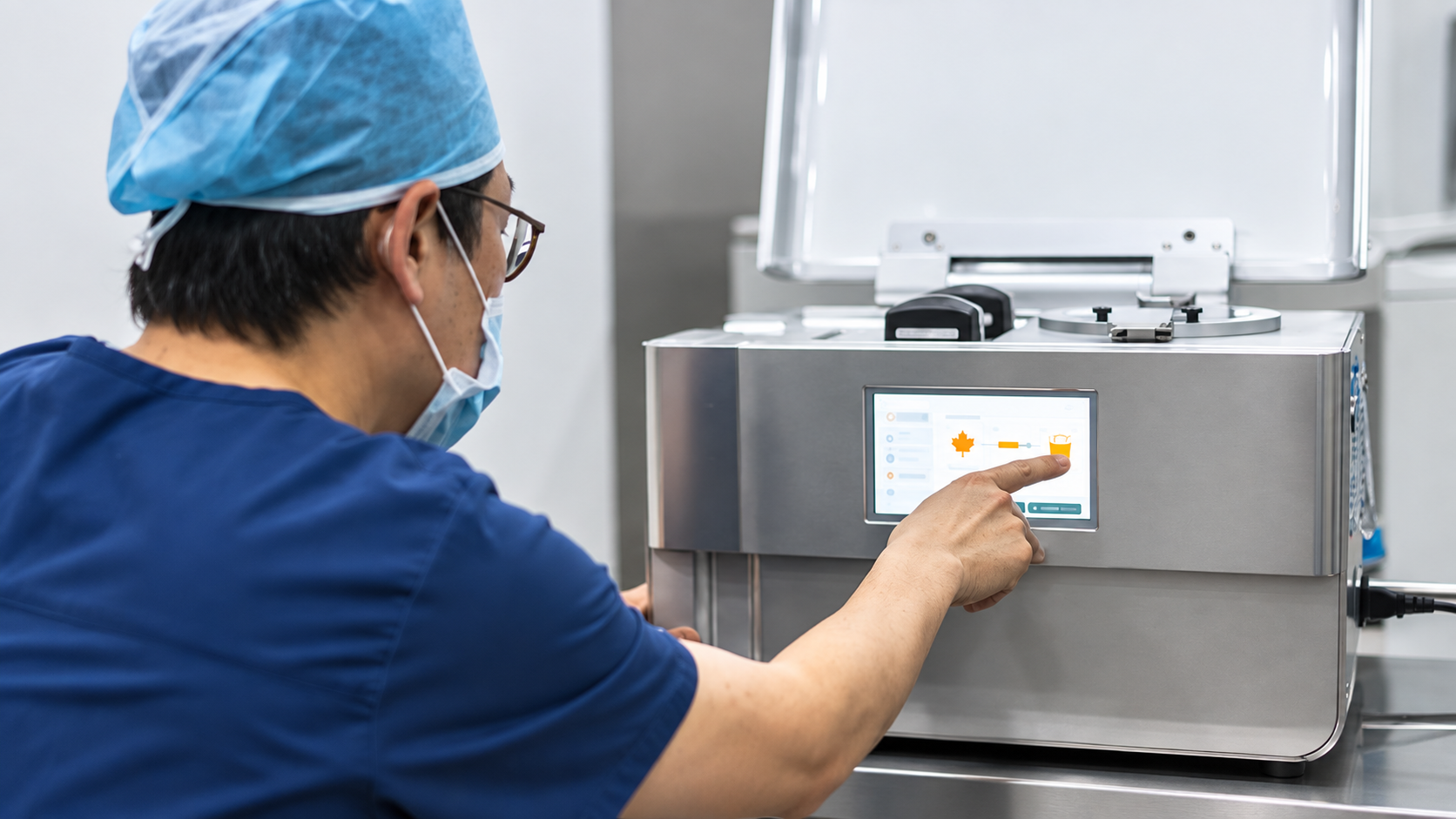
NP Profound is available in Busan at TAE Plastic Surgery Clinic, and the consultation is where the depth, settings and suitability of the treatment are decided for your skin. English-speaking assistance is available for both online and in-person consultations, and consultations are arranged through the clinic's contact page. TAE Plastic Surgery Clinic is at 4th Floor, Gunam Building, 27 Gunam-ro, Haeundae-gu, Busan, South Korea, and opens Monday to Friday from 09:00 to 18:00 and Saturday from 09:00 to 13:00, closed Sundays and public holidays.
Disclaimer
This page is for general informational purposes and does not constitute individualized medical advice. Candidacy, technique, anaesthesia and outcome can only be determined in an in-person consultation with a qualified doctor. Individual results vary.
References
American Academy of Dermatology — Cosmetic treatments
US Food and Drug Administration — Medical Devices