Personalized plastic surgery, laser & anti-aging care in Haeundae, Busan
en-US
Scar Treatment
Scar treatment in Busan, Korea using TAE-SFCT, the clinic's N-Derm and laser protocol, performed by Dr. Kim Ki-tae at TAE Plastic Surgery, Haeundae-gu.

Scar Treatment in Busan, Korea

Medically reviewed by Dr. Kim Ki-tae, MD — Board-Certified Specialist in Plastic Surgery, Korean Society of Plastic and Reconstructive Surgeons; Director and founder, TAE Plastic Surgery Clinic TAE Plastic Surgery Clinic, Haeundae-gu, Busan
Scar treatment in Busan at TAE Plastic Surgery Clinic is built around TAE-SFCT, the TAE-Scar Fractional Coring Technique, which pairs N-Derm micro-coring with laser treatment. The clinic's argument for a named protocol is that scars differ by cause, shape, depth and tissue condition, so no single method fits them all. What you get is a plan assembled from an analysis of your scar, not a standard scar appointment.
What Is Scar Treatment?
Scar treatment is a customized approach that reduces the visibility of a scar and improves its appearance, using a combination of methods selected for that particular scar.
The clinic's Scar Treatment Solution is delivered under the TAE-SFCT name.
TAE-SFCT stands for TAE-Scar Fractional Coring Technique.
It brings together N-Derm micro-coring technology and laser treatment.
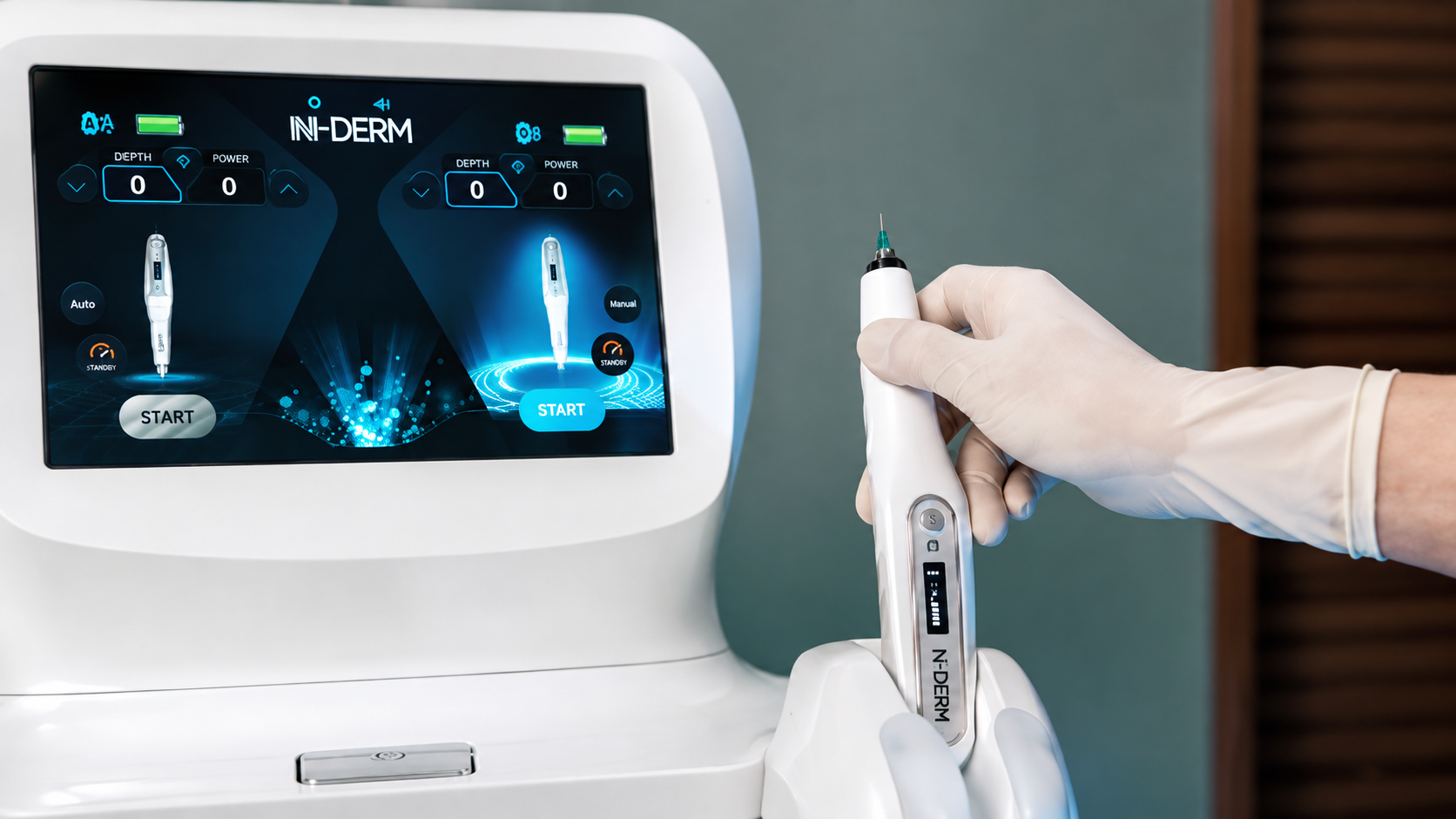
N-Derm uses a micro-coring approach that allows targeted treatment of scar tissue through controlled tissue coring.
The clinic states that scars cannot be effectively treated by one universal method, because their characteristics vary so widely.
Improvement is the stated aim and it is worth being precise about what that means. A scar that has formed cannot be erased. What the clinic works on is the appearance, texture and color of the scar, and it does not publish outcome data for this service. How many sessions your scar needs, and how strongly it responds, vary between patients and between two different scars on the same patient.
Scar treatment is also, for many American patients, a functional concern rather than a cosmetic one, and it is researched in depth before anyone books a flight. Patients with surgical or acne scarring frequently arrive having already worked through the options available at home. Two questions follow from that, and both are fair: how many sessions this will take, and whether the treatment is safe for their skin type, since scar treatment carries pigmentation risk across the full range of skin types.
Who Performs Scar Treatment at TAE Plastic Surgery Clinic
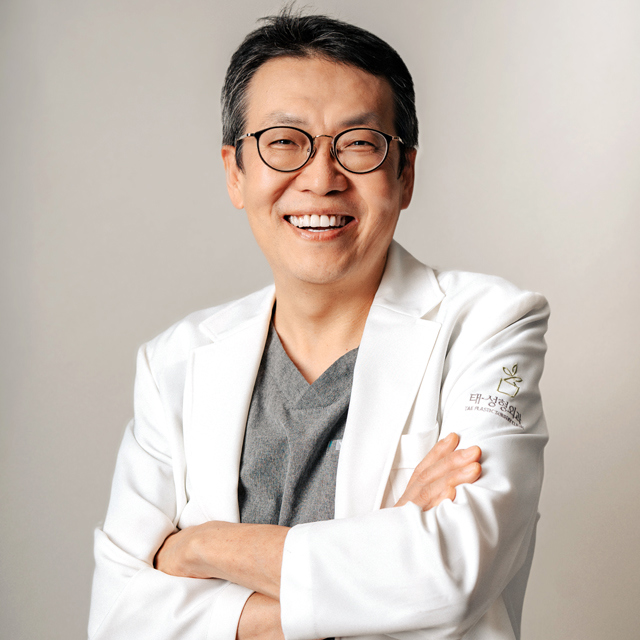
**Dr. Kim Ki-tae
**Board-Certified Plastic Surgeon
Scar treatment is performed by Dr. Kim Ki-tae, the clinic's founder and sole doctor and the listed performing doctor for the parent Scar & Tattoo Treatment specialty.
Dr. Kim Ki-tae holds the Board-Certified Specialist designation in Plastic Surgery issued by the Korean Society of Plastic and Reconstructive Surgeons. He graduated from Inje University College of Medicine and trained as a Clinical Fellow in the Department of Plastic Surgery at Pusan National University from March 2003 to February 2004. He founded TAE Plastic Surgery Clinic in 2005 and has practised there ever since.
TAE-SFCT is the clinic's own technique and is documented as having been developed through Director Kim Ki Tae's scar treatment experience and clinical know-how. It is one of the named techniques recorded in the clinic's materials, listed there as a method used within both this service and tattoo removal. His laser credentials sit behind that: he chairs the Academic Committee of the Laser Plastic Surgery Research Group at the Korean Society of Plastic and Reconstructive Surgeons, sits on that society's Academic Committee, serves on the Legislation Committee of the Korean Association of Plastic Surgeons, and is General Affairs Director of the Busan Medical Association.
TAE Plastic Surgery Clinic is a single-doctor clinic, so the surgeon who assesses you is the surgeon who treats you. His profile is on the doctor page.
Scar Treatment Options and Types Available
The clinic treats a range of scar types, and its position is that the type drives the plan.
| Scar type | Included in the clinic's list |
|---|---|
| Surgical scars | Yes |
| Acne scars | Yes |
| Burn scars | Yes |
| Traumatic scars | Yes |
| Chickenpox marks | Yes |
| Keloid scars | Yes |
| Atopic scars | Yes |
| Tattoo removal-related scars | Yes |
Enlarged-pore scars and scars associated with foreign-body removal are also named, and the clinic states that it treats both recent and established scars using customized protocols.
Behind the protocol sits equipment. The clinic states that specialized scar treatment devices and lasers are selected according to the individual scar condition, and it names Profractional, BBL, Q-Plus R Evo, Discovery Pico, Cell Unit and Ibex as its specialized scar treatment devices. Which of them is used, and in what order, follows the analysis rather than a fixed sequence.
TAE Plastic Surgery positions this customized approach as the alternative to standardized scar treatment, combining different equipment and laser technologies according to the individual scar. What separates TAE-SFCT from a conventional laser protocol in technical terms is for the clinic to state, and this page does not state it on the clinic's behalf.
Who Is a Good Candidate for Scar Treatment?
You may be a candidate if
You have a surgical scar.
You have acne scarring.
You have a burn scar.
You have a traumatic scar.
You have chickenpox marks.
You have a keloid scar.
You have an atopic scar.
You have scarring left by tattoo removal.
You are prepared to complete a course of sessions.
Treatment may be unsuitable or need postponing if
Pregnancy or breastfeeding applies to you.
The scar site is actively infected.
The scar site has open wounds.
The skin there has been tanned recently.
A final decision is made by the doctor after individual assessment. If you have a tendency toward abnormal scarring, that needs particular assessment before anything is planned, and it is one of the things to raise at the first consultation rather than the third.
What to Expect: Procedure, Recovery, and Results Timeline

The clinic's Scar Clinic evaluates the scar's shape, tissue condition, depth and extent. From that analysis it selects the treatment methods, the specialized equipment and the laser technologies that will make up your plan. The clinic's stated position is that customization comes first and equipment second.
The treatment sequence has five stages:
Consultation and analysis of the scar condition.
Development of a customized scar treatment plan.
Application of N-Derm micro-coring treatment where it is indicated.
Application of laser treatment as part of the TAE-SFCT protocol.
Follow-up scar management according to your individual response.
Treatment is typically performed with topical numbing cream, with cooling used during treatment for comfort, and the exact approach is confirmed with you at consultation based on your comfort and medical history. The procedure itself typically takes thirty minutes to an hour per session.
Before treatment, tell the clinic about previous scar treatments, medications, skin conditions and any history of hypertrophic scars or keloids. Avoid sun exposure or tanning of the scar site beforehand, and pause retinoid or strong exfoliating skincare for several days. Raise any chronic condition or regular medication so the plan can be adjusted.
| Stage | What to expect |
|---|---|
| Per session | Thirty minutes to an hour |
| Between sessions | Redness or mild flaking at the scar site usually settles within several days |
| First two to three sessions | A visible improvement typically begins to build |
| End of course | The full result typically appears after the recommended course is completed |
| Afterwards | Generally maintained for several months to a year |
| Follow-up | A check is scheduled once the course is finished, and more are added if another course is advised |
| Travel | With downtime this short, one day in Korea usually covers a session |
Standard aftercare involves protecting the scar site from sun and from heat exposure such as saunas for a short period, and using gentle skincare. Written aftercare guidance is provided to every patient and covers the specific day-by-day timeline. Individual healing pace varies with skin type, tissue characteristics and general health, and it is reviewed at follow-up.
What the clinic states this treatment is working toward is set out as a list of goals rather than as outcomes:
Improvement of surgical scars.
Improvement of acne scars.
Improvement of burn and traumatic scars.
Improvement of chickenpox marks and other scar types.
Reduction of scar visibility through personalized treatment.
Each of those is a direction, and how far your scar moves along it is individual. The clinic publishes no outcome data for this service, and no patient-facing expectation is set on this page beyond what it documents itself.
The clinic has not published a price or a price range for this procedure, so none is stated here, and cost is confirmed at consultation.
Combining Scar Treatment with Other Treatments
Combination is central to how this service works rather than an addition to it. The clinic describes combining N-DERM with laser as the core of the protocol, and separately describes combining laser treatment with its stem-cell-derived SVF approach for scars.
Tattoo Removal — the sibling service, which shares the TAE-SFCT protocol and is relevant if your scarring came from a previous removal attempt.
Scar & Tattoo Treatment — the parent specialty page.
Stem Cell MCT Injection — the clinic's regenerative service, in the same family as the SVF approach it describes for scars.
HALO Laser — the clinic's hybrid fractional laser, where surface texture is part of the picture.
Safety, Precision, and Clinic Standards
TAE Plastic Surgery Clinic is a Registered Medical Institution for Attracting Foreign Patients, certified by the Ministry of Health and Welfare under the Medical Overseas Expansion and Foreign Patients Attraction Act. The clinic has operated at the same address in Haeundae, Busan since 2005. TAE Plastic Surgery Clinic publishes neither case volumes nor complication rates for this procedure, and this page claims neither. The clinic reports approximately 240 surgical procedures and approximately 3,600 non-surgical treatments a year; these are clinic-wide totals across everything it offers, not figures for this procedure.
The clinic's stated risk control for this service is the protocol itself. It uses customized treatment combinations rather than relying on a single method. Its TAE-SFCT approach combines N-DERM micro-coring with laser, and the clinic states the aim of that pairing is to minimize unnecessary skin damage.
Possible side effects include temporary redness, swelling, tenderness, itching, dryness, crusting and irritation. Post-inflammatory hyperpigmentation can occur. Hypopigmentation can occur. Infection is possible. Delayed healing is possible. Changes in scar texture can occur. Rarely, treatment may worsen scarring or contribute to hypertrophic scars or keloids — which is the reason a history of abnormal scarring changes the assessment rather than merely being noted in it.
Three independent references sit behind the general claims above. The NHS explains scar formation, scar types and how scars mature (NHS). The American Academy of Dermatology curates public material across cosmetic dermatology (AAD). The American Society of Plastic Surgeons indexes reconstructive procedures, scar work included (ASPS).
The Bottom Line
TAE-SFCT is the clinic's own named protocol, pairing N-Derm micro-coring with laser treatment.
The plan follows an analysis of your specific scar's shape, tissue condition, depth and extent.
Eight scar types are named on the clinic's list, from surgical and acne scars to tattoo-removal scarring.
Response and the number of sessions vary between patients, and the full result comes after a course.
A formed scar cannot be erased, and this clinic states that rather than working around it.
FAQ
What is TAE-SFCT?
It is the clinic's own named scar protocol, the TAE-Scar Fractional Coring Technique, combining N-Derm micro-coring technology with laser treatment. The clinic documents it as having been developed through Director Kim Ki Tae's scar treatment experience. What distinguishes it technically from a conventional laser protocol is for the clinic to specify.
Which scars can be treated?
Surgical scars, acne scars, burn scars, traumatic scars, chickenpox marks, keloid scars, atopic scars and scars left by tattoo removal are on the clinic's list. Enlarged-pore scars and scars from foreign-body removal are also named. Both recent and established scars are treated using customized protocols.
How many sessions will I need?
That varies with the scar and is not fixed in advance. A visible improvement typically builds across the first two to three sessions, and the full result appears after the recommended course is finished. The schedule is set at consultation and reviewed as treatment progresses.
Will my scar disappear?
No. A scar that has formed cannot be erased, and neither a specific percentage of improvement nor an identical response between patients can be promised. The realistic result is improvement in the appearance, texture and color of the scar. The clinic publishes no outcome guarantee for this service.
Is it painful?
Most patients describe mild warmth or tingling rather than significant pain, and any sensation afterward is typically minimal. Treatment is typically performed under topical numbing cream with cooling during the session. Comfort measures can be adjusted on request.
What are the risks?
Infection, prolonged redness or inflammation, pigmentary changes, delayed healing and changes in scar texture are the recognized ones. Rarely, treatment can worsen scarring or contribute to hypertrophic scars or keloids. If you have a tendency toward abnormal scarring, that requires particular assessment beforehand.
Can it be combined with another treatment?
Yes, and combination is an important part of the clinic's approach here. It describes combining N-DERM with laser as the protocol itself, and separately describes combining laser treatment with its stem-cell-derived SVF approach for scars. What suits your case is decided at consultation.
What if I have a concern after returning home?
Contact the clinic if you develop unexpected symptoms, and provide photographs along with a description of the problem. The clinic lists 051-746-7004 as its telephone number. A wound that is not healing or shows signs of infection should also be seen locally without delay.
Book a Consultation at TAE Plastic Surgery Clinic
Scar treatment in Busan begins with an analysis of the scar itself — its shape, its depth, its tissue condition and how far it extends — before any device is selected. English-speaking assistance is available for both online and in-person consultations, and consultations are arranged through the clinic's contact page. TAE Plastic Surgery Clinic is at 4th Floor, Gunam Building, 27 Gunam-ro, Haeundae-gu, Busan, South Korea, and opens Monday to Friday from 09:00 to 18:00 and Saturday from 09:00 to 13:00, closed Sundays and public holidays.
Disclaimer
This page is for general informational purposes and does not constitute individualized medical advice. Candidacy, technique, anaesthesia and outcome can only be determined in an in-person consultation with a qualified doctor. Individual results vary.
References
NHS — Scars
American Academy of Dermatology — Cosmetic treatments
American Society of Plastic Surgeons — Reconstructive procedures