Personalized plastic surgery, laser & anti-aging care in Haeundae, Busan
en-US

Skin Tightening
Non-surgical skin tightening in Busan, Korea, and how Dr. Kim Ki-tae at TAE Plastic Surgery Clinic chooses between ONDA, Fascella, DoubleTite and HALO.

Non-Surgical Skin Tightening in Busan, Korea

Medically reviewed by Dr. Kim Ki-tae, MD — Board-Certified Specialist in Plastic Surgery, Korean Society of Plastic and Reconstructive Surgeons; Director and founder, TAE Plastic Surgery Clinic TAE Plastic Surgery Clinic, Haeundae-gu, Busan
Skin tightening in Busan is not one treatment but a decision between several. At TAE Plastic Surgery Clinic in Haeundae-gu the term covers a group of non-surgical and minimally invasive treatments aimed at skin laxity, firmness, elasticity, fine lines and facial contour, delivered through four different devices. This page is about how that choice is made, because picking the device is the part patients most often get wrong on their own.
What Is Skin Tightening?
Skin tightening refers to non-surgical or minimally invasive treatments intended to improve skin laxity, firmness, elasticity, fine lines and facial contour.
The clinic groups four devices under this heading: ONDA, Fascella, DoubleTite and HALO.
Each device places energy in a different tissue layer, so they are not interchangeable options for the same problem.
Suitability depends on which technology is being considered, not on the category as a whole.
Recovery varies considerably, and the non-invasive protocols the clinic describes for ONDA are generally associated with little downtime.
Patients with severe skin excess or advanced tissue descent may be better candidates for surgery.
Non-surgical lifting and skin tightening is an established part of aesthetic medicine, and patients typically arrive wanting improvement in mild skin laxity, firmness, wrinkles or facial contour without a surgical facelift. The realistic goals the clinic states depend on the technology chosen, and may include improved firmness and elasticity, smoother texture, a reduction in fine lines, improved facial definition and a more rejuvenated appearance.
Within that range the clinic is specific about two of its devices: it describes ONDA as supporting collagen production and remodeling, and HALO as improving elasticity and wrinkles. Across the category as a whole, the goals it names are improved skin elasticity, improvement in wrinkles, lifting, and facial or body contour, depending on which technology is used.
The clinic's stated approach is to assess skin condition and the underlying tissue structure together, because the two determine what any single treatment can realistically achieve. On an umbrella page that sentence is the whole argument: the device follows the assessment, not the other way round.
The clinic states that it holds a wide range of premium laser and energy-based devices beyond the level of a general dermatology practice. The practical consequence for a patient is that a treatment here is considered alongside the clinic's other surgical and device options rather than in isolation.
Who Performs Skin Tightening at TAE Plastic Surgery Clinic

**Dr. Kim Ki-tae
**Board-Certified Plastic Surgeon
Skin tightening is performed by Dr. Kim Ki-tae, the clinic's founder and sole doctor and the listed performing doctor for the parent Facial Lifting & Anti-Aging specialty.
Dr. Kim Ki-tae holds the Board-Certified Specialist designation in Plastic Surgery issued by the Korean Society of Plastic and Reconstructive Surgeons. He graduated from Inje University College of Medicine and trained as a Clinical Fellow in the Department of Plastic Surgery at Pusan National University from March 2003 to February 2004. He founded TAE Plastic Surgery Clinic in 2005 and has practised there ever since.
His listed core specializations begin with laser plastic surgery and energy-based aesthetic treatments, which is the discipline this page sits in. He chairs the Academic Committee of the Laser Plastic Surgery Research Group at the Korean Society of Plastic and Reconstructive Surgeons, sits on that society's Academic Committee, serves on the Legislation Committee of the Korean Association of Plastic Surgeons, and is General Affairs Director of the Busan Medical Association. He is a full member of the American Society for Laser Medicine and Surgery, an international member of the American Society of Plastic Surgeons, and a full member of the International Confederation for Plastic, Reconstructive and Aesthetic Surgery.
TAE Plastic Surgery Clinic is a single-doctor clinic, so the surgeon who assesses you is the surgeon who treats you. That matters more here than on a single-device page, because the person choosing between four devices is the same person who will operate them. His profile is on the doctor page.
Skin Tightening Options and Types Available
The four devices differ in the energy they use and the layer they act on. The clinic's own descriptions are set out below.
| Device | What the clinic states about how it is used | Layer or focus |
|---|---|---|
| ONDA | The clinic uses both the face and body handpieces in combined or mixed application, and describes using the technology not only for dermal improvement but also with a muscle-conditioning concept | Microwave energy; dermal improvement plus muscle conditioning |
| Fascella | RF and low-frequency energy reaching the fascial layer, with its glass stone used to support lymphatic circulation | Fascial layer, deeper than the dermis |
| DoubleTite | Needles of different heights distribute RF throughout the dermis, with a skin-booster solution delivered at the same time and cooling applied | Dermis, needle-delivered |
| HALO | Simultaneous 2940-nm and 1470-nm treatment of the superficial and the deeper skin layers | Skin surface plus deeper dermal remodeling |
The clinic also compares these against the wider field, which is useful if you are weighing a treatment you have already been offered elsewhere:
RF heats tissue to encourage remodeling and collagen-related changes.
Microwave-based treatment is described by the clinic as inducing collagen production and remodeling.
Ultrasound and HIFU use focused ultrasound rather than RF or microwave energy.
RF microneedling delivers RF through needles, so its invasiveness and downtime profile differ.
Fractional laser addresses the skin surface as well as deeper dermal remodeling.
Surgery, in the form of a facelift or neck lift, can reposition and remove tissue, and is generally more appropriate for advanced laxity.
Who Is a Good Candidate for Skin Tightening?
The clinic states that suitability depends on the technology. On this page, therefore, candidacy is not one question with one answer — it is the set of questions that decide which of the four devices, if any, is the right one.
What the assessment is deciding
Which tissue layer your concern is coming from, since the clinic describes its four devices as acting on the dermis, on the fascial layer, on the dermis by needle, and on the skin surface together with the deeper dermis.
Whether a needle-delivered option is acceptable to you, because the clinic notes that RF microneedling has a different invasiveness and downtime profile from the non-needle treatments in the same group.
Whether a body area is being treated alongside the face, which is the case the clinic describes for ONDA's combined use of its face and body handpieces.
Whether you want change at the skin surface as well as deeper remodeling, which is how the clinic characterizes fractional laser.
Whether the degree of laxity is still within reach of energy at all, or whether a facelift or neck lift — which can reposition and remove tissue — is the more appropriate answer.
The category is likely to be the wrong route if
You have severe skin excess or advanced tissue descent, which the clinic says may be better addressed surgically.
Your expectations cannot be met by a non-surgical treatment.
You have an active infection or inflammation in the treatment area.
You have a significant uncontrolled medical condition.
You have certain implanted electronic devices or metal implants, for the energy modalities where these matter.
You are pregnant or breastfeeding and the modality under consideration is contraindicated.
Two of those exclusions are modality-specific rather than categorical: an implanted electronic device or a metal implant may rule out one of the four devices and leave another available, and the same is true of pregnancy. That is the practical reason the clinic assesses this category device by device rather than once. Where the answer to all of those questions is a non-surgical one, the patient the clinic describes for this category is an adult with mild-to-moderate laxity, reduced firmness, early facial aging, fine lines or loss of definition who prefers a gradual result with limited downtime.
What to Expect: Procedure, Recovery, and Results Timeline
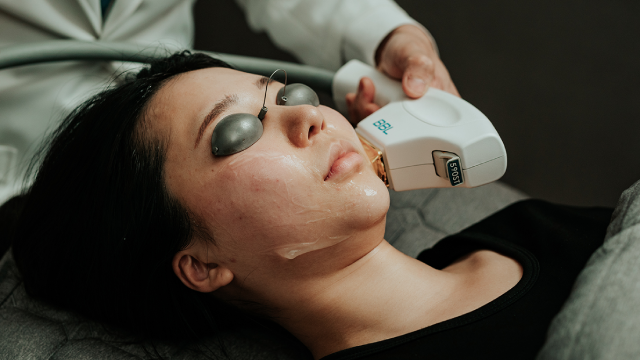
The clinic sets out a common sequence for its energy-based tightening treatments:
Consultation and treatment planning.
Cleansing the treatment area.
Marking or defining the treatment zones where necessary.
Applying the handpiece or applicator.
Delivering controlled energy to the selected tissue layer.
Monitoring comfort and temperature according to the device.
Removing any gel or coupling medium and completing post-treatment care.
Treatment is typically performed under topical numbing cream where it is needed, and the exact approach is confirmed with the patient at consultation. The clinic states that pain is not significant and that numbing cream can make treatment comfortable. Treatment time varies with the method selected and the area treated.
Before treatment, tell the clinician about implanted devices, metal implants, pregnancy or breastfeeding, active skin disease, recent procedures, medications and previous aesthetic treatments. Avoid sun exposure, tanning and strong retinoid or exfoliating products in the days beforehand, and confirm any individual restrictions at consultation.
Aftercare depends on the technology. For non-ablative tightening, there is generally little downtime; follow the clinic's skincare instructions and protect treated skin from excessive sun. For fractional laser or needle-based treatments, additional wound and skin-barrier care may be required.
| Stage | What to expect |
|---|---|
| Same day | Downtime is minimal, and redness generally settles within a few hours to a day |
| Immediately after | Temporary redness, warmth, swelling, tenderness, dryness or transient sensitivity can occur |
| Early result | Some patients notice an immediate tightening effect, depending on the modality |
| Weeks to months | Collagen remodeling and skin-quality change develop progressively |
| Course | A subtle improvement can appear within a few sessions and build across the course |
| Travel | Because downtime is minimal, an extended stay is generally not required, and many patients fly home the same day or the next; confirm long-haul timing with the treating doctor |
The clinic has not published a price or a price range for this procedure, so none is stated here, and cost is confirmed at consultation.
Combining Skin Tightening with Other Treatments
The clinic states that treatments of this type are commonly combined with other procedures in the same category, to address related concerns in a single visit or a coordinated plan, and that the right combination depends on your anatomy and goals and is decided with the treating doctor. Within this batch, the neighboring pages are:
HALO Laser — the fractional laser the clinic also groups under this heading.
NP Profound — needle-delivered RF, if the assessment points deeper than surface tightening.
XERF — the clinic's contact monopolar RF option.
EMFACE — RF combined with facial-muscle stimulation.
Thread Lifting — the mechanical route, where energy alone will not lift enough.
Facial Lifting & Anti-Aging — the parent specialty page.
Safety, Precision, and Clinic Standards
TAE Plastic Surgery Clinic is a Registered Medical Institution for Attracting Foreign Patients, certified by the Ministry of Health and Welfare under the Medical Overseas Expansion and Foreign Patients Attraction Act. TAE Plastic Surgery Clinic publishes neither case volumes nor complication rates for this procedure, and this page claims neither. The clinic reports approximately 240 surgical procedures and approximately 3,600 non-surgical treatments a year; these are clinic-wide totals across everything it offers, not figures for this procedure. The clinic has not published an approved-claims list for this procedure and this market, so this page states no efficacy or outcome claim beyond what the clinic itself documents.
The possible effects depend on the technology and can include temporary redness, warmth, swelling, tenderness, discomfort, dryness or transient sensitivity. Energy-based treatments carry procedure-specific risks, which is why an individualized medical assessment comes before treatment rather than after a device has been chosen. Contraindication screening — implanted electronic devices, metal implants, pregnancy — is part of that assessment and is specific to the modality.
For independent background, the American Society of Plastic Surgeons publishes patient information on non-surgical and surgical options (ASPS), and the US Food and Drug Administration publishes general information for patients about medical devices (FDA).
Dr. Kim Ki-tae's own published caution applies squarely to a category built out of four devices: "Even if a treatment is safe and simple, patients differ in skin condition, fat layer thickness, age and how far ageing has progressed — so to get a satisfying result you should have a full consultation with an experienced plastic surgery specialist before being treated."
The Bottom Line
Skin tightening at TAE is a group of four devices, not a single treatment.
ONDA, Fascella, DoubleTite and HALO act on different layers, so the assessment decides which one you need.
Downtime is generally minimal, and most patients can fly home the same day or the next.
Improvement is usually gradual, building across a course rather than appearing after one session.
Advanced laxity is a surgical problem, and the clinic says so rather than selling more sessions.
FAQ
Who is a good candidate for non-surgical skin tightening?
Adults with mild to moderate concerns about the face and skin who prefer a gradual result with limited downtime. Final suitability is confirmed by the doctor at consultation, and it is decided for the specific device being considered. Severe laxity generally calls for a surgical option instead.
How do you decide which device I need?
The clinic assesses skin condition and the underlying tissue structure together, then selects the technology that acts on the layer causing your concern. The four devices differ in energy type and depth. That is the reason this is a consultation rather than a menu.
Is it painful, and will I need anesthesia?
The clinic states that pain is not significant and that numbing cream can provide comfortable treatment. Treatment is typically performed under topical numbing cream where needed. The exact approach is confirmed with you at consultation.
How much downtime is there?
Minimal. Redness at the treated area generally settles within a few hours to a day, and individual healing pace varies with skin type and general health. Needle-based or fractional laser treatments in this group need more aftercare than the non-ablative ones.
When will I see a result?
A subtle improvement can appear within a few sessions and builds gradually across the course. Some patients notice an immediate tightening effect depending on the modality. The final result varies by treatment type, skin condition and individual response.
Does the device I choose change my travel plan?
It can. An extended medical stay is generally not required for the non-ablative treatments in this group, where downtime is minimal and same-day or next-day travel is usual. The fractional laser and needle-based options grouped under the same heading call for additional wound and skin-barrier care, so the return date is set once the device is chosen and confirmed with the treating doctor.
Can skin tightening be combined with other treatments?
Yes. It is common for treatments of this type to be combined with others in the same category, either in a single visit or as a coordinated plan. What is combined depends on your anatomy and goals and is decided with the treating doctor.
How many follow-up visits will I need?
The clinic does not state a standard number, because follow-up depends on which treatment was performed. The schedule is set at consultation and adjusted as the course progresses. Ask for it in writing before you book travel.
Book a Consultation at TAE Plastic Surgery Clinic
Non-surgical skin tightening in Busan begins with an assessment that decides which of the clinic's devices, if any, matches the layer your concern is coming from. English-speaking assistance is available for both online and in-person consultations, and consultations are arranged through the clinic's contact page. TAE Plastic Surgery Clinic is at 4th Floor, Gunam Building, 27 Gunam-ro, Haeundae-gu, Busan, South Korea, and opens Monday to Friday from 09:00 to 18:00 and Saturday from 09:00 to 13:00, closed Sundays and public holidays.
Disclaimer
This page is for general informational purposes and does not constitute individualized medical advice. Candidacy, technique, anaesthesia and outcome can only be determined in an in-person consultation with a qualified doctor. Individual results vary.
References
American Society of Plastic Surgeons — Cosmetic procedures
US Food and Drug Administration — Medical Devices