Personalized plastic surgery, laser & anti-aging care in Haeundae, Busan
en-US

Thread Lifting
Thread lifting in Busan, Korea for mild-to-moderate facial laxity, planned around your anatomy and performed by Dr. Kim Ki-tae at TAE Plastic Surgery.

Thread Lifting in Busan, Korea

Medically reviewed by Dr. Kim Ki-tae, MD — Board-Certified Specialist in Plastic Surgery, Korean Society of Plastic and Reconstructive Surgeons; Director and founder, TAE Plastic Surgery Clinic TAE Plastic Surgery Clinic, Haeundae-gu, Busan
Thread lifting in Busan is a minimally invasive way to lift selected facial tissue without a conventional facelift incision. At TAE Plastic Surgery Clinic in Haeundae-gu it is offered for mild-to-moderate facial laxity, not for advanced skin and tissue descent. The distinction is the whole basis of the consultation, because the same procedure on the wrong face produces a disappointing result rather than a subtle one.
What Is Thread Lifting?
Thread lifting is a minimally invasive facial procedure that lifts selected tissue mechanically, and depending on the thread design and the treatment plan may also contribute to longer-term tissue remodeling.
It is generally intended for selected patients with mild-to-moderate facial laxity rather than advanced skin or tissue descent.
It is commonly positioned as a facial contouring and rejuvenation option for people who want visible lifting without a conventional facelift incision.
Some patients notice an effect immediately, because the lift is mechanical repositioning rather than a slow biological change.
Swelling can temporarily obscure the final appearance in the days after treatment.
It is generally an outpatient procedure, with no overnight hospitalization for routine cases.
The potential benefits the clinic states are temporary lifting of selected facial tissues, improved jawline definition, improvement in mild-to-moderate sagging, and a more supported facial contour. The word "temporary" is the clinic's own framing and is worth holding on to: thread lifting is a period of support, not a permanent structural change.
The clinic's stated approach is to assess skin condition and the underlying tissue structure together, because the two determine what any single treatment can realistically achieve. TAE Plastic Surgery Clinic describes itself as a complex aesthetic surgery space, in which surgery is connected to non-surgical treatment and to advanced lasers, and stem cell and anti-ageing care are practised alongside them rather than kept apart. Thread lifting sits between those two poles: it is more than a device treatment and less than surgery, and a clinic that offers both should be able to tell you honestly which side of that line you fall on.
Who Performs Thread Lifting at TAE Plastic Surgery Clinic

**Dr. Kim Ki-tae
**Board-Certified Plastic Surgeon
Thread lifting is performed by Dr. Kim Ki-tae, the clinic's founder and sole doctor and the listed performing doctor for the parent Facial Lifting & Anti-Aging specialty.
Dr. Kim Ki-tae holds the Board-Certified Specialist designation in Plastic Surgery issued by the Korean Society of Plastic and Reconstructive Surgeons. He graduated from Inje University College of Medicine and trained as a Clinical Fellow in the Department of Plastic Surgery at Pusan National University from March 2003 to February 2004. He founded TAE Plastic Surgery Clinic in 2005 and has practised there ever since.
Lifting procedures are among his listed core specializations, alongside laser and energy-based aesthetic treatment, fat grafting and body contouring. He chairs the Academic Committee of the Laser Plastic Surgery Research Group at the Korean Society of Plastic and Reconstructive Surgeons, sits on that society's Academic Committee, serves on the Legislation Committee of the Korean Association of Plastic Surgeons, and is General Affairs Director of the Busan Medical Association. He is a full member of the American Society for Laser Medicine and Surgery, an international member of the American Society of Plastic Surgeons, and a full member of the International Confederation for Plastic, Reconstructive and Aesthetic Surgery. The clinic states that he is known as a doctor who teaches doctors, lecturing and running live procedure training in Korea and abroad.
TAE Plastic Surgery Clinic is a single-doctor clinic, so the surgeon who assesses you is the surgeon who treats you. His profile is on the doctor page, and thread lifting sits inside the clinic's Facial Lifting & Anti-Aging specialty, where it is the mechanical option among mostly energy-based ones.
Who Is a Good Candidate for Thread Lifting?
Threads work by holding tissue in a new position, so the assessment is about where the face has descended and whether there is anything for a thread to hold.
You may be a candidate if
You have early jowling or lower-face sagging you want repositioned rather than firmed up.
You have lost definition along the jawline.
Your midface or lower-face laxity is localized rather than an advanced descent of skin and tissue across the face.
There is enough tissue quality for the threads to engage, which the clinic names as the condition on which the result depends.
Neck laxity is part of what you want lifted, which the clinic lists alongside facial laxity for this treatment.
You want smaller access points and a shorter recovery than a facelift, and accept a more limited and temporary lift in exchange.
You may need to avoid or postpone treatment if
You have an uncontrolled bleeding disorder, which matters here because threads are inserted.
You have significant healing problems.
You have an active skin infection or inflammation at the treatment site.
You have a medical condition that affects healing.
Your expectations cannot be met by a minimally invasive lift.
Two of those are specific to an inserted device rather than to aesthetic treatment in general. Bleeding risk and healing capacity are weighed before threads because the complications the clinic lists — thread visibility or palpability, migration or extrusion, inflammatory reaction, hematoma — depend on how the tissue around a thread behaves after it is placed.
What to Expect: Procedure, Recovery, and Results Timeline
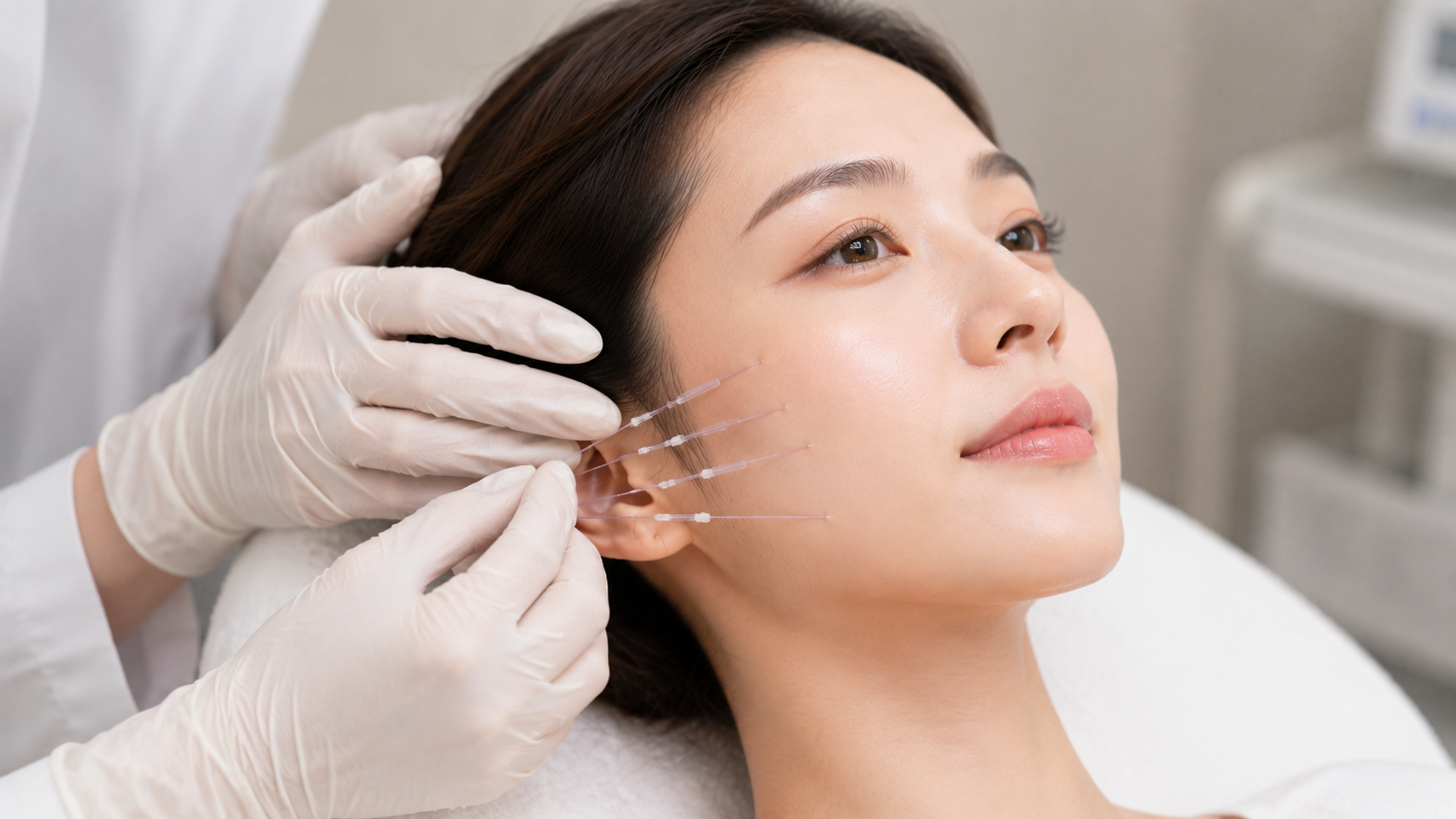
The consultation is a mapping exercise. The clinician evaluates where the face is sagging, the degree and direction of tissue descent, skin thickness and quality, facial asymmetry, fat distribution and overall facial proportions. The desired lifting direction and the treatment areas are then marked out. Thread type, number, entry points and vector are selected according to your anatomy rather than by applying the same pattern to every patient — which is the single most important thing to ask about when comparing clinics.
Thread lifting is commonly performed under local anesthesia, sometimes with additional numbing measures depending on the area treated and patient preference. Some discomfort, pressure or brief stinging may occur during insertion.
Treatment is generally outpatient. Time varies with the area and the number and type of threads used, and a practical general estimate is approximately 30 to 60 minutes.
Before treatment, tell the clinic about all medications and supplements, especially anything that increases bleeding risk. Disclose previous thread lifts, fillers, energy treatments or facial surgery. Do not proceed with an active skin infection or inflammation. Follow the clinic's instructions about alcohol, smoking and medication. Afterward, avoid strong pressure or massage on the treated areas, excessive facial manipulation, saunas and strenuous activity during early recovery.
| Stage | What to expect |
|---|---|
| Immediately | A lifting effect may be visible, because part of the effect is mechanical |
| First several days | Swelling, bruising, tightness or mild soreness are common, and early swelling can make the result look uneven |
| One to two weeks | Most visible recovery occurs in this window; subtle tissue settling continues longer |
| One to three months | The final appearance is usually assessed once the tissues have settled |
| Longevity | Varies considerably by thread material, technique, treatment area, tissue laxity and patient factors |
| Travel | International patients may consider staying approximately three to seven days to allow for initial recovery and any recommended follow-up before traveling |
Most patients can return to light daily activities relatively quickly, but swelling, bruising, tenderness and tightness can persist for several days to a few weeks depending on how many threads were placed and where. The appearance generally settles progressively over the weeks that follow rather than arriving at a fixed endpoint on a particular day, and how long the lift lasts is not a single published number — it varies with the thread material, the technique, the treatment area, how lax the tissue was to begin with, and patient factors.
The clinic has not published a price or a price range for this procedure, so none is stated here, and cost is confirmed at consultation.
Safety, Precision, and Clinic Standards
TAE Plastic Surgery Clinic is a Registered Medical Institution for Attracting Foreign Patients, certified by the Ministry of Health and Welfare under the Medical Overseas Expansion and Foreign Patients Attraction Act. TAE Plastic Surgery Clinic publishes neither case volumes nor complication rates for this procedure, and this page claims neither. The clinic has not published an approved-claims list for this procedure and this market, so this page states no efficacy or outcome claim beyond what the clinic itself documents.
The common short-term effects are swelling, bruising, pain or tenderness, tightness, temporary numbness and skin dimpling or irregularity. The less common but clinically important complications are infection, thread visibility or palpability, thread migration or extrusion, inflammatory reaction or granuloma, contour irregularity, hematoma, nerve injury, and injury to nearby glands or vessels. Rare complications can require additional treatment. This list is longer than for a non-invasive energy treatment, and that difference is part of the choice.
The clinic's stated method for reducing risk is one-to-one treatment planning with attention to tissue structure, aesthetic goals and recovery needs, and it emphasizes patient comfort, safety and satisfaction. The clinic reports approximately 240 surgical procedures and approximately 3,600 non-surgical treatments a year; these are clinic-wide totals across everything it offers, not figures for this procedure.
Dr. Kim Ki-tae's published position on treatments of this kind is a warning against assuming they are interchangeable: "Even if a treatment is safe and simple, patients differ in skin condition, fat layer thickness, age and how far ageing has progressed — so to get a satisfying result you should have a full consultation with an experienced plastic surgery specialist before being treated."
For independent background, the NHS publishes general guidance for people considering cosmetic procedures, including how to check a practitioner (NHS), and the American Academy of Dermatology publishes patient information on cosmetic treatments (AAD).
The Bottom Line
Thread lifting gives a mechanical lift through small access points instead of a facelift incision.
It is for mild-to-moderate laxity; advanced tissue descent generally needs a different approach.
Part of the effect can be immediate, but early swelling usually hides it for a week or two.
The clinic's own word for the lifting benefit is temporary, and longevity varies with thread, technique, area and tissue.
Thread type, number, entry points and vector are chosen from your anatomy, not from a standard pattern.
FAQ
Who is a good candidate for a thread lift?
Adults with mild to moderate facial or neck laxity who want a subtle lifting effect without traditional surgery. A consultation is needed to assess skin quality, tissue laxity and expectations. Where there is not enough tissue quality for the threads to engage, another option is likely to serve you better.
How is a thread lift different from a facelift?
Compared with a traditional facelift, thread lifting generally involves smaller access points and a shorter recovery period. It also provides a more limited and temporary lifting effect. A surgical facelift may provide stronger correction where laxity is significant.
Is it painful?
Some discomfort, pressure or brief stinging may occur during insertion. Local anesthesia and appropriate pain-control measures are used to make the procedure more comfortable. Tenderness afterward is common and generally mild.
How long should I stay in Korea?
International patients may consider staying approximately three to seven days, which allows for the initial recovery period and any recommended follow-up before traveling. Timing for the flight home should be confirmed with the doctor for your individual case rather than assumed.
What are the risks I should weigh?
Infection, bleeding, thread visibility or palpability, dimpling, asymmetry, persistent discomfort, skin irregularities and thread displacement are all possible. Rare complications can require further treatment. These should be discussed individually before you agree to the procedure.
When is the final result assessed?
Usually once the tissues have settled, often around one to three months, depending on the technique, the threads used and individual healing. Some lifting can be seen immediately, but early swelling affects the appearance. Results become clearer as swelling decreases over the following weeks.
What results are realistic?
A modest lifting effect, improved facial contour and a refreshed appearance. Thread lifting generally does not create the same degree of correction as comprehensive surgical lifting, and the clinic does not present it as doing so. Anyone promising otherwise is describing a different procedure.
How many follow-up visits will I need?
Most patients need at least one early follow-up so that healing, swelling, symmetry and thread position can be checked. Whether more are needed depends on your recovery. The clinic confirms the schedule at consultation.
Book a Consultation at TAE Plastic Surgery Clinic
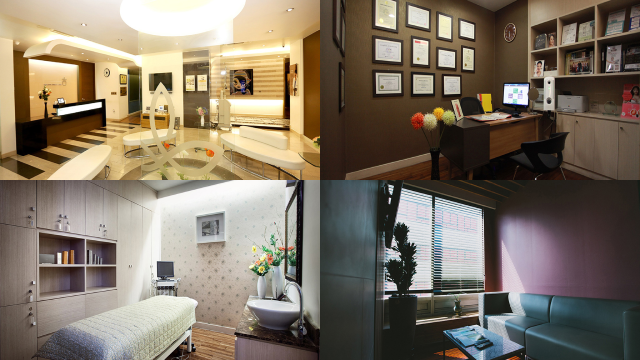
A thread lift in Busan starts with an assessment of where your face is descending and in which direction it should be lifted, not with a booking for a set number of threads. English-speaking assistance is available for both online and in-person consultations, and consultations are arranged through the clinic's contact page. TAE Plastic Surgery Clinic is at 4th Floor, Gunam Building, 27 Gunam-ro, Haeundae-gu, Busan, South Korea, and opens Monday to Friday from 09:00 to 18:00 and Saturday from 09:00 to 13:00, closed Sundays and public holidays. Clear front, side and angled facial photographs, your medical history and your medication information are useful to have ready.
Disclaimer
This page is for general informational purposes and does not constitute individualized medical advice. Candidacy, technique, anaesthesia and outcome can only be determined in an in-person consultation with a qualified doctor. Individual results vary.
References
NHS — Cosmetic procedures
American Academy of Dermatology — Cosmetic treatments