Personalized plastic surgery, laser & anti-aging care in Haeundae, Busan
en-US

Revision Breast Surgery
Revision breast surgery in Busan, Korea. Cause-first analysis, HD endoscopic implant removal and genuine Motiva and Mentor implants, by Dr. Kim Ki-tae.

Revision Breast Surgery in Busan, Korea

Medically reviewed by Dr. Kim Ki-tae, MD — Board-Certified Specialist in Plastic Surgery, Korean Society of Plastic and Reconstructive Surgeons; Director and founder, TAE Plastic Surgery Clinic TAE Plastic Surgery Clinic, Haeundae-gu, Busan
Revision breast surgery in Busan is a second operation performed after a previous breast augmentation, when the result or the implant has caused a problem. At TAE Plastic Surgery Clinic in Haeundae-gu the defining step happens before the operating room: the clinic analyzes why the previous surgery ended where it did, and plans the correction from that cause. Revision is more complex than a first augmentation, and the clinic states as much rather than presenting it as a repeat of the original procedure.
What Is Revision Breast Surgery?
Revision Breast Surgery is a secondary surgical procedure performed after breast augmentation when patients experience problems such as capsular contracture, implant displacement or rupture, breast asymmetry, or dissatisfaction with breast size or shape.
Because revision surgery is more complex and challenging than the initial procedure, the clinic analyzes the cause of the previous surgical outcome before planning the correction.
The analysis draws on the clinic's accumulated clinical experience and data, and the revision is then customized to what it finds.
Treatment is customized according to the underlying problem rather than performed as one standardized revision technique.
Existing implants can be removed using an HD high-definition endoscope, where that is appropriate.
Revision may combine several corrective components in one operation, such as implant removal and replacement, treatment of capsular contracture, correction of asymmetry, or modification of the implant pocket.
It differs from a first augmentation in a way that is easy to state and hard to work around. A primary operation starts with untouched anatomy. A revision deals with an existing implant, altered anatomy, scar tissue, or a previous surgical problem — usually more than one at once.
The clinic's stated approach is to assess skin condition and the underlying tissue structure together, because the two determine what any single treatment can realistically achieve. On a revision that principle carries extra weight, because the tissue in question has already been operated on once.
Who Performs Revision Breast Surgery at TAE Plastic Surgery Clinic
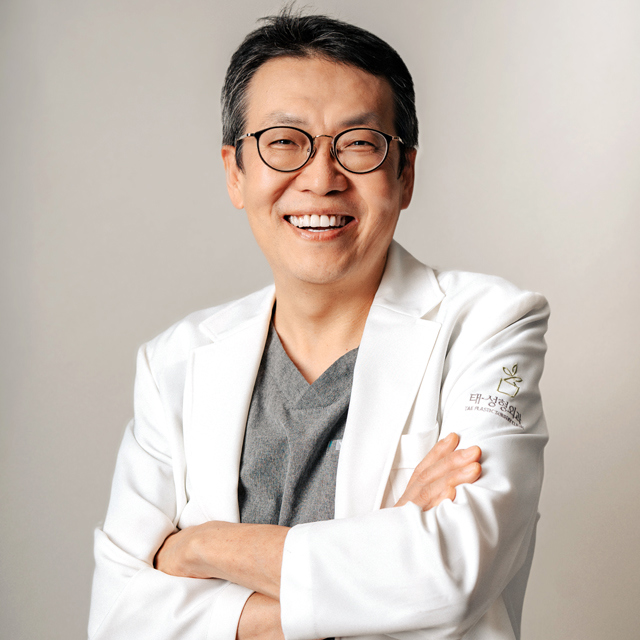
**Dr. Kim Ki-tae
**Board-Certified Plastic Surgeon
Revision breast surgery is performed by Dr. Kim Ki-tae, the clinic's founder and sole doctor and the listed performing doctor for the parent Breast Plastic Surgery specialty.
Breast surgery is one of his documented core specializations. For revision work the qualification that matters most is continuity of judgment: the surgeon who analyzes the cause of the previous result is the one who has to correct it.
Dr. Kim Ki-tae holds the Board-Certified Specialist designation in Plastic Surgery issued by the Korean Society of Plastic and Reconstructive Surgeons. He graduated from Inje University College of Medicine and trained as a Clinical Fellow in the Department of Plastic Surgery at Pusan National University from March 2003 to February 2004. He founded TAE Plastic Surgery Clinic in 2005 and has practised there ever since.
He chairs the Academic Committee of the Laser Plastic Surgery Research Group at the Korean Society of Plastic and Reconstructive Surgeons, sits on that society's Academic Committee, serves on the Legislation Committee of the Korean Association of Plastic Surgeons, and is General Affairs Director of the Busan Medical Association. He is a full member of the American Society for Laser Medicine and Surgery, an international member of the American Society of Plastic Surgeons, and a full member of the International Confederation for Plastic, Reconstructive and Aesthetic Surgery.
TAE Plastic Surgery Clinic is a single-doctor clinic, so the surgeon who assesses you is the surgeon who treats you. His published position on the assessment stage is short and applies directly to revision work: "In aesthetic medicine, the process of diagnosis is very important." See the doctor page for his full profile. Revision is listed under Breast Plastic Surgery.
Revision Breast Surgery Options and Types Available
The clinic does not publish a single revision technique. It publishes the problems it revises, and states that the approach follows from which one you have.
| Reason for revision | What the clinic describes |
|---|---|
| Capsular contracture | Thickening of the capsule surrounding the implant, causing hardness, pain, or breast deformation |
| Breast asymmetry | A difference in breast size or position caused by capsular contracture or implant deformation |
| Unsatisfactory size or shape | Breast volume or shape that did not meet expectations after augmentation |
| Implant damage | Implant rupture requiring replacement, because of possible pain, inflammation or capsular contracture concerns |
| Implant displacement or deformation | Movement or distortion of the implant from its planned position |
One further concern is listed among the reasons patients come: an overly prominent upper chest after a previous augmentation.
The technical distinctions the clinic names for this operation are three. It uses HD high-definition endoscopy for precise revision and for removing existing implants, and states that existing implants can be completely removed endoscopically through minimal incisions intended to reduce additional tissue damage. It uses delicate dissection to prepare the breast area accurately before a new implant goes in. And it states that it uses genuine Motiva and Mentor breast implants, stocking a range of sizes and shapes so the replacement can be matched to the individual case rather than to what is on the shelf.
On those implants, the clinic's own statement is that they are globally proven products approved by the US FDA, European CE and the Korean Ministry of Food and Drug Safety. That is the clinic's description of the products' regulatory status, and it is reported here as such rather than as a claim about your result.
Who Is a Good Candidate for Revision Breast Surgery?
Revision may be considered if
You have capsular contracture — hardness, pain or breast deformation caused by thickening of the capsule around the implant.
You have breast asymmetry caused by capsular contracture or implant deformation.
Your breast volume or shape did not meet expectations after augmentation.
You have implant rupture or damage requiring replacement.
You have implant displacement or deformation.
Revision may need to be postponed if
There is an active infection.
An uncontrolled medical condition increases your surgical risk.
Not enough time has passed since your previous operation for you to have recovered.
Pregnancy or breastfeeding applies to you now.
Timing and suitability are determined by the surgeon after reviewing your implant history, breast condition, medical history and treatment goals. Anyone considering a revision should also read independent material on implant complications; the US Food and Drug Administration maintains public information on breast implants, including the device risks that lead to revision in the first place (FDA).
What to Expect: Procedure, Recovery, and Results Timeline
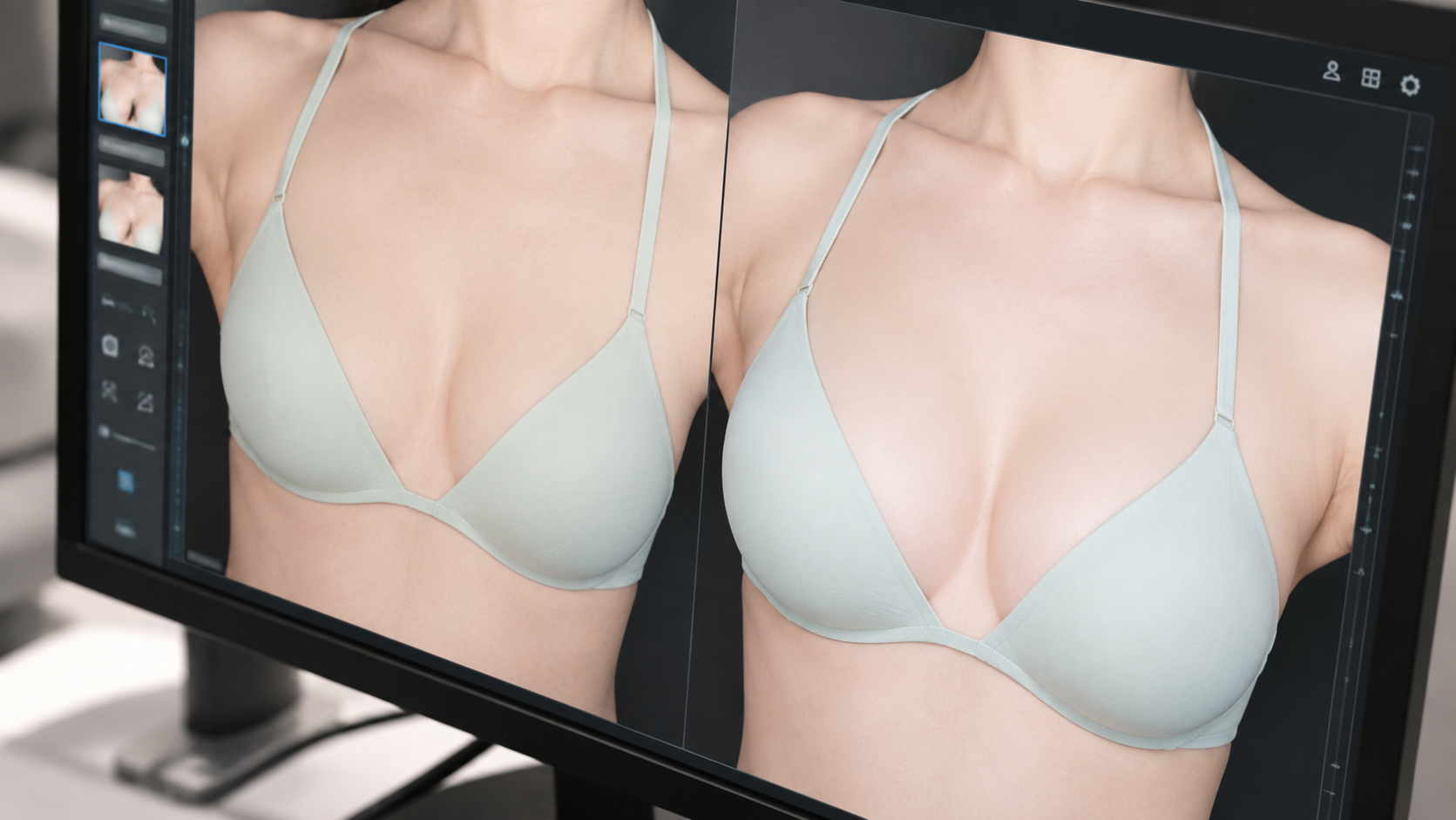
The clinic performs pre-operative precise examinations and accurate cause analysis to establish why the previous augmentation produced dissatisfaction or a complication. It states that it uses accumulated clinical experience and data to build the revision plan from that finding. That step is what distinguishes the service.
Preparation is heavier on documentation than a first operation. Your complete previous breast-surgery history is needed, along with implant information where you have it, your current symptoms, medical history, medications, allergies and any previous complications. The clinic assesses the existing implant and breast condition, and completes pre-operative examination and any required imaging or laboratory tests. Blood-thinning medicines and supplements may need adjusting under medical guidance, and the clinic's fasting and medication instructions apply before anaesthesia.
The operation runs in six stages. The current breast condition is examined. The cause of the previous problem is analyzed — capsular contracture, asymmetry, implant damage or unsatisfactory shape. The existing implant is removed using an HD high-definition endoscope where appropriate. The breast pocket is dissected and prepared. A new implant is placed, selected for the individual case. Breast shape and symmetry are then refined.
Duration varies considerably with the cause and the complexity. Removing an implant alone is a different operation from one that also treats capsular contracture, modifies the pocket, replaces the implant and corrects asymmetry. Anaesthesia is generally matched to the extent of the operation and is commonly general. Pain, swelling and discomfort afterward are typically managed with prescribed medication and post-operative care.
| Stage | What to expect |
|---|---|
| Early post-operative period | Swelling and bruising are most noticeable; pain and tightness are common |
| First weeks | Swelling improves gradually; strenuous exercise and heavy lifting stay restricted |
| Two to four weeks | Alcohol, smoking and direct pressure on the treated area are also avoided |
| Following weeks | Changes in implant position, volume and contour become clearer as swelling decreases |
| Several months | The final contour continues to develop |
The final appearance takes longer to assess than after a primary augmentation, because swelling decreases and tissues settle gradually, and because the timeline shifts with the revision technique, the tissue condition, the implant chosen, and whether extensive capsule or scar tissue treatment was required.
Recovery itself varies with the reason for revision, whether the implant was removed or replaced, how much scar-tissue removal or pocket modification was involved, and your own healing. The surgeon sets the activity and follow-up schedule from your case rather than from a template.
Aftercare covers keeping the surgical area clean and protected, taking prescribed medication as directed, wearing a recommended supportive garment if advised, staying away from strenuous activity and heavy lifting during initial healing, and attending scheduled examinations. The clinic describes 1:1 personalized close care for this service, including a dedicated VIP manager and post-operative management of the chest area.
For patients flying from the United States, plan roughly one to two weeks in Korea and treat that as a minimum rather than a plan. Revision cases can remain visibly swollen longer than primary surgery. Clearance to fly comes from the surgeon after a follow-up check, and international patients should allow enough time for early recovery and post-operative assessment before travelling.
The clinic has not published a price or a price range for this procedure, so none is stated here, and cost is confirmed at consultation.
Combining Revision Breast Surgery with Other Treatments
Revision is often several procedures inside one operation rather than one procedure combined with another. Depending on your condition it may involve implant removal and replacement, treatment of capsular contracture, correction of asymmetry, pocket modification, or shape adjustment — all confirmed by the surgeon after individual examination.
Breast Augmentation — the primary operation this service revises, and the reference point for what a first-time plan involves.
Trinity Breast Surgery — the clinic's combined implant programme, which shares the same Motiva and Mentor implant range.
Breast Plastic Surgery — the parent specialty, where revision is weighed against the clinic's other breast procedures.
Safety, Precision, and Clinic Standards
The clinic has operated at the same address in Haeundae, Busan since 2005. TAE Plastic Surgery Clinic is a Registered Medical Institution for Attracting Foreign Patients, certified by the Ministry of Health and Welfare under the Medical Overseas Expansion and Foreign Patients Attraction Act. TAE Plastic Surgery Clinic publishes neither case volumes nor complication rates for this procedure, and this page claims neither.
The clinic reports approximately 240 surgical procedures and approximately 3,600 non-surgical treatments a year; these are clinic-wide totals across everything it offers, not figures for this procedure.
What the clinic states it does to reduce risk on this operation is a list of process steps. It emphasizes precise pre-operative examination and accurate cause analysis. It uses an HD high-definition endoscope. It describes minimally invasive surgery with delicate dissection, intended to limit additional tissue damage, pain and bleeding. It describes state-of-the-art surgical equipment. It provides personalized post-operative care, including Capscare-related management for post-operative breast concerns.
The risks carry both breast-surgery and implant-surgery exposure. Pain, swelling and bruising are expected. Bleeding and infection are possible. Wound healing can be delayed. Scarring occurs. Breast or nipple sensation can change. Asymmetry and contour irregularities can persist or recur. Implant displacement can happen again. Implant rupture or leakage remains possible. Capsular contracture can recur. Persistent pain is a recognized outcome. Further revision surgery may be needed.
There is a structural reason for that list. Previous surgery and scar tissue make a revision more complex, and additional scar tissue or changes to the breast pocket can make the operation harder than the original. Breast implants are not considered lifetime devices, so future monitoring or additional surgery may be necessary regardless of how well this operation goes.
The clinic is explicit about the limits. Complete correction is not promised. Symmetry between the two sides is not promised. Nor is the assurance that one operation will be enough. The clinic publishes no fixed revision commitment, and outcomes are discussed individually with each patient. Independent background on the procedures in this category is published by the American Society of Plastic Surgeons (ASPS). Neither ASPS nor the FDA is affiliated with this clinic, and neither endorses it.
The Bottom Line
Revision breast surgery corrects the result or the complications of a previous augmentation, and the clinic treats cause analysis as the first step rather than a formality.
The clinic names five revision triggers: capsular contracture, asymmetry, unsatisfactory size or shape, implant damage, and implant displacement or deformation.
HD high-definition endoscopy is used for precise revision and for removing existing implants through minimal incisions.
The clinic states that it uses genuine Motiva and Mentor implants and stocks a range of sizes and shapes.
Revision is more complex than a primary augmentation because of the existing implant, altered anatomy and scar tissue.
Complete correction, symmetry, and one-operation sufficiency are all things the clinic states it will not promise.
FAQ
Who is a good candidate for revision breast surgery?
Patients with capsular contracture, implant displacement, implant rupture or damage, breast asymmetry, or dissatisfaction with breast size or shape after previous breast surgery may be considered. The clinic's stated emphasis is on analyzing the underlying cause before planning the revision. Final suitability is decided after an individual surgical evaluation.
How is a revision different from my first augmentation?
A revision has to work with an existing implant, altered anatomy, scar tissue, or a previous surgical problem. The clinic describes revision as more complex and more challenging than initial breast surgery. That is also why it puts cause analysis ahead of technique selection.
How long does the operation take?
It varies considerably with what the revision involves — implant removal alone, replacement, capsular contracture treatment, correction of displacement, rupture or asymmetry. The clinic's published information does not give a fixed operating time. Confirm the expected duration for your plan directly with the clinic.
What implants does the clinic use?
The clinic states that it uses genuine Motiva and Mentor breast implants and stocks various sizes and shapes so that the replacement can be customized. It describes these products as approved by the US FDA, European CE and the Korean Ministry of Food and Drug Safety. That is the clinic's description of the products themselves, not a statement about individual outcomes.
Can capsular contracture come back?
Recurrent capsular contracture is a recognized risk of revision surgery and appears on the clinic's own risk list. The clinic describes Capscare-related management as part of its post-operative care for breast concerns. No clinic can rule out a recurrence.
What records should I bring or send?
Send your complete previous breast-surgery history, implant information where you have it, your current symptoms, medical history, medications, allergies and details of any previous complications. Standardized photographs of the treatment area are typically requested as well. For a revision case, the prior records matter as much as the photographs.
What if a problem develops after I return home?
Get the clinic's post-operative contact information before you leave Korea. New or worsening severe pain, significant swelling, bleeding, fever, wound problems, shortness of breath or chest pain requires prompt medical assessment where you are. For non-urgent concerns, photographs can be sent to the clinic for remote review before next steps are advised.
Book a Consultation at TAE Plastic Surgery Clinic
Revision breast surgery in Busan is performed at TAE Plastic Surgery Clinic, and the consultation begins with working out why the previous result turned out the way it did. English-speaking assistance is available for both online and in-person consultations, and consultations are arranged through the clinic's contact page. International patients can send photographs and their medical and treatment history for an initial remote review before travelling, with the plan confirmed in person at the clinic. TAE Plastic Surgery Clinic is at 4th Floor, Gunam Building, 27 Gunam-ro, Haeundae-gu, Busan, South Korea, and opens Monday to Friday from 09:00 to 18:00 and Saturday from 09:00 to 13:00, closed Sundays and public holidays.
Disclaimer
This page is for general informational purposes and does not constitute individualized medical advice. Candidacy, technique, anaesthesia and outcome can only be determined in an in-person consultation with a qualified doctor. Individual results vary.
References
US Food and Drug Administration — Breast Implants
American Society of Plastic Surgeons — Cosmetic Procedures