Personalized plastic surgery, laser & anti-aging care in Haeundae, Busan
en-US

Eye Plastic Surgery
Eye plastic surgery reshapes eyelids and treats under-eye fat. Performed by board-certified Dr. Kim Ki-tae at TAE Plastic Surgery Clinic in Busan, Korea.

Eye Plastic Surgery in Busan, Korea

Medically reviewed by Dr. Kim Ki-tae, MD — Board-Certified Specialist in Plastic Surgery, Korean Society of Plastic and Reconstructive Surgeons; Director and founder, TAE Plastic Surgery Clinic TAE Plastic Surgery Clinic, Haeundae-gu, Busan
Eye plastic surgery in Busan, at TAE Plastic Surgery Clinic, covers the cosmetic and reconstructive procedures performed around the eyelid area to enhance overall appearance, reshape eyelid creases, or reposition periocular fat. In Haeundae-gu, this specialty is organized as five separate services rather than one standard operation, three of which address the under-eye specifically. Which service applies to a given patient is treated as a diagnostic question, not a preference selected from a menu.
Most American patients arrive at this subject through one of two doors. Either the under-eye has started to read as permanently tired in photographs and video calls, or an eyelid operation performed at home has left a result the patient wants changed. Both routes lead to the same first step here, which is working out which structure is actually responsible before anyone discusses a technique.
What Is Eye Plastic Surgery?
Eye plastic surgery includes cosmetic and reconstructive procedures performed around the eyelid area to enhance overall appearance, reshape eyelid creases, or reposition periocular fat.
The region treated is the eyelid and periorbital area, which includes the upper lid, the lower lid, the eye corners, and the roll of tissue beneath the lower lash line.
The clinic groups five distinct services under this specialty, and three of them are directed at the under-eye rather than the upper lid.
Selection between those services follows an assessment of eye shape, the amount of fat, and skin thickness, considered together rather than one at a time.
Dr. Kim Ki-tae states that the periorbital area has thin skin with a dense concentration of blood vessels and nerves, which is the stated reason the assessment is structured this way.
A transconjunctival route, which places the incision on the inner surface of the eyelid, is available within the specialty and avoids an incision on the skin surface.
Eye plastic surgery is widely performed to restore functional field-of-vision loss caused by drooping lids as well as to improve overall facial harmony and cosmetic appearance.
One naming point matters before you read further. This specialty is listed under the heading of under-eye fat repositioning surgery, but the clinic's own published under-eye method removes protruding fat and grafts separately harvested fat, rather than sliding existing fat downward into the hollow. Dr. Kim Ki-tae has addressed the confusion directly in print:
"Under-eye fat repositioning and under-eye fat correction have similar names, but they differ in surgical approach and in process. Because every patient's anatomical structure and under-eye condition is different, it is important to set an appropriate surgical plan through sufficient consultation and diagnosis."
For general background on eyelid surgery as a category, the American Society of Plastic Surgeons maintains a patient reference page (ASPS).
Who Performs Eye Plastic Surgery at TAE Plastic Surgery Clinic

**Dr. Kim Ki-tae
**Board-Certified Plastic Surgeon
Dr. Kim Ki-tae holds the Board-Certified Specialist designation in Plastic Surgery issued by the Korean Society of Plastic and Reconstructive Surgeons. He graduated from Inje University College of Medicine and trained as a Clinical Fellow in the Department of Plastic Surgery at Pusan National University from March 2003 to February 2004. He founded TAE Plastic Surgery Clinic in 2005 and has practised there ever since.
TAE Plastic Surgery Clinic is a single-doctor clinic, so the surgeon who assesses you is the surgeon who treats you. That structure is why the diagnostic step described above is not delegated: the person deciding which of the five services applies is the person who will carry it out. His documented position on that decision is short — "In aesthetic medicine, the process of diagnosis is very important." — and the under-eye workflow at this clinic is built around it.
He chairs the Academic Committee of the Laser Plastic Surgery Research Group at the Korean Society of Plastic and Reconstructive Surgeons, sits on that society's Academic Committee, serves on the Legislation Committee of the Korean Association of Plastic Surgeons, and is General Affairs Director of the Busan Medical Association. He is a full member of the American Society for Laser Medicine and Surgery, an international member of the American Society of Plastic Surgeons, and a full member of the International Confederation for Plastic, Reconstructive and Aesthetic Surgery.
One named technique sits inside this specialty rather than across it: a transconjunctival route that pairs removal with grafting, documented in full on the Under-Eye Fat Correction page. You can read more about the surgeon on the doctor profile page.
Eye Plastic Surgery Options and Types Available
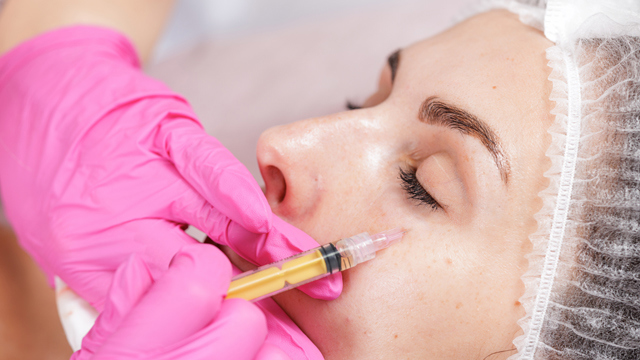
The clinic's confirmed service list keeps five services under this specialty. Two of them, Under-Eye Fat Correction and Under-Eye Fat Contouring, are recorded as separate entries and must not be treated as the same operation under two names — a level of differentiation within one small region that most clinics do not maintain.
| Service | What it addresses | Distinguishing feature |
|---|---|---|
| Under-Eye Fat Correction | Orbital fat protruding forward, and the combined bulging-and-hollow pattern | Removal of protruding fat plus grafting of separately harvested fat, through a conjunctival incision |
| Under-Eye Fat Contouring | Under-eye bags, tear-trough depression, congenital lack of volume, sunken facial appearance | Under-eye fat correction and autologous fat grafting performed together, with graft volume designed area by area |
| Autologous Fat Grafting for Aegyo-Sal | Definition of the roll of tissue directly beneath the lower lash line | Small-volume transfer of the patient's own fat, with no implant involved |
| Bespoke Eye Surgery | Eyelid crease, eye shape, eye opening, symmetry, eye corners | Not a single operation; a plan assembled from the appropriate procedures for that anatomy |
| Revision Eye Surgery | An unsatisfactory result from a previous eyelid operation | Cause-based analysis of crease, muscle, fat and scar tissue before any technique is chosen |
Non-surgical alternatives sit outside this table but belong in the same conversation. Radiofrequency skin tightening or injectable dermal fillers can offer temporary tightening or volumization without incisional surgical changes.
Who Is a Good Candidate for Eye Plastic Surgery?

Candidacy for this specialty is assessed for the region first and for the specific service second.
Generally suitable:
Patients whose concern sits in the eyelid or periorbital region, including protruding or hollow under-eyes.
Patients concerned with the definition of the roll beneath the lower lash line.
Patients concerned with eyelid shape or the position of the eyelid crease.
Patients dissatisfied with the result of a previous eye operation.
Generally healthy adults with realistic expectations who want a change that non-surgical options cannot achieve.
Generally not suitable, or requiring further review first:
Patients with uncontrolled medical conditions that could increase surgical or anesthesia risks.
Patients with active infection or significant inflammation around the eyes.
Patients with conditions that may interfere with healing.
Patients with certain untreated eye conditions, including active thyroid eye disease.
Patients with severe dry eye syndrome or uncontrolled eye infections.
Patients with bleeding disorders.
Patients with unrealistic expectations, who may require further counseling before surgery.
Suitability depends on the specific procedure, the patient's overall health, eye condition, medications, and individual goals. The final decision is made by the doctor following an individual medical assessment.
What to Expect: Procedure, Recovery, and Results Timeline
The pathway through this specialty is the same regardless of which service is selected at the end of it.
Identification of which eyelid or periorbital structure is causing the concern.
Assessment of eye shape, fat volume and skin thickness together.
Selection of the applicable service from the five in this specialty.
Design and planning of the operation with the doctor who will perform it.
Anesthesia arrangements, discussed with the medical team.
The operation itself, as set out in the individual service page.
Recovery-room observation and discharge instructions.
Eye plastic surgery is typically performed under local anesthesia, sometimes combined with light IV sedation to ensure complete patient comfort during the procedure. Advanced surgical equipment, micro-precision instruments, and high-precision electrocautery or laser systems are used for fine soft-tissue handling around the eyes.
Before the operation, patients must avoid blood-thinning medications and anti-inflammatory drugs, refrain from smoking, and arrange post-procedure transportation. Aspirin, vitamin E supplements and alcohol are also avoided for one to two weeks beforehand. Afterwards, patients apply cold compresses for the first two days, keep the surgical site clean, avoid heavy lifting or straining, and use prescribed eye drops or ointments.
| Point in recovery | What the clinic documents |
|---|---|
| First 2–3 days | Acute swelling and bruising peak |
| Day 5–7 | Stitch removal; flying home is generally possible after this point |
| Within 2 weeks | Initial swelling subsides and initial structural changes become visible |
| 2–3 weeks | Contact lenses, eye makeup, sauna visits and vigorous exercise are avoided until this period has passed |
| 2–3 months | Tissues settle |
| 6–12 months | Final eyelid symmetry, soft tissue naturalness and complete scar fading |
The procedure takes around one to two hours, with visits required for consultation, surgery, and stitch removal five to seven days later. Typically two to three clinic visits are needed in total: an immediate post-operative check, suture removal at day five to seven, and a final evaluation before departure. A stay of five to seven days in Korea is recommended so that all three can happen before you travel. Realistic results depend on the patient's individual eye structure, fat distribution, skin and muscle condition, and the selected surgical technique.
Combining Eye Plastic Surgery with Other Treatments
Eye plastic surgery is frequently combined with facial fat grafting, brow lifting, or targeted laser skin rejuvenation to enhance overall facial balance.
Fat Grafting & Anti-Aging — facial fat grafting, where volume loss elsewhere in the midface is contributing to the tired appearance around the eye.
Autologous Fat Grafting for Aegyo-Sal — where the concern is specifically the definition of the roll beneath the lash line rather than the fat behind it.
HALO Laser — targeted laser skin rejuvenation of the surrounding facial skin.
Bespoke Laser Treatment — where the skin surface, rather than the underlying structure, is a substantial part of the concern.
The clinic's stated approach is to assess skin condition and the underlying tissue structure together, because the two determine what any single treatment can realistically achieve. TAE Plastic Surgery Clinic describes itself as a complex aesthetic surgery space, in which surgery is connected to non-surgical treatment and to advanced lasers, and stem cell and anti-ageing care are practised alongside them rather than kept apart. Any combination is decided with the treating doctor at consultation.
Safety, Precision, and Clinic Standards

TAE Plastic Surgery Clinic is a Registered Medical Institution for Attracting Foreign Patients, certified by the Ministry of Health and Welfare under the Medical Overseas Expansion and Foreign Patients Attraction Act. The clinic has operated at the same address in Haeundae, Busan since 2005. The clinic reports approximately 240 surgical procedures and approximately 3,600 non-surgical treatments a year; these are clinic-wide totals across everything it offers, not figures for this procedure. TAE Plastic Surgery Clinic publishes neither case volumes nor complication rates for this procedure, and this page claims neither. The clinic has not published a price or a price range for this procedure, so none is stated here, and cost is confirmed at consultation.
Risk in this region is stated plainly by the clinic. Eye plastic surgery may cause temporary swelling, bruising, tightness, discomfort, dryness, watering, or blurred vision during recovery. Possible complications include bleeding or hematoma, infection, scarring, and asymmetry. Overcorrection or undercorrection may occur. Changes in eyelid position and difficulty fully closing the eyes are documented complications. Persistent or worsened dry-eye symptoms are also possible. Rare but serious complications may include injury to surrounding structures or significant changes in vision. Revision surgery may occasionally be required.
The clinic states that risks are minimized through personalized pre-operative design, precise micro-dissection, sterile operating environments, and multi-layered fine suturing techniques. Absolute mathematical symmetry between both eyes is not something the clinic claims, because natural facial bone structure and muscle movement vary between the two sides. Independent bodies publishing patient-facing risk information for eyelid procedures include the NHS (NHS) and the American Academy of Dermatology (AAD).
The Bottom Line
Eye plastic surgery at TAE Plastic Surgery Clinic is five separate services, not one operation, and three of them address the under-eye.
Which service applies is decided from eye shape, fat volume and skin thickness assessed together, not from patient preference.
The clinic's own under-eye method removes protruding fat and grafts separately harvested fat, which is not the same thing as repositioning existing fat.
A transconjunctival route is available and places the incision on the inner surface of the eyelid.
Dr. Kim Ki-tae is the clinic's sole doctor and performs the assessment and the operation himself.
Most patients need five to seven days in Korea, with stitch removal at day five to seven and final settling over several months.
FAQ
How do I know which of the five eye services I need? You do not decide this in advance, and the clinic does not expect you to. The assessment establishes which structure is responsible — protruding orbital fat, loss of skin elasticity, volume loss, eyelid position, or the effects of previous surgery — and the service follows from that finding. Dr. Kim Ki-tae states that eye shape, the amount of fat and skin thickness must be considered together.
How long does eye plastic surgery take? Typically 30 minutes to 2 hours. The range depends on whether a non-incisional, incisional, or combined procedure such as canthoplasty is performed. The clinic confirms the expected duration for your specific plan at consultation.
How many days should I stay in Korea? Five to seven days is the recommended stay. That window allows for stitch removal, an initial healing evaluation, and post-operative monitoring before you travel. Patients can generally fly home once stitches have been removed.
Is it painful? Pain during the procedure is minimal because of local anesthesia. Mild tightness, soreness, or slight stinging around the eyelids may occur for the first two to three days. Light intravenous sedation is frequently added for comfort during the initial numbing injections.
When will I see the final result? Initial structural changes and new crease shapes are visible immediately after suture removal, although mild swelling is still present at that point. Major swelling subsides within two weeks. Final eyelid symmetry, soft tissue naturalness and complete scar fading are reached between six and twelve months after the procedure.
What photographs does the clinic need before I travel? Clear, well-lit photographs of the eyes looking straight ahead, upward, and closed. Any relevant medical eye history records should be sent alongside them. Online consultation is available, and this material is what the review is based on.
Can something be done remotely if a concern comes up after I get home? Patients can send photographs of the concern for the clinic to review remotely before the clinic advises on next steps. This is the documented route for post-travel questions. Anything involving significant vision change, severe pain or rapidly increasing swelling should be assessed in person locally without waiting.
What can eye plastic surgery not deliver? Exact mathematical symmetry between both eyes cannot be promised, because facial bone structure and muscle movement differ naturally between the two sides. Dark circles caused purely by skin pigmentation rather than by contour are also a different problem from fat protrusion. Both limits are discussed at consultation rather than after surgery.
Book a Consultation at TAE Plastic Surgery Clinic
Eye plastic surgery at TAE Plastic Surgery Clinic is carried out in Haeundae-gu, Busan, by Dr. Kim Ki-tae. English-speaking assistance is available for both online and in-person consultations, and consultations are arranged through the clinic's contact page. TAE Plastic Surgery Clinic is at 4th Floor, Gunam Building, 27 Gunam-ro, Haeundae-gu, Busan, South Korea, and opens Monday to Friday from 09:00 to 18:00 and Saturday from 09:00 to 13:00, closed Sundays and public holidays.
If you are travelling from the United States, send the photographs described above with your enquiry so that the pre-travel review can begin before you book flights.
Disclaimer
This page is for general informational purposes and does not constitute individualized medical advice. Candidacy, technique, anaesthesia and outcome can only be determined in an in-person consultation with a qualified doctor. Individual results vary.
References
American Society of Plastic Surgeons — Eyelid Surgery
American Academy of Dermatology — Cosmetic treatments