Personalized plastic surgery, laser & anti-aging care in Haeundae, Busan
en-US

Autologous Fat Grafting for Aegyo-Sal
Aegyo-sal fat grafting uses your own processed fat to shape the roll under the lower lash line. Performed by Dr. Kim Ki-tae in Busan, South Korea.

Autologous Fat Grafting for Aegyo-Sal in Busan, Korea

Medically reviewed by Dr. Kim Ki-tae, MD — Board-Certified Specialist in Plastic Surgery, Korean Society of Plastic and Reconstructive Surgeons; Director and founder, TAE Plastic Surgery Clinic TAE Plastic Surgery Clinic, Haeundae-gu, Busan
Autologous fat grafting for aegyo-sal in Busan involves removing a small amount of fat from a suitable donor area, processing the harvested fat, and carefully injecting it into the lower-eyelid area. At TAE Plastic Surgery Clinic in Haeundae-gu, the objective is stated as creating a soft, natural-looking fullness while maintaining appropriate facial proportions. Aegyo-sal is the roll of tissue that sits directly beneath the lower lash line and becomes more visible when you smile.
Two things motivate most enquiries. Patients want a more defined and youthful-looking lower-eye contour without relying on a permanent implant, and they prefer using their own tissue over an injectable manufactured material. Both are reasonable starting positions, and both come with a trade-off that this page sets out plainly: fat taken from your own body is yours, but how much of it survives cannot be predicted precisely.
It is worth being clear about what this treatment is not. It does not remove protruding orbital fat, and it does not lift or tighten loose lower-eyelid skin. It adds a small, designed amount of volume in one specific place. Where the underlying problem is a bulge rather than an absence, or a broader loss of facial volume, a different service in the same specialty is the appropriate one, and the consultation exists to make that distinction before anything is harvested.
What Is Autologous Fat Grafting for Aegyo-Sal?
Autologous fat grafting for aegyo-sal is the transfer of a small quantity of the patient's own processed fat into the lower-eyelid area to create or enhance the roll beneath the lash line.
The fat comes from the patient, so no manufactured filler material is introduced.
A donor area is selected at consultation and a small amount of fat is harvested from it.
The harvested fat is processed to prepare it for transfer before anything is injected.
Placement is done in small amounts, distributed carefully to achieve a smooth and balanced contour.
Results are kept conservative on purpose, because excessive volume can make the area look puffy or unnatural.
The clinic's broader fat-grafting program describes fat harvesting and processing alongside SVF-based fat-grafting techniques. TAE states that SVF contains adipose-derived stem-cell components and growth factors, and that its approach is intended to support fat retention and tissue regeneration. Those are the clinic's statements about its own method, and this page does not extend them further. General patient information about soft-tissue augmentation of the face, including how injected volume behaves over time, is published by the NHS (NHS).
Who Performs Autologous Fat Grafting for Aegyo-Sal at TAE Plastic Surgery Clinic
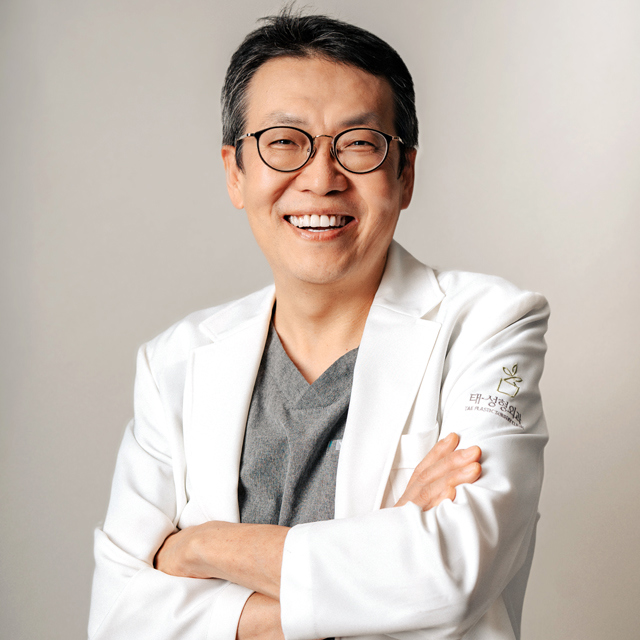
**Dr. Kim Ki-tae
**Board-Certified Plastic Surgeon
Autologous Fat Grafting for Aegyo-Sal is performed by Dr. Kim Ki-tae, the clinic's founder and sole doctor and the listed performing doctor for the parent Eye Plastic Surgery specialty.
Dr. Kim Ki-tae holds the Board-Certified Specialist designation in Plastic Surgery issued by the Korean Society of Plastic and Reconstructive Surgeons. He graduated from Inje University College of Medicine and trained as a Clinical Fellow in the Department of Plastic Surgery at Pusan National University from March 2003 to February 2004. He founded TAE Plastic Surgery Clinic in 2005 and has practised there ever since.
Fat grafting is listed among his core specializations, alongside liposuction and body contouring, which is the same skill set applied at a much smaller scale here. TAE Plastic Surgery Clinic is a single-doctor clinic, so the surgeon who assesses you is the surgeon who treats you. His documented view on the starting point of any aesthetic treatment is that "In aesthetic medicine, the process of diagnosis is very important." Full credentials are on the doctor profile page.
Who Is a Good Candidate for Autologous Fat Grafting for Aegyo-Sal?
Generally suitable:
Generally healthy adults who have enough donor fat available.
Patients who want subtle enhancement of the lower-eye area rather than a dramatic change.
Patients whose lower-eyelid anatomy can support a natural-looking contour.
Patients who understand that fat survival and final results can vary.
Patients who prefer an autologous approach over a manufactured injectable.
Generally not suitable, or requiring review before proceeding:
Patients with insufficient donor fat.
Patients with active infection or inflammation around the treatment area.
Patients with uncontrolled medical conditions.
Patients with significant healing problems, or conditions that could interfere with healing.
Patients with unrealistic expectations.
A detailed assessment of the eye area and overall facial balance is important before treatment. During consultation the practitioner evaluates lower-eyelid anatomy, existing aegyo-sal volume, skin condition, facial proportions, and available donor areas. The desired result and the medical history are reviewed before deciding whether fat grafting is appropriate and how much volume should be considered.
What to Expect: Procedure, Recovery, and Results Timeline
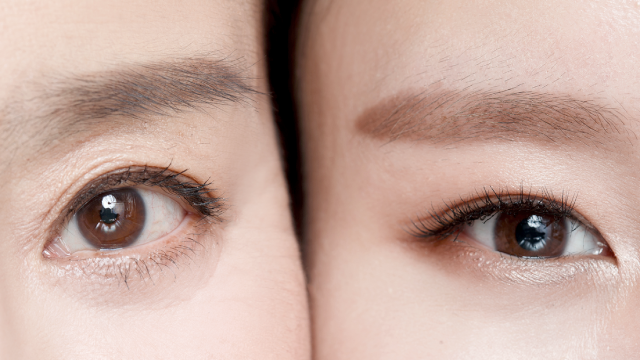
Treatment generally runs in this order:
Marking of the treatment area and the donor area.
Administration of appropriate anesthesia.
Harvesting of a small amount of fat.
Processing of the fat to prepare it for transfer.
Placement of small amounts into the targeted lower-eyelid area, distributed for a smooth contour.
Local anesthesia is commonly sufficient for limited fat harvesting and injection, although the approach can vary depending on the amount of treatment and the patient's circumstances. Some patients experience temporary tenderness, tightness, or mild discomfort during recovery. Discomfort can come from two places rather than one, because there is a harvesting site as well as the treated eyelid area.
The procedure itself typically takes under an hour, and is generally performed as an outpatient treatment. Exact timing depends on the fat harvesting, processing, and injection requirements agreed at consultation. Before treatment, patients should provide a complete medical and medication history. The practitioner may advise avoiding certain medications or supplements that increase bleeding risk, where medically appropriate. Smoking may also be discouraged because it can interfere with healing.
| Point in recovery | What the clinic documents |
|---|---|
| Early recovery | Swelling and bruising around the eyes are most noticeable, then gradually decrease |
| Around one week | Most patients can fly home once early swelling has settled |
| Five to seven days | Recommended stay in Korea, covering consultation, treatment and early review |
| Following weeks | The treated area continues to settle; small areas of unevenness can appear while it does |
| Several months | The point at which the grafted fat and surrounding tissue have stabilized and the result should be judged |
Aftercare follows the clinic's instructions on cleaning, physical activity, pressure on the treated area, and medication. Rubbing, pressing or massaging the treated eyelid should be avoided unless you are specifically instructed otherwise. Strenuous activity and anything that could traumatize the eye area may need to be restricted during early recovery. Follow-up appointments assess swelling, symmetry, and fat retention. Typical practice is one in-person follow-up before you depart Korea, with further check-ins available remotely by photograph.
The realistic goal is a subtle, natural-looking increase in lower-eyelid fullness rather than a dramatically swollen appearance. The exact final volume, symmetry, contour and amount of fat that survives cannot be promised.
Combining Autologous Fat Grafting for Aegyo-Sal with Other Treatments
Depending on the patient's anatomy and goals, fat grafting may be considered alongside other facial or eyelid procedures. Any combination should be based on clinical assessment, because treating multiple areas can increase swelling, recovery requirements, and procedural risks.
Under-Eye Fat Correction — where protruding orbital fat sits behind the area you want defined.
Under-Eye Fat Contouring — where a wider facial volume plan is under discussion.
Bespoke Eye Surgery — where eyelid crease or eye shape is also being addressed.
Safety, Precision, and Clinic Standards
TAE Plastic Surgery Clinic is a Registered Medical Institution for Attracting Foreign Patients, certified by the Ministry of Health and Welfare under the Medical Overseas Expansion and Foreign Patients Attraction Act. Two sites are involved in this treatment, the donor area and the eyelid area, and the risk list below covers both.
Temporary swelling, bruising and tenderness are common. Mild asymmetry is common in early recovery. Infection is possible. Bleeding or hematoma is possible. Contour irregularity can occur. Palpable or visible lumps can occur. Overcorrection and undercorrection are both possible. Fat reabsorption occurs to a degree that varies between patients. Prolonged swelling can occur. Additional treatment is sometimes needed. Rare but serious complications are possible with fat injection around the eye, and careful technique is required.
The clinic has not published an approved-claims list for this procedure and this market, so this page states no efficacy or outcome claim beyond what the clinic itself documents. TAE Plastic Surgery Clinic publishes neither case volumes nor complication rates for this procedure, and this page claims neither. The clinic has not published a price or a price range for this procedure, so none is stated here, and cost is confirmed at consultation. Independent background on cosmetic procedures and how to weigh them is published by the American Society of Plastic Surgeons (ASPS).
The Bottom Line
The material transferred is the patient's own fat, harvested and processed during the same treatment.
The aim is a subtle roll beneath the lash line, kept conservative because excess volume looks puffy.
Fat survival varies between patients and cannot be predicted, so additional treatment is sometimes needed.
There are two recovery sites to consider: the eyelid area and the donor area.
The result should be judged after several months, once the graft and surrounding tissue have stabilized.
FAQ
How is this different from aegyo-sal filler? Filler uses an injectable manufactured material and is generally temporary. Fat grafting uses the patient's own tissue and may provide longer-lasting volume where the transferred fat survives. The trade-off is that grafting involves a harvesting procedure and has less predictable volume retention than a filler treatment.
How long does the treatment take? Typically under an hour, as an outpatient treatment. The exact time depends on the harvesting, processing and injection required by the plan agreed at consultation. It is a small-volume procedure by design.
How much fat will survive? That varies between patients and cannot be quantified in advance. Some of the transferred fat is absorbed, and additional enhancement is sometimes needed later. This is the main reason the final appearance is assessed after the tissue has stabilized rather than in the first weeks.
How long should I stay in Korea? Five to seven days is the general advice. That allows time for consultation, treatment, and any early postoperative review the clinic recommends. Most patients can fly home once early swelling has settled, typically within about a week.
Is it painful? Some discomfort can occur, and it comes from both the fat-harvesting site and the treated eyelid area. Swelling and bruising are also possible during early recovery. Temporary tenderness and tightness are commonly reported.
What should I bring or send before the consultation? Tell the clinic about previous eye surgery, medications, allergies, eye conditions and any previous fillers or injections. Clear photographs from the front and at an angle are useful, with the eyes open and smiling if requested. Photographs showing the amount of aegyo-sal you have in mind help the discussion about volume.
What should I avoid after treatment? Do not rub, press or massage the treated eyelid unless you are told to. Strenuous activity and anything that could knock the eye area may need to be restricted in early recovery. Follow the clinic's written instructions on cleaning, activity and medication.
Book a Consultation at TAE Plastic Surgery Clinic
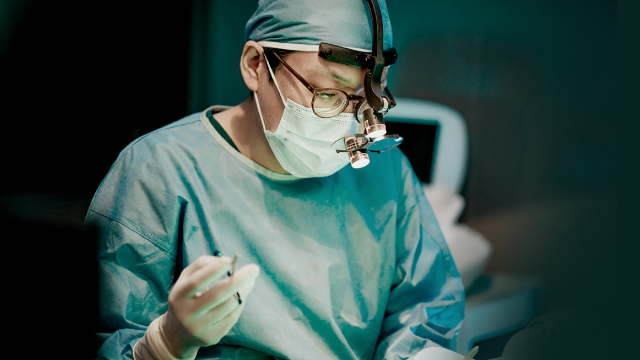
Autologous fat grafting for aegyo-sal is performed in Busan by Dr. Kim Ki-tae at the clinic's Haeundae-gu premises. English-speaking assistance is available for both online and in-person consultations, and consultations are arranged through the clinic's contact page. TAE Plastic Surgery Clinic is at 4th Floor, Gunam Building, 27 Gunam-ro, Haeundae-gu, Busan, South Korea, and opens Monday to Friday from 09:00 to 18:00 and Saturday from 09:00 to 13:00, closed Sundays and public holidays.
Disclaimer
This page is for general informational purposes and does not constitute individualized medical advice. Candidacy, technique, anaesthesia and outcome can only be determined in an in-person consultation with a qualified doctor. Individual results vary.
References
American Society of Plastic Surgeons — Cosmetic procedures