Personalized plastic surgery, laser & anti-aging care in Haeundae, Busan
en-US

Bespoke Eye Surgery
Bespoke eye surgery plans eyelid procedures around your own anatomy rather than one standard operation. Dr. Kim Ki-tae, TAE Plastic Surgery, Busan.

Bespoke Eye Surgery in Busan, Korea

Medically reviewed by Dr. Kim Ki-tae, MD — Board-Certified Specialist in Plastic Surgery, Korean Society of Plastic and Reconstructive Surgeons; Director and founder, TAE Plastic Surgery Clinic TAE Plastic Surgery Clinic, Haeundae-gu, Busan
Bespoke eye surgery in Busan, at TAE Plastic Surgery Clinic, is a personalized approach to improving the appearance and function of the eyes according to the patient's eyelid anatomy, facial proportions, eye-opening characteristics and aesthetic goals. It is planned and carried out at the clinic's Haeundae-gu premises. It is not necessarily one operation, and that is the point of it.
Patients researching Korean eye surgery from the United States often expect to choose a named operation and then find a surgeon to perform it. This service inverts that order. The examination comes first, the combination of procedures follows from it, and the name of the operation is the last thing decided rather than the first.
What Is Bespoke Eye Surgery?
Bespoke eye surgery is an individualized surgical plan for the eye region, assembled from whichever eyelid procedures suit the patient's anatomy rather than applied as a single standard operation.
Depending on the assessment, the plan may include double-eyelid surgery, ptosis correction, epicanthoplasty, lateral or lower canthoplasty, or upper and lower blepharoplasty.
Two or more of those procedures may be combined in one plan.
TAE states that its customized treatment planning considers skin condition, tissue structure, aesthetic goals and recovery needs.
The clinic states that it provides 1:1 personalized care, and describes combining surgical expertise with advanced laser and energy-based treatments.
The stated aim is individual suitability and natural facial harmony, rather than simply making the eyes larger.
A customized approach is relevant here because patients differ in eyelid thickness, crease anatomy, eye-opening strength, facial proportions and desired outcomes. Upper-eyelid and double-eyelid surgery is among the most commonly performed facial plastic-surgery procedures, and general background on the category is published by the American Society of Plastic Surgeons (ASPS).
Who Performs Bespoke Eye Surgery at TAE Plastic Surgery Clinic

**Dr. Kim Ki-tae
**Board-Certified Plastic Surgeon
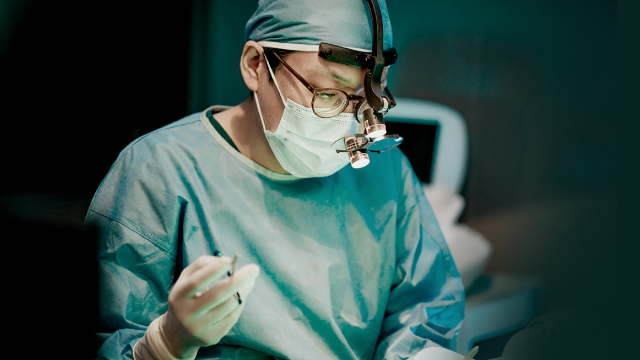
Bespoke Eye Surgery is performed by Dr. Kim Ki-tae, the clinic's founder and sole doctor and the listed performing doctor for the parent Eye Plastic Surgery specialty.
Dr. Kim Ki-tae holds the Board-Certified Specialist designation in Plastic Surgery issued by the Korean Society of Plastic and Reconstructive Surgeons. He graduated from Inje University College of Medicine and trained as a Clinical Fellow in the Department of Plastic Surgery at Pusan National University from March 2003 to February 2004. He founded TAE Plastic Surgery Clinic in 2005 and has practised there ever since.
This is the service where the single-doctor structure has the most direct effect on what the patient gets. TAE Plastic Surgery Clinic is a single-doctor clinic, so the surgeon who assesses you is the surgeon who treats you. A plan built around one person's anatomy is only as good as the examination behind it, and his published position is that "In aesthetic medicine, the process of diagnosis is very important."
He chairs the Academic Committee of the Laser Plastic Surgery Research Group at the Korean Society of Plastic and Reconstructive Surgeons, sits on that society's Academic Committee, serves on the Legislation Committee of the Korean Association of Plastic Surgeons, and is General Affairs Director of the Busan Medical Association. More detail is on the doctor profile page.
Bespoke Eye Surgery Options and Types Available
The components below are the building blocks. A bespoke plan is one or more of them, chosen for what the examination finds.
| Component procedure | What it addresses |
|---|---|
| Double-eyelid surgery | Primarily creates or defines a crease |
| Ptosis correction | Addresses eyelid-opening and muscle function |
| Epicanthoplasty | Changes the inner eye corner |
| Lateral or lower canthoplasty | Changes the outer or lower eye-corner dimensions |
| Upper or lower blepharoplasty | Addresses excess skin and fat associated with aging or eyelid fullness |
Commonly documented combinations include double-eyelid surgery with ptosis correction, double-eyelid surgery with epicanthoplasty, double-eyelid surgery with lateral or lower canthoplasty, and eyelid surgery alongside other rejuvenation procedures. What distinguishes bespoke eye surgery from any single item in the table is that it integrates one or more of them into an individualized plan rather than prescribing the same operation to everyone.
Who Is a Good Candidate for Bespoke Eye Surgery?
Generally suitable:
Adults seeking improvement in eyelid crease, eye shape, eye opening, symmetry, or overall harmony between the eyes and the face.
Patients with monolids or an indistinct crease.
Patients with eyelid asymmetry.
Patients with excess eyelid skin or fat.
Patients with ptosis.
Patients with aesthetic concerns involving the inner or outer eye corners.
Patients with realistic expectations who are medically suitable for surgery.
Generally not suitable, or requiring review before proceeding:
Patients with uncontrolled medical conditions that make elective surgery unsafe.
Patients with active eye or eyelid infection or inflammation.
Patients with unrealistic expectations.
Patients with insufficient understanding of the limitations of surgery.
Exact suitability is determined during an individual examination. The consultation assesses eye shape, eyelid anatomy, facial proportions, eyelid thickness and skin, fat, muscle and eye-opening function, asymmetry, and aesthetic goals.
What to Expect: Procedure, Recovery, and Results Timeline

The planning sequence is documented as follows:
Discuss the patient's concerns and desired appearance.
Examine eyelid and facial anatomy.
Determine whether a crease, eyelid-opening correction, corner surgery or rejuvenation procedure is appropriate.
Design the surgical plan around the individual's anatomy.
Perform the selected procedure or procedures.
Provide postoperative monitoring and aftercare.
The clinic has not published an anaesthesia or pain-control protocol for this procedure, so none is described here; it is confirmed with the medical team before treatment.
There is no single duration, because bespoke eye surgery can mean different combinations. Individual double-eyelid procedures may take approximately 30 to 120 minutes, while combined procedures take longer. Published Korean clinic examples report around 30 minutes for some incisional procedures and 60 to 90 minutes for revision procedures.
Recovery also varies according to the exact combination. A straightforward eyelid procedure may have visible swelling and bruising for several days to weeks. Published Korean clinic examples report approximately three to four days of basic recovery for some incisional procedures, while more extensive or combined surgery can require longer. International patients are generally advised to plan roughly one to two weeks in Korea before flying home, and should confirm the appropriate travel date with the surgeon once any required early postoperative assessment has been completed.
Early appearance is affected by swelling and bruising. The crease and soft tissues continue to settle during the following weeks and months. The eye shape and crease should be assessed after the initial swelling decreases rather than immediately after surgery. Longevity varies by procedure, tissue characteristics, aging and technique, and the clinic does not describe the outcome as permanent.
Before surgery, provide a complete medical and medication history and disclose previous eye surgery, eye conditions, allergies and relevant medications. Bring reference photographs if they help you describe the crease or eye shape you have in mind. Follow the surgeon's instructions on medications and supplements, since anything that increases bleeding risk may need to be adjusted under medical supervision. Afterwards, follow the wound-care and medication instructions, protect the surgical area, avoid rubbing or unnecessary pressure, and attend scheduled follow-ups. Activity restrictions and suture-removal timing depend on the technique used. One in-person follow-up before departure is typical, and later check-ins can be handled remotely from photographs you send.
Combining Bespoke Eye Surgery with Other Treatments
TAE's overall treatment philosophy allows customized combinations of surgical and non-surgical treatments where appropriate.
Under-Eye Fat Correction — where lower-lid fat protrusion is part of the finding.
Under-Eye Fat Contouring — where facial volume loss is contributing alongside the eyelid concern.
Autologous Fat Grafting for Aegyo-Sal — where definition beneath the lash line is a separate goal.
Revision Eye Surgery — where a previous operation is the reason for the consultation.
Safety, Precision, and Clinic Standards
TAE Plastic Surgery Clinic is a Registered Medical Institution for Attracting Foreign Patients, certified by the Ministry of Health and Welfare under the Medical Overseas Expansion and Foreign Patients Attraction Act. Because this service is a plan rather than a fixed operation, the points below apply according to which components are used. The clinic's stated approach is to assess skin condition and the underlying tissue structure together, because the two determine what any single treatment can realistically achieve. The clinic states that it holds a wide range of premium laser and energy-based devices and combines surgical and laser treatment, and no specific device is named for this service.
The documented risks depend on which procedures are performed. Swelling and bruising are expected. Temporary discomfort is common. Asymmetry can occur. Scarring can occur. Crease loosening or irregularity is possible. Over-correction and under-correction are both possible. Dry-eye symptoms can occur. Eyelid malposition is a recognized complication. Incomplete eye closure is a recognized complication. Altered sensation can occur. In functional procedures, ptosis may persist or recur. Combination or revision surgery carries additional risks.
A specific crease height cannot be promised. Perfect symmetry cannot be promised. An exact recovery time cannot be promised. The realistic goal is an eye appearance better matched to the patient's individual anatomy and facial proportions, rather than an identical crease or eye shape for everyone. TAE Plastic Surgery Clinic publishes neither case volumes nor complication rates for this procedure, and this page claims neither. The clinic has not published a price or a price range for this procedure, so none is stated here, and cost is confirmed at consultation. Independent patient information on eyelid surgery risks is published by the NHS (NHS).
The Bottom Line
This is a plan, not a fixed operation, and the components are chosen after the examination.
The available components include double-eyelid surgery, ptosis correction, epicanthoplasty, canthoplasty and blepharoplasty.
Duration and recovery both depend on which combination is selected.
The clinic states its planning considers skin condition, tissue structure, aesthetic goals and recovery needs.
No specific crease height, symmetry or recovery time is promised in advance.
FAQ
If it is not one operation, what am I actually booking? You are booking an assessment that produces a surgical plan. The plan may be a single procedure such as a crease operation, or a combination such as double-eyelid surgery with ptosis correction. The components are decided from the examination of your eyelid anatomy, eye-opening function and facial proportions.
Will surgery in Korea change the character of my eyes? The stated aim is individual suitability and harmony with the rest of the face, not making the eyes larger. Design decisions are made around your own anatomy and your stated goals. Bring reference photographs if that helps you describe what you do and do not want.
How long will I need in Korea? Roughly one to two weeks is the general advice, and the exact date you can fly is confirmed with the surgeon after any required early postoperative assessment. Recovery length depends on how much was done. A straightforward eyelid procedure may show visible swelling and bruising for several days to weeks.
When should I judge the result? After the initial swelling decreases, not immediately after surgery. Early appearance is distorted by swelling and bruising. The crease and surrounding soft tissue keep settling over the following weeks and months.
What should I send before an online consultation? Clear eye photographs from the front and at an angle, with the eyes open and closed. Include information about any previous eye surgery, and earlier photographs of yourself if you have them. Online consultation is available.
What happens if something looks wrong after I get home? Contact the clinic if you have an unexpected or worsening postoperative issue. Significant vision changes, severe pain, substantial bleeding, rapidly increasing swelling or double vision warrant prompt medical assessment rather than waiting for a routine follow-up. Photographs can be reviewed remotely for non-urgent concerns.
Can non-surgical treatment be part of the plan? It can, where appropriate. The clinic describes combining surgical expertise with advanced laser and energy-based treatments, and its treatment philosophy allows customized combinations. Whether that applies to you is a clinical decision made at consultation.
Book a Consultation at TAE Plastic Surgery Clinic
Bespoke eye surgery is planned and performed in Busan by Dr. Kim Ki-tae at the clinic's Haeundae-gu premises. English-speaking assistance is available for both online and in-person consultations, and consultations are arranged through the clinic's contact page. TAE Plastic Surgery Clinic is at 4th Floor, Gunam Building, 27 Gunam-ro, Haeundae-gu, Busan, South Korea, and opens Monday to Friday from 09:00 to 18:00 and Saturday from 09:00 to 13:00, closed Sundays and public holidays.
Disclaimer
This page is for general informational purposes and does not constitute individualized medical advice. Candidacy, technique, anaesthesia and outcome can only be determined in an in-person consultation with a qualified doctor. Individual results vary.
References
American Society of Plastic Surgeons — Eyelid Surgery: