Personalized plastic surgery, laser & anti-aging care in Haeundae, Busan
en-US

Bespoke Laser Treatment
Bespoke laser treatment in Busan, Korea is a 1:1 skin analysis and multi-laser plan that is built for you by Dr. Kim Ki-tae at TAE Plastic Surgery Clinic.

Bespoke Laser Treatment in Busan, Korea

Medically reviewed by Dr. Kim Ki-tae, MD — Board-Certified Specialist in Plastic Surgery, Korean Society of Plastic and Reconstructive Surgeons; Director and founder, TAE Plastic Surgery Clinic TAE Plastic Surgery Clinic, Haeundae-gu, Busan
Bespoke laser treatment in Busan is a personalized one-to-one laser program in which the devices are chosen for the patient rather than the patient fitted to a device. At TAE Plastic Surgery Clinic in Haeundae-gu it exists as a service in its own right because the clinic holds enough laser and energy platforms for that selection to be a real decision. What you are booking here is the analysis and the plan; the treatment that follows is whatever the analysis points to.
What Is Bespoke Laser Treatment?
Bespoke Laser Treatment is a personalized laser program in which skin concerns are diagnosed first and one or more laser technologies are then combined into a plan built for that individual skin.
The clinic describes it as a 1:1 program rather than a single standardized laser applied to every patient.
Its documented starting point is accurate understanding of the patient's concerns, followed by scientific skin diagnosis and analysis.
The combination of technologies is selected against the skin condition found in that analysis.
Planning draws on Dr. Kim Ki-tae's clinical experience and the clinic's accumulated treatment data.
The concerns it is documented as addressing are pigmentation, wrinkles, elasticity, pores, skin texture, acne, scars and skin conditions.
The platforms available to a plan are the reason the service is meaningful. The clinic documents HALO, BBL, Chrome Laser, Mosaic 3D, Ruby Laser, Discovery PICO, Profractional, Virtue RF, Liftera 2, ONDA and LSSA among its laser and energy-based technologies, and states that the specific technology is chosen according to the treatment objective. This page names those platforms because the clinic does, and describes the mechanism of none of them, because the clinic does not.
Treatment planning is documented as weighing four things together: skin condition, tissue structure, aesthetic goals and recovery needs. The fourth is the one patients tend to leave out of their own thinking, and it changes the answer more than they expect. A plan that would be right for someone with two weeks free is not the plan for someone flying out on Thursday.
It is worth being clear about what the alternatives to this approach are, because they are real ones. Chemical peels, microneedling, radiofrequency and ultrasound-based treatments all address overlapping concerns, and the clinic documents them as options to weigh. Which of them fits depends on whether the primary problem is pigmentation, texture, laxity, redness or overall skin quality — and that is a question of diagnosis rather than of preference. The case for a bespoke plan is not that it is more advanced than the alternatives; it is that the choice between them is made after looking at your skin instead of before.
Who Performs Bespoke Laser Treatment at TAE Plastic Surgery Clinic

**Dr. Kim Ki-tae
**Board-Certified Plastic Surgeon
Bespoke Laser Treatment is performed by Dr. Kim Ki-tae, the clinic's founder and sole doctor and the listed performing doctor for the parent Skin & Laser Treatments specialty.
That matters more here than on a single-device page. If the service is the selection of a technology, then the value of the service is entirely the judgement of the person selecting. His published position on that point is one sentence long: "In aesthetic medicine, the process of diagnosis is very important."
Dr. Kim Ki-tae holds the Board-Certified Specialist designation in Plastic Surgery issued by the Korean Society of Plastic and Reconstructive Surgeons. He graduated from Inje University College of Medicine and trained as a Clinical Fellow in the Department of Plastic Surgery at Pusan National University from March 2003 to February 2004. He founded TAE Plastic Surgery Clinic in 2005 and has practised there ever since.
He chairs the Academic Committee of the Laser Plastic Surgery Research Group at the Korean Society of Plastic and Reconstructive Surgeons, sits on that society's Academic Committee, serves on the Legislation Committee of the Korean Association of Plastic Surgeons, and is General Affairs Director of the Busan Medical Association. He is a full member of the American Society for Laser Medicine and Surgery, an international member of the American Society of Plastic Surgeons, and a full member of the International Confederation for Plastic, Reconstructive and Aesthetic Surgery.
Laser plastic surgery and energy-based aesthetic treatment is the first entry in his documented core specializations. The clinic also states that he is known as a doctor who teaches doctors, and that he conducts live procedure training for other practitioners.
TAE Plastic Surgery Clinic is a single-doctor clinic, so the surgeon who assesses you is the surgeon who treats you. His profile is on the doctor page, and this service is catalogued under Skin & Laser Treatments.
Who Is a Good Candidate for Bespoke Laser Treatment?
You may be a candidate if
You are an adult with a specific skin concern and are medically suitable for laser or energy-based treatment.
You have more than one concern in play and no single device obviously covers them.
You want the treatment chosen against your skin rather than against a package.
You are willing to have skin condition, tissue structure, goals and recovery needs weighed together.
You may need to avoid or postpone treatment if
An infection is active in the skin you want treated.
An inflammatory skin condition is present and not under control.
You have significant photosensitivity.
You have recent sunburn in the treatment area.
You have another medical factor that raises the risk of laser treatment.
A medical evaluation is required before treatment, and suitability depends on skin type, treatment goals, existing skin conditions, medications and how you heal. Being unsuitable for one platform does not rule out the others, which is the point of assessing before choosing.
What to Expect: Procedure, Recovery, and Results Timeline
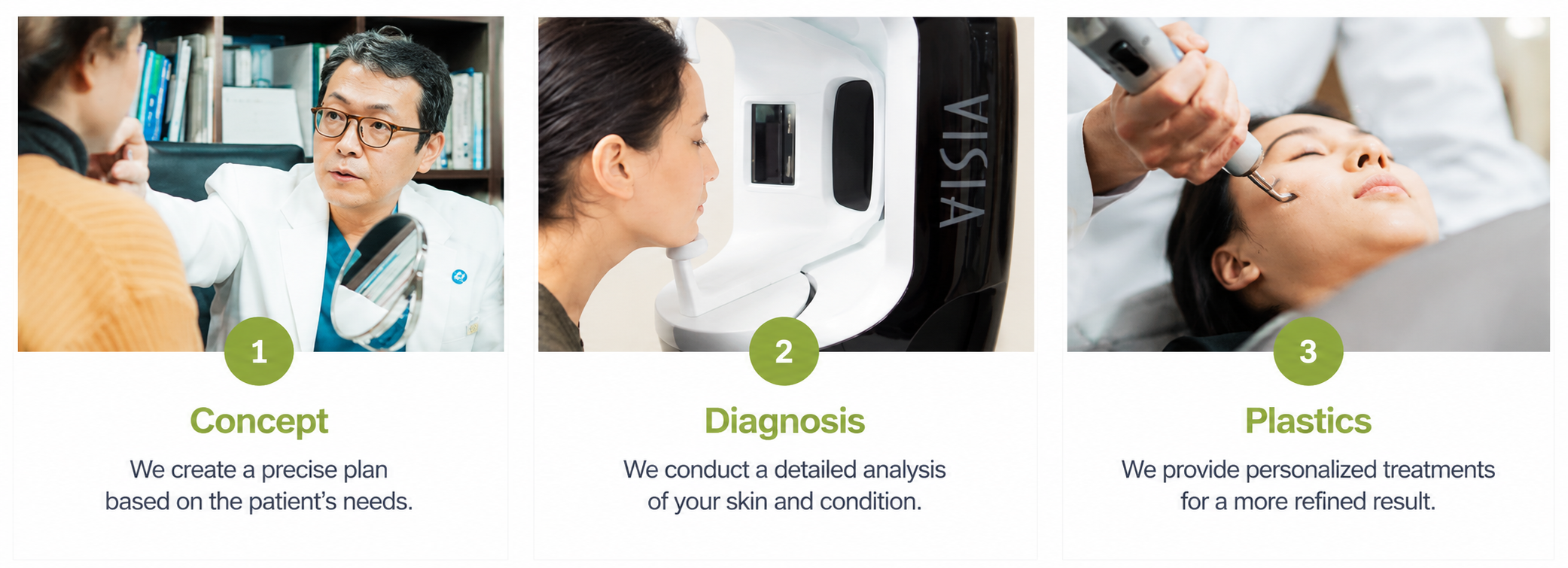
The consultation is the service. Your concerns are established first, then the skin is diagnosed and analysed, and only then is a laser or energy-based approach proposed. For an international enquiry the clinic typically asks for clear photographs of the area, your relevant medical history, current medications, records of previous cosmetic treatment and a statement of what you actually want changed.
On the day, the skin is assessed and prepared, the selected device is applied to the target area at settings chosen for you, and the skin is then monitored before aftercare instructions are given. Because the device is not fixed in advance, neither is the session length; it follows the area, the platform and the intensity, and the clinic confirms it once the plan is set.
Anesthesia follows the same logic. Many non-invasive laser treatments need little or none. Topical numbing is used where the intensity calls for it. Stronger pain-control measures are reserved for the more intensive procedures. Sensation during treatment is variously described as warmth, tingling, a snapping feeling or temporary discomfort.
Before treatment, keep the skin out of strong sun and do not tan it. Depending on the platform chosen, certain irritating products, waxing or other procedures may also need to be paused, and the clinic confirms which at consultation. Disclose your medications, any skin condition and any previous aesthetic treatment on the same area.
| Stage | What the clinic documents |
|---|---|
| Session length | Set by the device, area and intensity, and confirmed at consultation |
| Lower-intensity treatments | Little downtime |
| Resurfacing treatments | Several days or longer of visible skin recovery |
| Early phase | Initial improvement appears once the skin has healed |
| Weeks to months | Collagen remodeling and other skin changes continue |
| Course | Some patients need one session, others a planned series |
| Follow-up | One review for lighter treatments, more for intensive or multi-session plans |
Aftercare depends on what was actually done, and it is issued in writing with a day-by-day timeline. The general rules are constant: protect the skin from sun and from heat such as saunas for a period, use gentle skincare, avoid aggressive exfoliation, and leave irritating products alone until the skin has recovered.
Flying home is a question the clinic answers case by case rather than in advance, and for this service that is the honest answer. What determines it is whether swelling, redness and any other reaction are adequately settled — which depends on the platform and intensity chosen for you. Raise it at the online consultation, before you book the return leg.
Combining Bespoke Laser Treatment with Other Treatments
Combination is built into the service rather than added to it. The clinic describes personalized plans that can bring surgical procedures together with premium laser and energy-based technologies, and which combination applies depends on your condition and your goals.
HALO Laser — the named resurfacing platform, and frequently the centre of a multi-device plan.
Private Daily Care — ongoing medical skincare, which the clinic documents as running alongside its laser work.
Skin & Laser Treatments — the category page, which sets the three services side by side.
Safety, Precision, and Clinic Standards
The clinic has operated at the same address in Haeundae, Busan since 2005. TAE Plastic Surgery Clinic is a Registered Medical Institution for Attracting Foreign Patients, certified by the Ministry of Health and Welfare under the Medical Overseas Expansion and Foreign Patients Attraction Act.
The clinic's documented method of reducing risk on this service is the planning itself. Skin condition, tissue structure, aesthetic goals and recovery needs are considered together, and a broad range of laser and energy-based technologies means the treatment can be selected to fit the patient instead of the other way round.
Risk does not disappear because the plan is personalized. Temporary redness, swelling, warmth, sensitivity and dryness are common. Pigmentary change is possible. Prolonged redness is possible. Burns are possible. Scarring is possible. Infection is possible. Uneven results are possible. The individual level of risk depends on skin type, on the settings used and on medical history, and it rises with the intensity of the treatment chosen. The American Academy of Dermatology publishes general patient guidance on cosmetic treatments and on choosing a qualified provider (AAD).
Because the plan is individual, the outcome is individual too. Results vary between patients and depend on the technology selected, and the clinic states the goal as customized improvement measured against your own skin rather than against anyone else's result. The UK's National Health Service publishes general advice on thinking through a cosmetic procedure before committing to one (NHS).
TAE Plastic Surgery Clinic publishes neither case volumes nor complication rates for this procedure, and this page claims neither. The clinic has not published a price or a price range for this procedure, so none is stated here, and cost is confirmed at consultation.
The Bottom Line
The service is a 1:1 diagnosis and plan, not a fixed treatment with a fixed name.
Documented platforms available to a plan include HALO, BBL, Chrome Laser, Mosaic 3D, Ruby Laser, Discovery PICO, Profractional, Virtue RF, Liftera 2, ONDA and LSSA.
Planning weighs skin condition, tissue structure, aesthetic goals and recovery needs together.
Session length, downtime and the number of sessions all follow the plan and are confirmed at consultation.
Being unsuitable for one platform does not rule out the rest.
FAQ
What am I actually booking when I book this?
An assessment and a plan. Your concerns are established, the skin is diagnosed and analysed, and one or more laser or energy-based technologies are then selected for you. The treatment that follows is whichever combination the analysis supports, so the specifics are settled at consultation rather than before it.
How is this different from just booking a laser treatment?
A named laser treatment fixes the device before your skin has been assessed. This service reverses that order, and it is worth doing when more than one concern is in play or when the obvious device is not obviously right. The clinic's stated position is that treatment is selected according to the objective rather than applied uniformly.
Which devices might be used?
The clinic documents HALO, BBL, Chrome Laser, Mosaic 3D, Ruby Laser, Discovery PICO, Profractional, Virtue RF, Liftera 2, ONDA and LSSA among the technologies available to a plan. Which of them appears in yours depends on the treatment objective. No device is committed to in advance of the analysis.
Is it painful?
It depends entirely on what is chosen. Patients describe warmth, tingling, a snapping sensation or temporary discomfort during laser treatment. Many non-invasive treatments need little or no anesthesia, topical numbing is used where the intensity warrants it, and stronger pain control is available for the more intensive procedures.
How much downtime should I plan for?
That follows the plan. Lighter treatments may involve minimal downtime, while resurfacing or stronger energy-based treatments can require several days or longer for the skin to recover. Because this is decided at consultation, tell the clinic in advance how much recovery time you actually have — it is one of the four things the plan is built around.
What are the common side effects?
Temporary redness, swelling, warmth, sensitivity, dryness and mild irritation are the usual ones. Their severity and duration track the intensity of the treatment used. Anything that intensifies rather than settles, or any change in pigmentation, should be reported to the clinic.
What do I need to send before the consultation?
Clear photographs of the treatment area, your relevant medical history, your current medications, records of previous cosmetic treatments, and a plain statement of what you want to change. Previous laser or peeling treatment on the same area matters particularly, because it affects what can safely be done next.
Book a Consultation at TAE Plastic Surgery Clinic
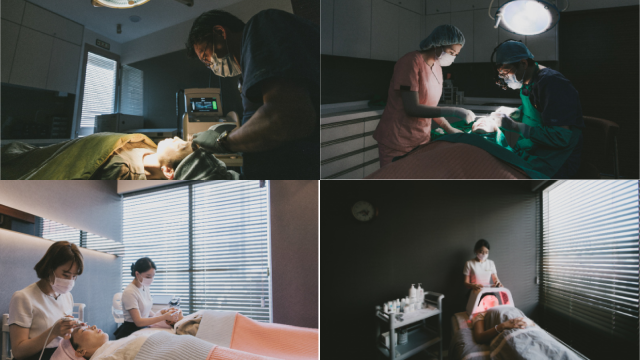
Bespoke laser treatment is available in Busan at TAE Plastic Surgery Clinic, and the consultation is the service — it is where your skin is analysed and the combination of technologies is chosen. English-speaking assistance is available for both online and in-person consultations, and consultations are arranged through the clinic's contact page. TAE Plastic Surgery Clinic is at 4th Floor, Gunam Building, 27 Gunam-ro, Haeundae-gu, Busan, South Korea, and opens Monday to Friday from 09:00 to 18:00 and Saturday from 09:00 to 13:00, closed Sundays and public holidays.
Disclaimer
This page is for general informational purposes and does not constitute individualized medical advice. Candidacy, technique, anaesthesia and outcome can only be determined in an in-person consultation with a qualified doctor. Individual results vary.
References
NHS — Cosmetic procedures
American Academy of Dermatology — Cosmetic treatments