Personalized plastic surgery, laser & anti-aging care in Haeundae, Busan
en-US

HALO Laser
HALO laser in Busan, Korea is a hybrid fractional laser delivering 2940 nm and 1470 nm, and is performed by Dr. Kim Ki-tae at TAE Plastic Surgery Clinic.

HALO Laser in Busan, Korea

Medically reviewed by Dr. Kim Ki-tae, MD — Board-Certified Specialist in Plastic Surgery, Korean Society of Plastic and Reconstructive Surgeons; Director and founder, TAE Plastic Surgery Clinic TAE Plastic Surgery Clinic, Haeundae-gu, Busan
HALO laser in Busan is a hybrid fractional laser treatment that combines an ablative and a non-ablative wavelength in one session to work on skin tone, texture, pigmentation, pores, fine lines and sun damage. At TAE Plastic Surgery Clinic in Haeundae-gu it is the named resurfacing option within the skin and laser category. What separates it from conventional fractional lasers is that both wavelengths are delivered at the same time rather than in separate treatments.
What Is HALO Laser?
HALO is a hybrid fractional laser that treats the epidermis and the deeper dermal layer simultaneously, using two wavelengths delivered together, and is designed to give visible resurfacing with less downtime than a fully ablative treatment.
The 2940 nm erbium YAG wavelength is highly absorbed by water and works on the epidermal layer at a depth of 20 to 100 micrometres, where the clinic documents its effect on scars and pores.
The 1470 nm wavelength reaches the deeper dermal layer at 100 to 700 micrometres.
The device includes an intelligent energy delivery system with real-time speed and temperature measurement, intended to keep the energy delivered stable and uniform.
Energy settings are selected against the skin assessed at consultation rather than fixed in advance.
The treatment is documented as suitable for face and body, across Fitzpatrick skin types I to VI.
The clinic uses HALO as a dual-layer treatment addressing surface and deeper concerns in one procedure, and its stated emphases are the simultaneous delivery of the two wavelengths, surface improvement of pores and scars, deeper stimulation in the dermis, and change in pigmentation, wrinkles, elasticity and skin tone through customized energy delivery. That is the clinic's own account of the treatment, and it is deliberately the limit of the mechanism described here.
HALO is described as improving the appearance of wrinkles, fine lines, sun damage, pigmentation, acne scars, enlarged pores, skin texture and signs of aging. Independent patient information on laser resurfacing generally, including realistic expectations and the recovery it involves, is published by the American Society of Plastic Surgeons (ASPS).
Patients weighing this against other resurfacing options are usually weighing downtime against depth. Fractional carbon dioxide and erbium YAG resurfacing, non-ablative fractional lasers, intense pulsed light, microneedling and chemical peels are all documented alternatives to consider. What differentiates HALO in that group is the pairing: it combines an ablative and a non-ablative wavelength within one fractional treatment, which is how the clinic accounts for the balance between a resurfacing effect and a recovery measured in days rather than weeks. Whether that balance is the right one for you is a question about your skin and your calendar, and it is settled at consultation rather than from a comparison table.
Who Performs HALO Laser at TAE Plastic Surgery Clinic

**Dr. Kim Ki-tae
**Board-Certified Plastic Surgeon
HALO Laser is performed by Dr. Kim Ki-tae, the clinic's founder and sole doctor and the listed performing doctor for the parent Skin & Laser Treatments specialty.
For this particular device the clinic's teaching record is directly relevant, and it is documented rather than asserted. The clinic hosted the Sciton Innovations Workshop live seminar at its own premises on 26 August, attended by around 50 practitioners including a delegation from Taiwan, with Dr. Patrick Bitter, the developer of BBL HERO, as special guest. At that seminar Dr. Kim Ki-tae shared knowledge and experience citing actual Er:YAG and Halo cases performed on his own patients, and he lectured on the concept of prejuvenation.
Dr. Kim Ki-tae holds the Board-Certified Specialist designation in Plastic Surgery issued by the Korean Society of Plastic and Reconstructive Surgeons. He graduated from Inje University College of Medicine and trained as a Clinical Fellow in the Department of Plastic Surgery at Pusan National University from March 2003 to February 2004. He founded TAE Plastic Surgery Clinic in 2005 and has practised there ever since.
He chairs the Academic Committee of the Laser Plastic Surgery Research Group at the Korean Society of Plastic and Reconstructive Surgeons, sits on that society's Academic Committee, serves on the Legislation Committee of the Korean Association of Plastic Surgeons, and is General Affairs Director of the Busan Medical Association. He is a full member of the American Society for Laser Medicine and Surgery, an international member of the American Society of Plastic Surgeons, and a full member of the International Confederation for Plastic, Reconstructive and Aesthetic Surgery.
His published caution applies here as much as to any device: "Even if a treatment is safe and simple, patients differ in skin condition, fat layer thickness, age and how far ageing has progressed — so to get a satisfying result you should have a full consultation with an experienced plastic surgery specialist before being treated."
TAE Plastic Surgery Clinic is a single-doctor clinic, so the surgeon who assesses you is the surgeon who treats you. His profile is on the doctor page, and HALO is catalogued under Skin & Laser Treatments.
Who Is a Good Candidate for HALO Laser?
You may be a candidate if
You are an adult concerned about wrinkles or fine lines.
Your concern is sun damage or pigmentation.
Your concern is uneven texture, acne scarring or enlarged pores.
You have noticed reduced skin elasticity.
You want visible resurfacing but cannot accept the downtime of a more aggressive treatment.
You may need to avoid or postpone treatment if
You have an active skin infection.
You have an uncontrolled inflammatory skin condition.
You have a photosensitivity disorder.
You have a medical factor that impairs healing.
You have significant current irritation in the treatment area.
A clinician assesses your skin condition, your medications, your medical history and your goals before treatment is agreed. Settings can be adjusted to skin condition, goals and the downtime you can accept, so a first answer of "not at this intensity" is not always an answer of "not at all".
What to Expect: Procedure, Recovery, and Results Timeline
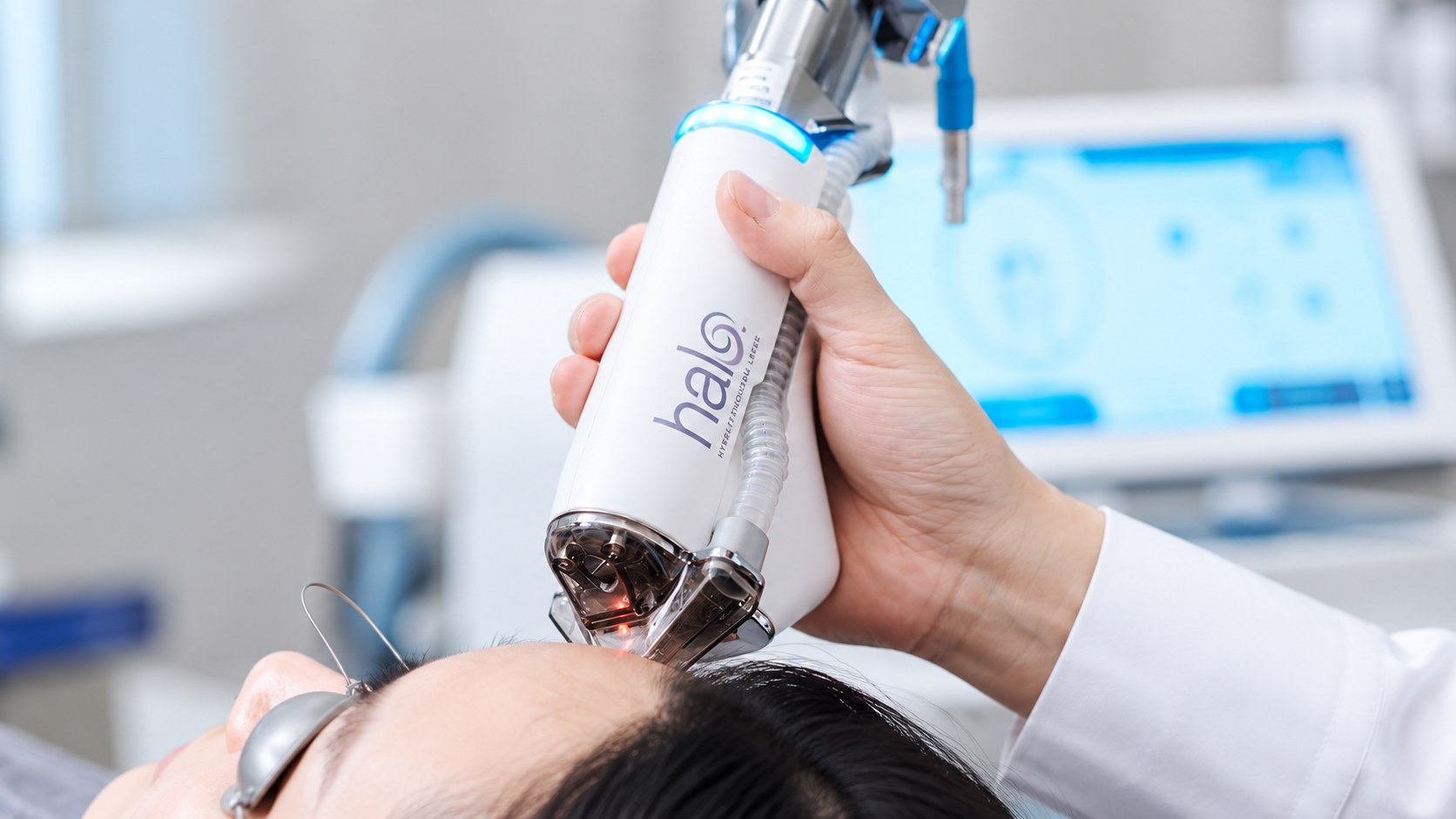
Consultation evaluates skin condition, pigmentation, texture, scarring, lifestyle and the downtime you can tolerate, and the treatment settings follow from that. For an international enquiry, clear photographs of the area are usually requested first, together with medical history, medication details and any record of previous procedures on the same skin.
In the days beforehand, stay out of strong sun, do not tan, and stop using retinoids and strong exfoliating products. Anything long-term you take or live with should be raised at consultation so the plan can be adapted individually.
A topical anesthetic is generally recommended before treatment rather than a nerve block, and the device's integrated cooling adds to comfort during the session. Warmth, stinging or discomfort during treatment is normal, and how much of it you feel depends on the settings and on your own sensitivity.
The treatment itself runs in four documented stages.
Assessment. Skin condition is reviewed and the energy settings are selected.
Delivery. Halo applies its two wavelengths simultaneously to the skin surface and the deeper dermal layers.
Depth split. The 2940 nm wavelength works on the epidermal layer while the 1470 nm wavelength reaches the dermis.
Response. Skin regeneration follows as collagen and elastin production is stimulated.
| Stage | What the clinic documents |
|---|---|
| Session length | Around 30 to 60 minutes, depending on area and settings |
| Typical downtime | Around 3 to 5 days, varying with treatment intensity |
| First days | Redness, warmth, swelling and a tight or rough skin surface |
| Days four to five | Microscopic epidermal debris sheds |
| Two to five days | Initial results can become visible |
| Weeks to months | Pigment and skin quality continue to change |
| Longer term | Results can last for years with sun protection and maintenance |
| Follow-up | Usually one review, with more if a concern arises |
Aftercare is simple and non-negotiable. Cleanse and moisturize gently as instructed. Do not rub or scratch the treated skin. Apply sunscreen consistently and keep direct sun off the area during early healing. Heat, vigorous exercise, harsh products, exfoliation and picking are all out until the skin has recovered.
Travel planning deserves a moment of realism. The documented downtime of three to five days is the visible part, and the shedding around days four and five is the phase patients least want to spend in an airport. Most people can fly sooner than that, but the sensible question to ask at consultation is not when you are allowed to fly, it is when you would rather be seen.
There is a second reason to give the trip some room. The clinic advises a stay long enough to allow initial healing and a check before travelling home, and its typical practice is a review after the final session of whatever course has been recommended. If your plan is a single session, that check can usually be fitted into a short stay. If a course has been proposed, ask at the online consultation how it is meant to be spaced before you fix any dates.
Combining HALO Laser with Other Treatments
The clinic documents no fixed combination protocol for HALO. Its position is that HALO may be combined with other treatments in some plans, and that the combination and its timing should be determined by a qualified provider against your skin condition and your goals.
Bespoke Laser Treatment — the planning route when HALO is one of several devices being considered.
Private Daily Care — the clinic's medical skincare program, documented as accompanying laser treatment.
Skin & Laser Treatments — the parent category, where the alternatives are set out side by side.
Safety, Precision, and Clinic Standards
The clinic has operated at the same address in Haeundae, Busan since 2005. TAE Plastic Surgery Clinic is a Registered Medical Institution for Attracting Foreign Patients, certified by the Ministry of Health and Welfare under the Medical Overseas Expansion and Foreign Patients Attraction Act.
Risk is reduced here by four documented steps: a proper skin assessment, appropriate laser settings, hygiene measures during treatment, and clear instructions before and after. The device's real-time speed and temperature measurement is described by the clinic as a means of keeping delivered energy stable and uniform.
The risks themselves should be read carefully. Prolonged redness is possible. Infection is possible. Pigmentation change is possible. Burns are possible. Scarring is possible. Delayed healing is possible. How likely any of these is depends on your skin type, on the intensity chosen and on how closely aftercare is followed. General guidance on cosmetic procedures and on selecting a qualified provider is published by the American Academy of Dermatology (AAD).
Complete removal of pigmentation, scars, wrinkles or pores is not promised. HALO is documented as improving the appearance of those concerns, and the degree and duration of that improvement differ from person to person.
TAE Plastic Surgery Clinic publishes neither case volumes nor complication rates for this procedure, and this page claims neither. The clinic has not published a price or a price range for this procedure, so none is stated here, and cost is confirmed at consultation.
The Bottom Line
HALO delivers 2940 nm and 1470 nm at the same time, treating the epidermis and the dermis in one session.
The clinic documents the epidermal depth as 20 to 100 micrometres and the dermal depth as 100 to 700 micrometres.
Typical downtime is around three to five days, with shedding around days four and five.
Initial results can appear within two to five days, with further change over weeks to months.
It is documented for Fitzpatrick skin types I to VI, but pigment change remains a risk to discuss before treatment.
FAQ
What makes HALO different from a conventional fractional laser?
HALO combines two wavelengths in a single fractional treatment, where conventional fractional lasers generally work at one wavelength or one depth. That is why the clinic uses it as a dual-layer treatment: the 2940 nm wavelength works on the epidermal layer and the 1470 nm wavelength reaches the dermis in the same session.
How long does a session take?
A session generally runs 30 to 60 minutes, depending on the size of the treated area and the settings used. The consultation and preparation are additional. The exact plan, including whether more than one session is advisable, is agreed before treatment.
Is it painful?
Warmth, stinging or some discomfort during treatment is normal, and how much you feel depends on the settings and your own sensitivity. A topical anesthetic is generally applied beforehand rather than a nerve block. The device's integrated cooling is used to improve comfort during the session.
What does recovery actually look like?
Expect redness, warmth, swelling and a rough or sandpaper-like skin surface for several days, with typical downtime around three to five days. Microscopic shedding of epidermal debris is documented around days four and five. Mild peeling or temporary darkening of treated areas can occur before the skin settles.
When will I see the result, and how long does it last?
Initial results can be visible within two to five days, and pigment and skin quality may continue to change for weeks to months afterward. The clinic documents that results can last for years, with consistent UV protection and maintenance treatments helping to preserve them. Individual response varies.
Can I have HALO if I have a deeper skin tone?
The treatment is documented as suitable for Fitzpatrick skin types I to VI. Pigmentation change is still a listed risk of laser treatment, and it is the one to raise specifically at consultation if your skin tone is deeper or you have recently been in strong sun. Settings are chosen against the skin assessed on the day.
What should I avoid after treatment?
Direct sun, tanning, intense heat, vigorous exercise, harsh skincare products, exfoliation, and picking or scratching the treated skin, until it has recovered. Use sun protection as instructed. The clinic issues aftercare guidance matched to the intensity of the treatment you actually received.
Book a Consultation at TAE Plastic Surgery Clinic
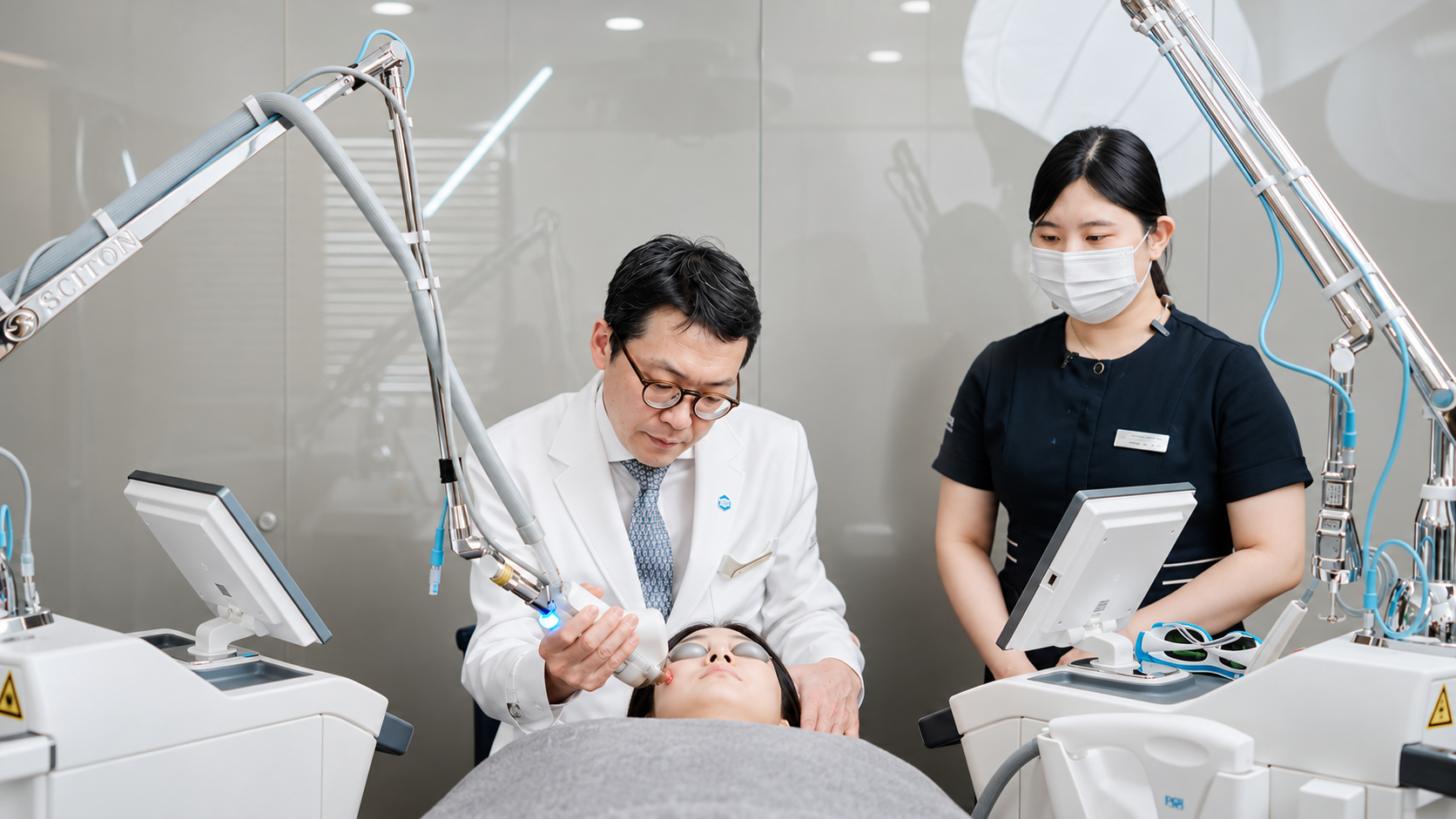
HALO laser treatment is available in Busan at TAE Plastic Surgery Clinic, and the consultation is where the energy settings are matched to your skin and to the downtime you can accept. English-speaking assistance is available for both online and in-person consultations, and consultations are arranged through the clinic's contact page. TAE Plastic Surgery Clinic is at 4th Floor, Gunam Building, 27 Gunam-ro, Haeundae-gu, Busan, South Korea, and opens Monday to Friday from 09:00 to 18:00 and Saturday from 09:00 to 13:00, closed Sundays and public holidays.
Disclaimer
This page is for general informational purposes and does not constitute individualized medical advice. Candidacy, technique, anaesthesia and outcome can only be determined in an in-person consultation with a qualified doctor. Individual results vary.
References
American Society of Plastic Surgeons — Laser skin resurfacing
American Academy of Dermatology — Cosmetic treatments